
BOOKS
Published
Read Time
3 min read
Share This Review
The Testaments by Margaret Atwood Review: A Propulsive, Prize-Winning Return to Gilead
Margaret Atwood's The Testaments, the Booker Prize-winning sequel to The Handmaid's Tale, returns to the theocratic republic of Gilead fifteen years on, delivering a thriller-paced narrative through three distinct female voices — Aunt Lydia, Agnes Jemima, and Daisy — whose converging stories expose the regime's internal rot. Now a Hulu Original series, this media tie-in edition from Vintage keeps one of contemporary fiction's most celebrated sequels firmly in the spotlight.
In This Review
- What Works & What Doesn't
- What the Novel Actually Is and Does
- Significance: Sequel, Prize, and Cultural Moment
- Strengths: Pace, Structure, and Surprise
- The Central Critique: Clarity Over Ambiguity
- Who This Book Is For
What Works & What Doesn't
What Works
- Winner of the Booker Prize and a #1 New York Times bestseller, marking rare simultaneous critical and commercial distinction
- Three-narrator structure — Aunt Lydia, Agnes Jemima, and Daisy — exposes Gilead's decay from multiple angles, including from within its own power structure
- Praised by The Daily critical coverage for 'propulsive, almost breathless narrative, stacked with twists and turns worthy of a Gothic novel'
- Designed to work as a standalone novel or as a sequel, broadening its accessible readership
- Directly coordinated with the Hulu television adaptation, making it a seamless companion to the ongoing series
What Doesn't
- Literary Review notes it trades the ambiguity and sense of jeopardy that defined The Handmaid's Tale for a clearer, more plot-driven resolution — a deliberate but consequential shift in register
- The thriller-paced momentum, while widely praised, tips into the melodramatic at points, as Michiko Kakutani observed in critical coverage
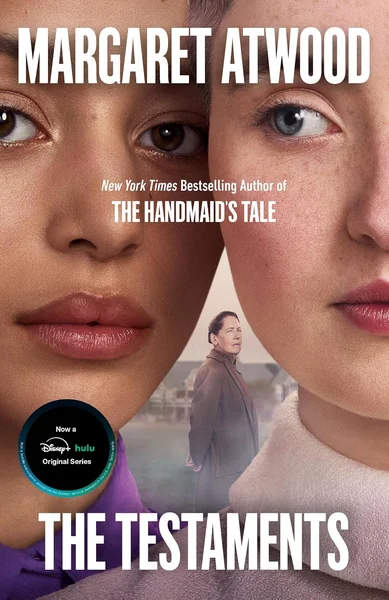
Atwood's sequel is a #1 New York Times bestseller and Booker Prize winner that dismantles Gilead from within through three interlocking testimonies — and it is as much a thriller as it is a literary reckoning.

The Testaments (TV Tie-in): A Novel by Margaret Atwood front cover
What the Novel Actually Is and Does
Set fifteen years after the events of The Handmaid's Tale, The Testaments unfolds through three distinct narrative voices: Aunt Lydia, the formidable enforcer familiar from the original novel; Agnes Jemima, a young woman raised inside Gilead; and Daisy, a girl living outside its borders. Together, their testimonies — structured as documents recovered after the fact, consistent with Atwood's "historical notes" framing device — trace how the regime's inner decay becomes exploitable. The novel's central tension turns on how these three women's choices might ignite Gilead's downfall. As Atwood told CBS News Sunday Morning's Martha Teichner, the book contains "tons of hope — lots and lots of hope," a pointed counterweight to assumptions about its premise.
“a blockbuster of propulsive, almost breathless narrative, stacked with twists and turns worthy of a Gothic novel.”
Significance: Sequel, Prize, and Cultural Moment
First published in 2019, The Testaments arrived after more than three decades of readers living with The Handmaid's Tale and several seasons of the Hulu adaptation keeping Gilead in the cultural conversation. The novel won the Booker Prize and became a global number-one bestseller — a rare commercial and critical alignment for literary fiction. This Vintage edition is a media tie-in timed to the Hulu Original series adaptation, which stars Ann Dowd reprising her role as Aunt Lydia, alongside Chase Infiniti as Agnes and Lucy Halliday as Daisy. Atwood coordinated the writing of the novel with the television production, communicating to producers where her sequel was taking key characters — a degree of cross-medium collaboration that underlines just how intertwined the two properties have become.
Strengths: Pace, Structure, and Surprise
Critical reception zeroed in on the novel's relentless momentum. Serena Davies, writing in The Daily critical coverage, called it "a blockbuster of propulsive, almost breathless narrative, stacked with twists and turns worthy of a Gothic novel." Michiko Kakutani, in critical coverage, described it as "a fast, immersive narrative that's as propulsive as it is melodramatic." USA Today* credited the book's power to "Atwood's capacity to surprise, even writing in a universe we think we know so well." Aunt Lydia in particular emerges as the novel's most complex engine: granting her a first-person voice allows Atwood to excavate the machinery of complicity from the inside, giving readers access to the logic that sustains authoritarian systems while simultaneously showing its fracture lines.
The Central Critique: Clarity Over Ambiguity
The most consistent note of reservation in the critical record concerns what the novel trades away for its narrative momentum. In Literary Review, Sarah Crown praised The Testaments as "politically and emotionally satisfying," while observing that it lacks, compared to The Handmaid's Tale, "the richness and the sense of jeopardy" — a consequence of Atwood exchanging her earlier novel's studied ambiguity for something more legible and plot-driven. Where The Handmaid's Tale left readers in an unsettled moral fog, The Testaments moves toward resolution and, at times, catharsis. For readers who prized the original's refusal to comfort, this shift registers as a meaningful tonal change. It does not diminish the sequel's achievement so much as define its different appetite.
Who This Book Is For
The Testaments is designed to function both as a standalone read and as a sequel — the publisher states explicitly that it can be entered without prior knowledge of The Handmaid's Tale, though readers coming to it fresh will encounter a richer context with the original in hand. The media tie-in edition makes it a natural companion to the Hulu series. Readers drawn to politically charged literary fiction with the pacing of a thriller, and those who want to spend more time with a world and a set of moral questions that have proven stubbornly resonant, will find the novel delivers on both counts. Those seeking the elliptical dread of the 1985 original should approach with calibrated expectations — this is a different, more kinetic kind of story, and deliberately so.
Frequently Asked Questions
Is The Testaments worth reading if you loved The Handmaid's Tale?
The Testaments delivers on both literary and thriller fronts, but readers should approach with calibrated expectations. Where The Handmaid's Tale offered elliptical dread and studied ambiguity, this sequel is a more kinetic, plot-driven story that moves toward resolution and catharsis rather than unsettled moral fog.
Who is The Testaments for?
It is designed for readers drawn to politically charged literary fiction with the pacing of a thriller, as well as those who want to spend more time with the moral questions of Gilead. The media tie-in edition also makes it a natural companion for viewers of the Hulu series.
Can you read The Testaments without having read The Handmaid's Tale?
The publisher states explicitly that the novel can be entered without prior knowledge of The Handmaid's Tale. However, readers coming to it fresh will encounter a richer context with the original in hand.
What are the three narrative voices in The Testaments?
The novel unfolds through the testimonies of Aunt Lydia, a formidable enforcer familiar from the original novel; Agnes Jemima, a young woman raised inside Gilead; and Daisy, a girl living outside its borders. Together, their interlocking accounts trace how the regime's inner decay becomes exploitable.
How is the novel structured?
The testimonies are structured as documents recovered after the fact, consistent with Atwood's historical notes framing device from The Handmaid's Tale. This approach anchors the novel's three distinct voices within a larger archival conceit.
What is the central tension driving the plot?
The novel's central tension turns on how the choices of three women — Aunt Lydia, Agnes Jemima, and Daisy — might ignite Gilead's downfall. The story examines how a regime's inner decay can be exploited from within.
What makes Aunt Lydia such a compelling character in this book?
Atwood grants Aunt Lydia a first-person voice, which allows readers access to the logic that sustains authoritarian systems while simultaneously showing its fracture lines. She emerges as the novel's most complex engine, excavating the machinery of complicity from the inside.
What is the pacing of The Testaments like?
Critics zeroed in on the novel's relentless momentum, with Serena Davies calling it a blockbuster of propulsive, almost breathless narrative stacked with twists and turns worthy of a Gothic novel. Michiko Kakutani similarly described it as a fast, immersive narrative that is as propulsive as it is melodramatic.
Is The Testaments more of a thriller than a literary novel?
The reviewer describes it as being as much a thriller as it is a literary reckoning, and multiple critics highlighted its propulsive, twist-laden pacing. Atwood appears to have deliberately traded some of the original's literary ambiguity for narrative momentum and accessibility.
What themes does The Testaments engage with?
The novel engages with complicity, authoritarian decay, and female resistance within a theocratic regime. Atwood told CBS News Sunday Morning that the book contains tons of hope, positioning it as a more hopeful counterweight to assumptions about its premise.
How does The Testaments compare to The Handmaid's Tale in tone and ambiguity?
Sarah Crown in Literary Review praised The Testaments as politically and emotionally satisfying while noting it lacks, compared to The Handmaid's Tale, the richness and sense of jeopardy that came from Atwood's earlier studied ambiguity. The sequel moves toward resolution where the original left readers in an unsettled moral fog.
What is the main criticism of The Testaments?
The most consistent critical reservation is that the novel trades away ambiguity for momentum. For readers who prized the original's refusal to comfort, this shift toward a more legible, plot-driven story registers as a meaningful tonal change, though the reviewer notes it defines a different appetite rather than diminishing the book's achievement.
Did The Testaments win any major literary awards?
Yes, The Testaments won the Booker Prize and became a global number-one bestseller, a rare commercial and critical alignment for literary fiction. It is also a number-one New York Times bestseller.
How does this edition relate to the Hulu series?
This Vintage edition is a media tie-in timed to the Hulu Original series adaptation, which stars Ann Dowd reprising her role as Aunt Lydia, alongside Chase Infiniti as Agnes and Lucy Halliday as Daisy. Atwood coordinated the writing of the novel with the television production, communicating to producers where her sequel was taking key characters.
How involved was Atwood with the Hulu adaptation?
Atwood coordinated the writing of the novel with the television production, communicating to producers where her sequel was taking key characters. The reviewer notes this as a degree of cross-medium collaboration that underlines how intertwined the two properties have become.
How long after The Handmaid's Tale is The Testaments set?
The Testaments is set fifteen years after the events of The Handmaid's Tale. It first published in 2019, arriving more than three decades after the original novel.
Does The Testaments offer hope or is it as bleak as the original?
Atwood herself described the book to CBS News Sunday Morning as containing tons of hope, lots and lots of hope, positioning this as a pointed counterweight to assumptions about its premise. The novel moves toward resolution and, at times, catharsis, distinguishing it tonally from the original's dread.
What does USA Today say about Atwood's writing in this sequel?
USA Today credited the book's power to Atwood's capacity to surprise, even writing in a universe we think we know so well. This speaks to how Atwood manages to generate genuine tension within a world readers have spent decades with.
Is The Testaments good value at its price point?
At $12.15, the novel offers a Booker Prize-winning, globally bestselling work of literary fiction that functions as both a standalone read and a companion to one of the most culturally resonant dystopias of the past forty years. The media tie-in packaging also makes it a practical companion to the Hulu series for viewers following the adaptation.
What should readers expect if they are coming to this book specifically because of the Hulu series?
This edition is a media tie-in timed directly to the Hulu Original series adaptation, featuring the same core characters played by Ann Dowd, Chase Infiniti, and Lucy Halliday. Atwood coordinated her novel with the television production, so readers familiar with the show will find the two properties closely intertwined in their treatment of key characters.
Sources & Further Reading
The key facts and claims in this review are grounded in the retrieved, verified sources listed below.
- Cited in this review
- 1
thebookerprizes.com
- 2
- Further reading
- 3
en.wikipedia.org
- 4
kirkusreviews.com
- 5
- 6
- 7
- 8
- 9
penguinrandomhouse.ca
Reader Comments
No comments yet
Be the first to share your thoughts!