BOOKS
Published

Read Time

9 min read

Reader rating

4.7

· 9,603 Amazon ratings
reader ratings, not a LuvemBooks score
Curated & edited by

LuvemBooks Editorial

How we create our reviews →
Share This Review

The Flavor Bible by Andrew Dornenburg & Karen Page Review: A James Beard–Winning Culinary Reference Classic

The Flavor Bible is a 2008 reference guide — not a traditional cookbook — that maps flavor affinities across hundreds of ingredients, drawing on the collective experience of dozens of leading American chefs to help cooks season and combine ingredients with greater creativity and confidence. Winner of the 2009 James Beard Book Award for Best Book: Reference and Scholarship, it has been named one of the 100 best cookbooks of the last twenty-five years by Cooking Light and one of the ten best cookbooks in the world of the past century by Forbes, and was recognized as one of the year's best cookbooks on both Today and Good Morning America. This review assesses the book's content, organization, and published reception — not a kitchen test.
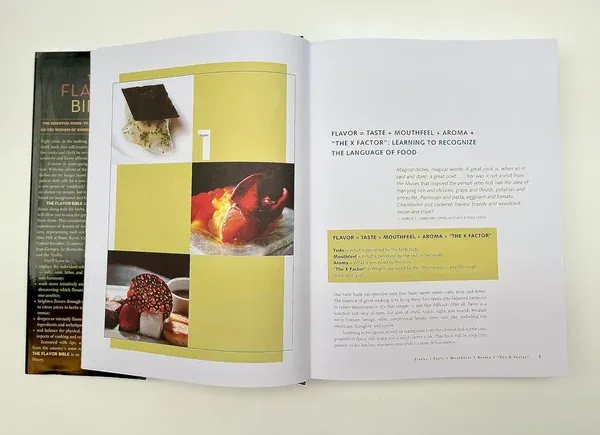
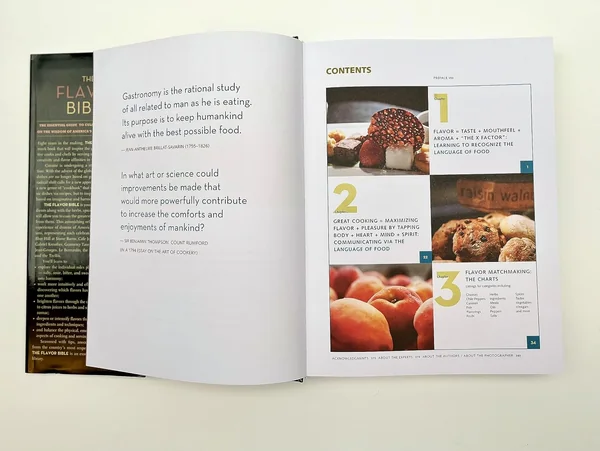
Contents page spread showing numbered sections with food photography and ingredient descriptions for flavor pairing guidance.Interior spread showing flavor pairing concepts with yellow panels, food photography, and explanatory text about culinary taste factors.The Flavor Bible: The Essential Guide to Culinary Creativity, Based on the Wisdom of America's Most Imaginative Chefs by Andrew Dornenburg, Karen Page front coverTap to enlarge

LuvemBooks Verdict

Best for

Experienced home cooks, culinary students, and working professionals who already have solid technique and want a systematized, chef-endorsed map of flavor relationships to spark more intuitive, improvisational cooking.

Worth it if

You're ready to move beyond recipe-dependency and want a comprehensive, professionally validated reference for understanding how ingredients, herbs, and spices interact — organized for both targeted lookup and open-ended creative browsing.

Skip if

You cook primarily by following structured recipes and are still building foundational skills — the open-ended pairing index format assumes existing competence and offers no step-by-step guidance, technique instruction, or plated recipe photography.

Publishers Weekly called it a comprehensive alphabetical flavor index that "allows readers to search complementary combinations for a particular ingredient," praising its breadth, while Herbivoracious noted that Page and Dornenburg's books are fixtures on professional chefs' shelves — "battered and bruised, coffee stained and taped together at the spine" — on account of their uniquely useful culinary lists. Kitchen Arts & Letters described it as "a remarkably versatile aid to inspiration" for anyone who creates or improvises in the kitchen.

Sources: Publishers Weekly, Herbivoracious, Kitchen Arts & Letters, Cooking by the Book, Eat Me Daily, The StoryGraph
4.7from 9,603 Amazon ratings— reader ratings, not a LuvemBooks score

Age & Reading Level

Recommended age

Adult

Reading level

Adult

Skip if you're looking for a traditional cookbook with step-by-step recipes and plated photographs.

In This Review
  • What Works & What Doesn't
  • What the Book Actually Is — and Is Not
  • Significance and Reception
  • The Authority Behind the Pairing Index
  • Strengths as a Culinary Tool
  • Who Will Get the Most — and Least — from It

What Works & What Doesn't

What Works
  • Winner of the 2009 James Beard Book Award for Best Book: Reference and Scholarship — the field's most authoritative recognition for culinary knowledge
  • Named one of the 100 best cookbooks of the last 25 years by Cooking Light and one of the ten best cookbooks of the past century by Forbes
  • Draws on the collective experience of dozens of leading professional chefs, grounded in real restaurant practice at the highest level
  • Authored by Karen Page and Andrew Dornenburg, whose prior titles are multiple James Beard Award winners and IACP honorees, lending exceptional source credibility
  • Structured for both targeted lookup and open-ended browsing, making it a flexible creative tool for experienced cooks
What Doesn't
  • Not a traditional cookbook — contains no conventional step-by-step recipes, which may disappoint readers expecting structured meal guidance
  • Assumes existing cooking competence; cooks early in their culinary education may find the open-ended reference format difficult to apply immediately
A landmark culinary reference, not a recipe collection, The Flavor Bible earns its place on the shelf through the breadth and authority of its sourcing rather than through step-by-step instructions.

What the Book Actually Is — and Is Not

The Flavor Bible is a reference guide organized around ingredient pairings rather than recipes. Its premise, stated plainly in the publisher's synopsis, is that "great cooking goes beyond following a recipe — it's knowing how to season ingredients to coax the greatest possible flavor from them." The book maps hundreds of ingredients against the herbs, spices, and other seasonings that best complement them, drawing on the combined experience of dozens of leading American chefs working in top restaurants across the country. Readers looking for a conventional cookbook with measured recipes and plated photographs will need to recalibrate their expectations: the primary deliverable here is a comprehensive pairing index, seasoned with tips, anecdotes, and signature dishes attributed to named chefs.
great cooking goes beyond following a recipe — it's knowing how to season ingredients to coax the greatest possible flavor from them.
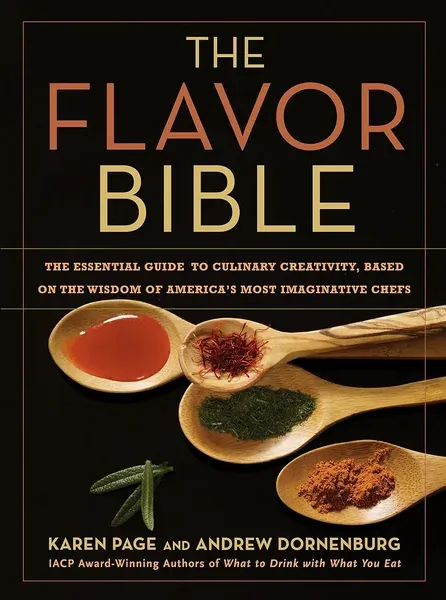
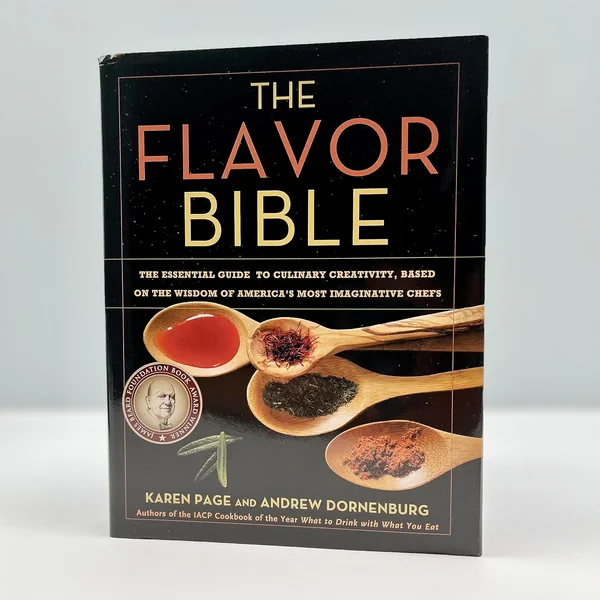
Front cover featuring the title in large text, wooden spoons holding various colored ingredients and spices against a black background.

Significance and Reception

Few culinary references have accumulated the kind of documented, cross-platform recognition that The Flavor Bible has earned since its September 2008 publication by Voracious (Little, Brown and Company). It won the 2009 James Beard Book Award for Best Book: Reference and Scholarship — the field's most prestigious category for works of culinary knowledge. Cooking Light named it one of the 100 best cookbooks of the last twenty-five years; Forbes placed it among the ten best cookbooks in the world of the past century; and both Today and Good Morning America listed it among the year's best cookbooks at release. That breadth of recognition — spanning professional culinary institutions, mainstream television, and long-view critical retrospectives — reflects a book that has genuinely shaped how a generation of cooks thinks about flavor.
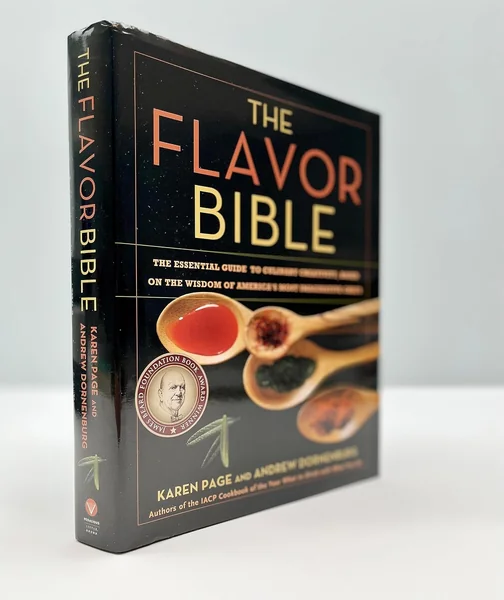
Front cover featuring the title in large gold and yellow text, wooden spoons with colorful ingredients, and a circular medallion seal.

The Authority Behind the Pairing Index

Authors Karen Page and Andrew Dornenburg bring substantial culinary credentials to the project. Dornenburg studied with the legendary Madeleine Kamman at the School for American Chefs and cooked professionally in top New York City restaurants. Page is a two-time James Beard Award-winning author, and the pair's earlier books — including Becoming a Chef, Culinary Artistry, and the IACP Cookbook of the Year What to Drink with What You Eat — were winners of or finalists for Gourmand World Cookbook, IACP, and James Beard book awards. The Culinary Institute of America, in naming them Honorary Ambassadors, described them as "accomplished authors, respected food authorities, and industry leaders with exceptional talent and vision." Chef Eric Ripert has stated that their books "have enriched the fount of culinary knowledge." The Flavor Bible follows in that lineage as their most reference-focused work.
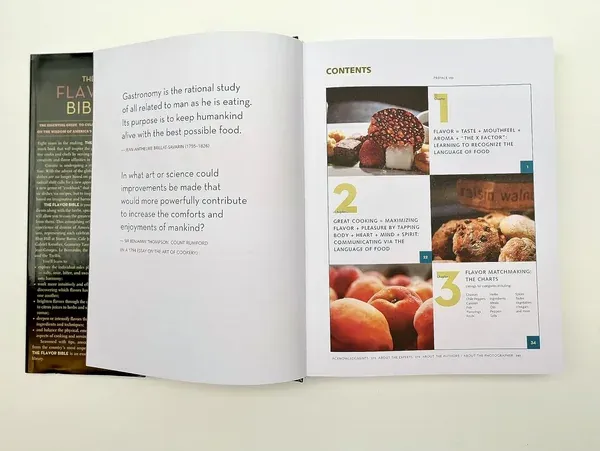
Contents page spread showing numbered sections with food photography and ingredient descriptions for flavor pairing guidance.

Strengths as a Culinary Tool

Because the book is designed as a creative reference rather than a prescriptive guide, its value scales with the user's existing cooking knowledge. For cooks already comfortable with technique, the ingredient-by-ingredient pairing entries — organized alphabetically and annotated with guidance distilled from professional chefs — function as a creative springboard. The structure is built for browsing as much as for targeted lookup: a cook with a single ingredient on hand can trace outward to flavor partners, seasonings, and chef-endorsed combinations. The book's anecdotes and signature-dish notes from named chefs add professional context that a bare index would lack, grounding the pairings in real kitchen practice at a high level.
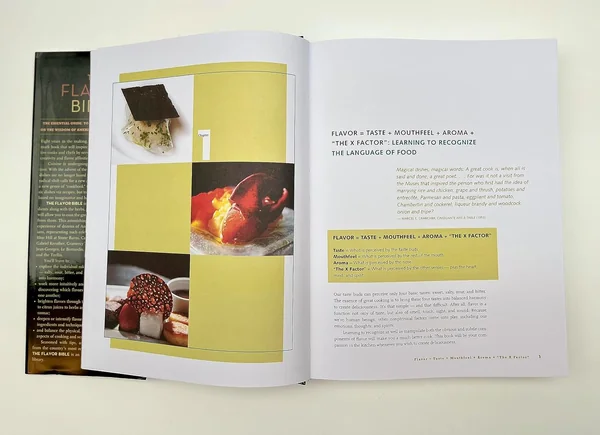
Interior spread showing flavor pairing concepts with yellow panels, food photography, and explanatory text about culinary taste factors.

Who Will Get the Most — and Least — from It

The book is explicitly positioned for cooks seeking to move beyond recipe-dependency toward instinctive, improvisational cooking. Readers who cook primarily by following recipes to the letter, or who are early in their culinary education, may find the open-ended reference format less immediately actionable than a structured curriculum. The book does not teach knife skills, explain technique, or walk through foundational methods — it assumes the reader already knows how to cook and is ready to season, combine, and create with greater intention. For culinary students, experienced home cooks, and working professionals looking for a systematized map of flavor relationships endorsed by America's most imaginative chefs, however, The Flavor Bible remains one of the most widely validated resources the genre has produced.

Sources & Further Reading

The key facts and claims in this review are grounded in the retrieved, verified sources listed below.

  1. Cited in this review
  2. 1
  3. 2
  4. 3
  5. Further reading
  6. 4
  7. 5
  8. 6
  9. 7
  10. 8
  11. 9
  12. 10