
8 min read
4.6
· 1,284 Amazon ratings, as of Oct 2026Share This Review
Our review
Sense and Sensibility
Sense and Sensibility by Jane Austen Review: A Foundational Classic of English Literature
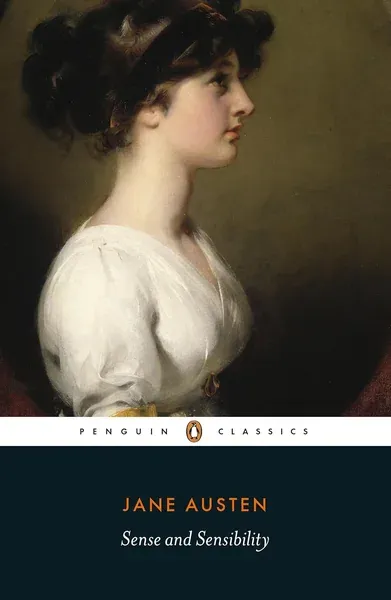
Sense and Sensibility is Jane Austen's debut novel, first published in 1811, following sisters Elinor and Marianne Dashwood as they navigate love, loss, and financial precarity after being displaced from their family estate. Britannica calls it a "classic of English literature," and its sharp, satirical portrait of Regency society has lost none of its force — this Penguin Classics reissue, with an introduction by Ros Ballaster, gives new readers a well-supported entry point.
LuvemBooks Verdict
Best for
Readers coming to Austen's debut for the first time who want both the novel itself and scholarly grounding — particularly students or book-club members drawn to fiction that uses romantic plots to argue about how women should (and must) navigate a world that grants them little economic power.
Worth it if
Worth reading if you value a novel whose central contrast — emotional restraint against open passion — is pressed with genuine philosophical seriousness rather than used as a simple moral lesson, and you are willing to meet a more inward, muted emotional register than Austen's later comedies tend to offer.
Skip if
Skip it if you are drawn primarily to sparkling back-and-forth romantic repartee, as Elinor's suffering is largely internalised and some readers find Marianne's resolution — her eventual marriage to Colonel Brandon — a less convincing emotional payoff than Austen achieves elsewhere.
What readers & critics say
Britannica confirms it as "a classic of English literature," describing it as "pointedly satirical" and "comic" in its depiction of early nineteenth-century middle-class life. Mental Floss notes that an anonymous 1812 review in The Critical Review called it "highly pleasing" and "just long enough," while the AV Club observes that, among Austen's works, Sense and Sensibility "remains a little less loved" than Pride and Prejudice.
“Coughlan's smart and nuanced narration, in which she gives voice to the Dashwood family and their acquaintances, makes it a decent addition to a crowded market.”
— The Guardian“Classic novel is rich in romance and humor.”
— Common Sense MediaAsk LuvemBooks
Was this helpful?
- Is it worth reading?
- For readers willing to engage with a more inward, muted emotional register than Austen's later comedies, Sense and Sensibility delivers genuine philosophical seriousness — the contrast between Elinor's restraint and Marianne's passion is pressed as a real argument about women's autonomy, not flattened into a simple moral lesson. The satirical machinery is precise: secondary figures like Lucy Steele, Mrs. Jennings, and the Dashwood half-brother John and his wife Fanny ground the romantic plots in sharp social critique. Readers should, however, go in knowing that the novel's tone is more subdued than Pride and Prejudice, and that Marianne's eventual marriage to Colonel Brandon divides opinion — that dissatisfaction is a recurring thread in reader responses.
- Similar books
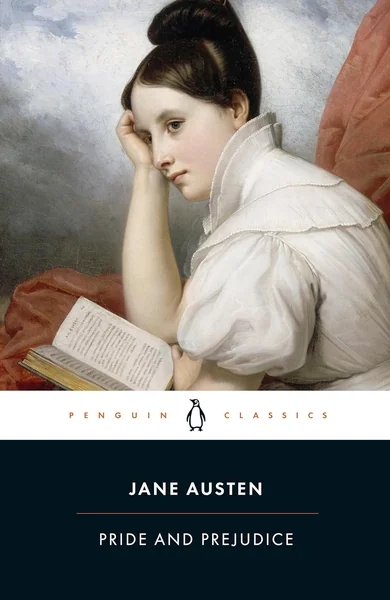
- Readers drawn to Sense and Sensibility's blend of romantic plots and social critique are well served by the curated list below. Pride and Prejudice — Austen's next published novel and her most celebrated work — offers a sharper comic register through Elizabeth Bennet and Darcy's sparring courtship, and is the natural next read for anyone coming to Austen for the first time. Persuasion, also by Austen, is frequently cited as a more emotionally mature companion piece, tracing a second-chance romance with a quieter, more melancholy tone that suits readers who responded to Elinor's restrained interiority. For Victorian literary fiction with comparable social and psychological range, Middlemarch by George Eliot and Jane Eyre by Charlotte Brontë both reward the same kind of reader; Wuthering Heights by Emily Brontë offers Marianne's brand of unguarded romantic passion taken to a far darker extreme. Georgette Heyer's Cotillion provides a lighter, Regency-set alternative for readers who want the period manners without the philosophical weight.
- Who should read this?
- This edition is particularly well matched to students and book-club members who want both the novel and scholarly grounding — Ros Ballaster's introduction provides historical and literary context that casual readers can skip but that rewards those engaging with Austen's work critically. Beyond the classroom, it suits readers drawn to fiction that uses romantic plots to interrogate real constraints: the novel's central argument is about how women navigate a world that grants them very little economic power, and Austen presses that argument without reducing either Elinor or Marianne to a caricature. Readers who prefer high-energy romantic comedy or want a clear emotional payoff from every arc may find this a less satisfying fit.
- About Jane Austen
- Jane Austen was an English writer known primarily for her six novels, which implicitly interpret, critique, and comment on the English landed gentry at the end of the 18th century.
- Are the secondary characters worth noting?
- The secondary cast is one of the novel's genuine strengths. Lucy Steele — whose secret engagement to Edward Ferrars is the engine of Elinor's suffering — is precisely drawn as a calculating social climber. John Dashwood and his wife Fanny embody self-serving landed gentry who rationalise their own meanness with impressive ingenuity. Mrs. Jennings, ingratiating but not unkind, adds a layer of social comedy. Together these figures do real satirical work: they are not backdrop but the mechanism through which Austen critiques the economic and social structures that constrain the Dashwood sisters.
- Where should I start with Austen?
- Most readers and critics point to Pride and Prejudice as the most accessible entry point — its comic energy and the immediate appeal of Elizabeth Bennet and Darcy's courtship make it easier to read on first encounter. Sense and Sensibility, as Austen's actual debut, offers a slightly more demanding experience: the emotional register is quieter and the central pleasures are more philosophical. A reader who has already enjoyed Pride and Prejudice will likely find Sense and Sensibility more rewarding for the contrast it provides.
Summarize this book
Follow up
Synthesized from verified book data & published reviews · How we review
What would you like to know about Sense and Sensibility?
Answers come from our editorial notes on this book. If we haven't covered something, we'll say so.
Readers often ask
Our Review
We review the evidence: published critics, reader verdicts and BookTube reviews, gathered and weighed with AI assistance and edited by LuvemBooks, rather than one reader's first-hand take.
What the Novel Is — and What It Does
Its Place in the Canon
What Austen Does Well
Genuine Limitations and Points of Debate
The Penguin Classics Edition — Scholarly Context
Sources & Further Reading
The key facts and claims in this review are grounded in the retrieved, verified sources listed below.
- Cited in this review
- 1
janeaustenpage.com
- 2
link.springer.com
- 3
penguinrandomhouse.com
- Further reading
- 4
Jane Austen, LuvemBooks
- 5
- 6
en.wikipedia.org
- 7
- 8
- 9
thebookescape.com
- 10
- 11
- 12
salempress.com
- 13
- 14
Age & Reading Level
Recommended age
Adult
who it suits
Skip if you want sparkling romantic repartee and a clear, emotionally satisfying resolution for every heroine.
Reader reviews
Be one of the first readers to answer.
Read it? Was it right for you?
Books like Sense and Sensibility
Curated picks for readers who enjoyed Sense and Sensibility, with our reasoning for each match.
More by Jane Austen

If you liked Sense and Sensibility


