
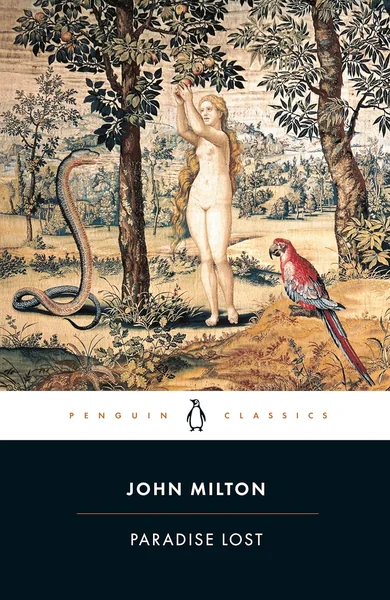
At a glance
Paradise Lost
by John Milton
LuvemBooks Verdict
Best for: Students, first-time readers seeking scholarly support, and returning readers who want to engage seriously with one of the greatest and most demanding poems in the English language — particularly in this Penguin Classics edition with John Leonard's editorial introduction and apparatus.
Worth it? Skip it? Read the full verdict →Ask LuvemBooks
Was this helpful?
- Is it worth reading?
- For readers prepared to engage with its demands, Paradise Lost is among the most rewarding works in the English literary canon — a poem whose arguments about free will, disobedience, and redemption have lost none of their force after more than three and a half centuries. Its portrayal of Satan alone has generated productive interpretive disagreement across centuries of scholarship, and the treatment of Adam and Eve traces their innocence, transgression, and growing self-awareness with genuine psychological complexity. The honest caveat, as The Guardian has noted, is that this is a poem many readers admire more easily than enjoy — its elaborately Latinate syntax, dense biblical and classical allusions, and consistently elevated register place real demands on any reader. Those who persevere, particularly with the scholarly support of John Leonard's editorial apparatus in this Penguin Classics edition, will find a work that has provoked, inspired, and divided readers for centuries.
- Who should read this?
- Paradise Lost is best suited to readers with a genuine appetite for philosophical and theological ideas — free will, predestination, moral consequence, and redemption — and a willingness to engage with the formal demands of seventeenth-century blank verse. Students of English literature, theology, or intellectual history will find it essential; so will readers drawn to the centuries-long critical debate surrounding Satan as a literary character. This Penguin Classics edition, with John Leonard's editorial introduction and apparatus, is particularly appropriate for general readers approaching the poem for the first time with scholarly support, as well as those returning to the text with renewed purpose. Readers expecting narrative momentum in a modern sense, or those who find Latinate syntax and dense classical allusion a barrier rather than a feature, may find the experience more admirable than enjoyable.
- Similar books
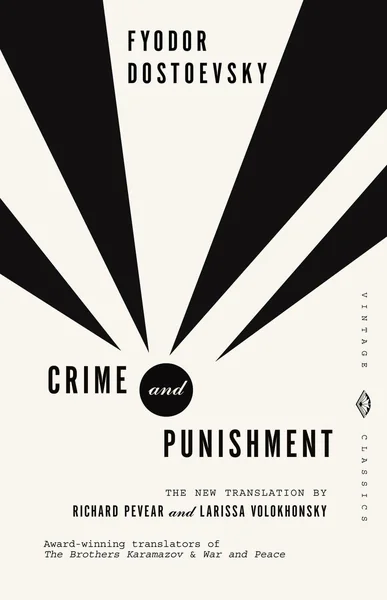
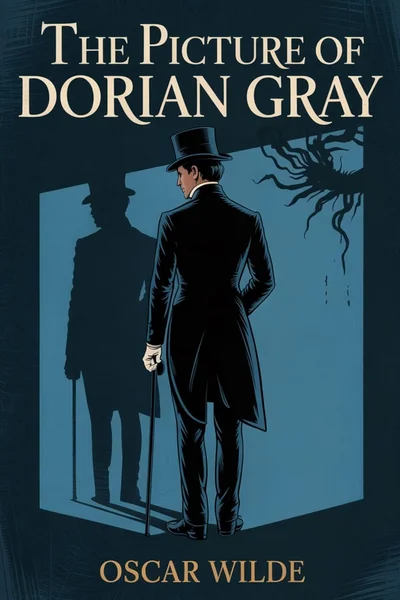
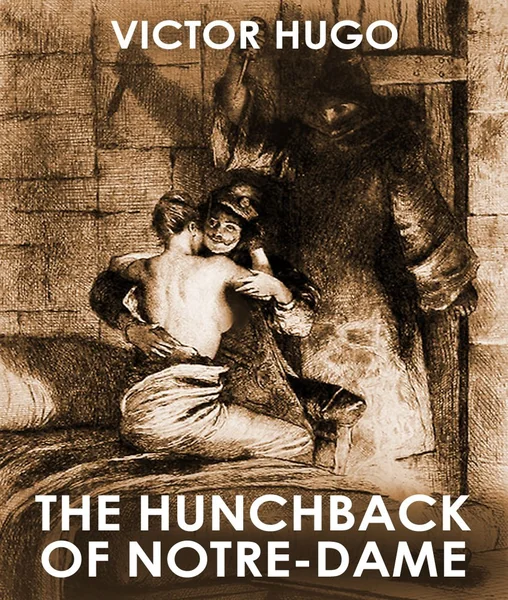
- Readers drawn to Paradise Lost's grand moral scope and its engagement with sin, damnation, and spiritual ambition will find rich company in several other landmark works. Dante Alighieri's The Divine Comedy is the most direct predecessor — another vast theological epic traversing Hell, Purgatory, and Heaven — while Johann Wolfgang von Goethe's Faust explores a similarly Faustian bargain with disobedience and damnation. Percy Bysshe Shelley's Prometheus Unbound engages directly with the Miltonic Satan as heroic rebel. For readers drawn to the theme of beauty, corruption, and moral consequence in a more novelistic register, Oscar Wilde's The Picture of Dorian Gray — available in the LuvemBooks catalogue — is a natural companion, as is Victor Hugo's The Hunchback of Notre Dame, which shares the poem's interest in grand tragic figures caught between aspiration and fall.
- About John Milton
- John Milton was an English poet, polemicist, and civil servant.
- What are the main themes?
- Paradise Lost engages free will, predestination, obedience, moral consequence, and the possibility of redemption as its central philosophical concerns — treating them not as background theology but as the poem's living argumentative core. Milton moves his narrative through vast cosmic terrain — from Hell's depths to Heaven's courts to the Garden of Eden — to dramatise what it means for humanity to choose, to disobey, and ultimately to be offered salvation through Christ. The portrayal of Satan raises further questions about the nature of ambition, pride, and heroism that centuries of readers have debated without resolution. The poem ends on a note of genuine hope, giving its immense theological scope an emotionally resonant conclusion.
- How did it influence the Romantics?
- Paradise Lost had a profound influence on the Romantic poets, who engaged intensely with the poem — particularly its portrayal of Satan as a grandly ambitious rebel figure. William Blake, Lord Byron, Percy Bysshe Shelley, and William Hazlitt all read Satan as a heroic character, a interpretation that shaped much of the Romantic tradition's interest in the transgressive individual. Blake famously suggested that Milton was "of the Devil's party without knowing it," a provocation that has never stopped generating critical debate. The poem's impact extended well beyond the Romantics: it has remained a cornerstone of literary and theological discourse from the seventeenth century to the present.
Summarize this book
Follow up
Synthesized from verified book data & published reviews · How we review
Press Enter to ask. Answers come from our editorial Q&A — start typing to see related questions.
Age & Reading Level
Recommended age
Adult
Reading level
Adult
3 content notes · who it suits
Content to know about
Skip if you're looking for fast-paced narrative or modern prose fiction rather than demanding seventeenth-century verse.
Editorial Review
Milton's Paradise Lost, presented here in the Penguin Classics edition edited and introduced by John Leonard, is widely considered the greatest epic poem in the English language — a work of over ten thousand lines that retells the biblical story of Satan's rebellion, the temptation of Adam and Eve, and humanity's expulsion from the Garden of Eden, while grappling with free will, obedience, and the possibility of redemption.
Read the Full ReviewBooks like Paradise Lost
Curated picks for readers who enjoyed Paradise Lost, with our reasoning for each match.
If you liked Paradise Lost
Why It’s Trending
Paradise Lost Movie Adaptation Announced for 2026 by AI Production Company Ex Machina
A film adaptation of Milton's epic poem was announced in April 2026 by AI production company Ex Machina, with a release date now set. It's a project many thought would never happen given the sheer cosmic scale of the story — which makes it big news for book lovers and movie fans alike.