
8 min read
4.5
· 6,866 Amazon ratingsShare This Review
Paradise Lost by John Milton Review: A Monumental Epic of Humanity's Fall
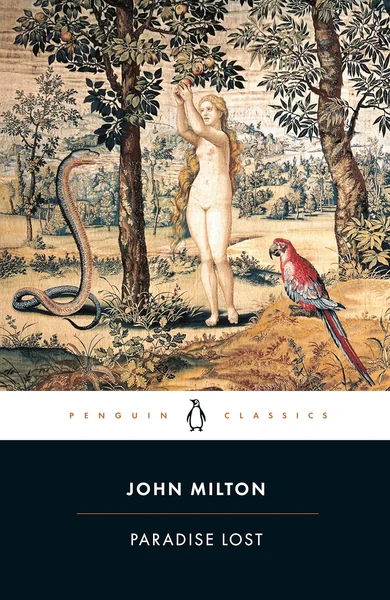
Milton's Paradise Lost, presented here in the Penguin Classics edition edited and introduced by John Leonard, is widely considered the greatest epic poem in the English language — a work of over ten thousand lines that retells the biblical story of Satan's rebellion, the temptation of Adam and Eve, and humanity's expulsion from the Garden of Eden, while grappling with free will, obedience, and the possibility of redemption.
LuvemBooks Verdict
Best for
Students, first-time readers seeking scholarly support, and returning readers who want to engage seriously with one of the greatest and most demanding poems in the English language — particularly in this Penguin Classics edition with John Leonard's editorial introduction and apparatus.
Worth it if
You are prepared to meet Milton on his own terms — willing to slow down, sit with elaborately Latinate syntax and dense classical and biblical allusion, and engage with profound questions of free will, disobedience, and redemption that have lost none of their force in three and a half centuries.
Skip if
Readers expecting modern narrative momentum or an accessible page-turner should skip it — as The Guardian has plainly observed, Paradise Lost is, for many, a poem to admire rather than enjoy, and the full twelve-book text makes no concessions to impatience.
What readers & critics say
Wikipedia describes Paradise Lost as Milton's masterpiece and credits it with solidifying his standing as one of the greatest English poets, noting that its influence on literature and theology has been immense from the seventeenth century to the present. The Guardian, reviewing an adaptation of the poem, noted candidly that "for many, Milton's epic is a poem to admire rather than enjoy," acknowledging the real intellectual and linguistic demands the text places on readers.
“For many, Milton's epic is a poem to admire rather than enjoy.”
— The GuardianAge & Reading Level
Recommended age
Adult
Reading level
Adult
3 content notes · who it suits
Content to know about
Skip if you're looking for fast-paced narrative or modern prose fiction rather than demanding seventeenth-century verse.
Paradise Lost by John Milton is Trending
Paradise Lost Movie Adaptation Announced for 2026 by AI Production Company Ex Machina
A film adaptation of Milton's epic poem was announced in April 2026 by AI production company Ex Machina, with a release date now set. It's a project many thought would never happen given the sheer cosmic scale of the story — which makes it big news for book lovers and movie fans alike.
For years, Hollywood considered Paradise Lost basically unfilmable — the story spans Heaven, Hell, and Eden, and pulling that off was thought to be too expensive and too ambitious. That changed in April 2026, when AI production company Ex Machina announced a movie adaptation with an actual release date attached. The announcement has people going back to the source material to see what all the fuss is about.
This is the kind of news that tends to send classic books flying off shelves (or into digital carts). Readers who've always meant to tackle Milton but kept putting it off suddenly have a reason to finally do it — before the movie arrives and everyone's talking about it. And for those who do dive in, the Penguin Classics edition edited by John Leonard is a great starting point, with an introduction that actually helps you get your footing in the poem's epic scope.
If you've been curious about Paradise Lost but felt intimidated, now's genuinely a good time to pick it up. The story — Satan's rebellion, the fall of Adam and Eve, the question of free will versus obedience — is exactly the kind of big, dramatic material that translates well to screen. Reading it first means you'll have a lot more to say when everyone's debating the film.
In This Review
- What Works & What Doesn't
- What the Poem Is and What It Does
- Significance and Place in the Canon
- Strengths: Linguistic, Philosophical, and Characterological
- A Genuine Challenge: Accessibility and Density
- Who This Edition Is For
What Works & What Doesn't
What Works
- Widely considered Milton's masterpiece and one of the most significant poems in the English language, with a centuries-long critical and artistic legacy
- Engages profound themes — free will, predestination, moral consequence, and redemption — with sustained philosophical seriousness
- Satan is one of the most complex and debated characters in literary history, generating productive interpretive disagreement across centuries of scholarship
- John Leonard's editorial introduction and apparatus in this Penguin Classics edition provides scholarly grounding for new and returning readers
- The poem ends on a note of genuine hope, giving its vast theological scope an emotionally resonant conclusion
What Doesn't
- The elaborately Latinate syntax, dense classical and biblical allusions, and consistently elevated register make it, as The Guardian has noted, a poem many readers admire more easily than enjoy
- The full twelve-book poem demands considerable patience and prior familiarity with seventeenth-century verse — readers seeking narrative momentum in a modern sense may find the experience challenging
What the Poem Is and What It Does
Significance and Place in the Canon
Strengths: Linguistic, Philosophical, and Characterological
A Genuine Challenge: Accessibility and Density
Who This Edition Is For
Frequently Asked Questions
Sources & Further Reading
The key facts and claims in this review are grounded in the retrieved, verified sources listed below.
- Cited in this review
- 1
John Milton, Open Library, (1667)
- 2
milton.host.dartmouth.edu
- 3
fivebooks.com
- 4
redbulltheater.com
- Further reading
- 5
John Milton, Wikipedia
- 6
en.wikipedia.org
- 7
gutenberg.org
- 8
- 9
- 10
salempress.com
- 11
- 12
thoughtco.com
Related Reviews
Reviews of books we picked for readers who enjoyed Paradise Lost.
Reader Comments
No comments yet
Be the first to share your thoughts!