BOOKS
Published

Read Time

5 min read

Reader rating

4.8

· 58 Amazon ratings
reader ratings, not a LuvemBooks score
Curated & edited by

LuvemBooks Editorial

How we create our reviews →
Share This Review

The Young VC's Handbook by Sakib Jamal Review: Tactical Career Guide for Aspiring Investors

The Young VC's Handbook is an independently published, 342-page tactical reference for newcomers to venture capital, written by Sakib Jamal — a Cornell University alumnus, vice president at Crossbeam Venture Partners, and Forbes 30 Under 30 honoree. Drawing on contributions from multiple practitioners in the VC ecosystem, the book is designed to deliver actionable, ground-level guidance for those entering or advancing in the industry. This review is based on the book's documented content, positioning, and published reception — not hands-on application.

LuvemBooks Verdict

Best for

Early-career venture capital professionals — analysts, associates, and aspiring investors — who need a structured, practitioner-built introduction to how the industry actually operates day to day, rather than a conceptual or founder-facing survey of the asset class.

Worth it if

You are new to venture capital and want a tactically oriented, multi-contributor reference that surfaces the kind of working knowledge normally passed informally through networks, written by an active VC practitioner with real industry standing.

Skip if

You are an experienced investor seeking advanced strategy, a founder looking for fundraising guidance, or someone who wants the editorial rigour and independent critical validation of a major trade publication.

Cornell University's entrepreneurship programme lists the handbook as a notable resource, reflecting the institutional recognition tied to Jamal's Forbes 30 Under 30 profile, which Cornell's coverage directly linked to the book's publication and reach (eship.cornell.edu). American Book Warehouse, a bookseller, characterises it as "widely popular" and notes "an abundance of positive reviews" from readers, though that assessment comes from a retailer's product description rather than an independent critical source (americanbookwarehouse.com).

Sources: Cornell Entrepreneurship (eship.cornell.edu), American Book Warehouse, VC Sheet
4.8from 58 Amazon ratings— reader ratings, not a LuvemBooks score
In This Review
  • What Works & What Doesn't
  • What the Book Is and Who It's For
  • The Author and Contributors
  • The Tactical Design and Content Approach
  • Reception and Credibility
  • Scope, Limitations, and Who May Find It Most Useful

What Works & What Doesn't

What Works
  • Written by a Forbes 30 Under 30 honoree and active VC practitioner at Crossbeam Venture Partners, giving the content direct professional grounding
  • Multi-contributor format draws on actionable perspectives from multiple working venture capital professionals, not just a single author's experience
  • Explicitly tactical and newcomer-focused, filling a niche that broad VC books aimed at founders or general audiences do not address
  • At 342 pages, offers substantive coverage at an accessible independent-publishing price point suited to its early-career target audience
What Doesn't
  • As an independently published title, it lacks the editorial infrastructure — developmental editing, wide peer review — of a major trade release, which some readers may notice
  • Available third-party critical reviews are limited; the most visible reception comes from contributors with a connection to the project, making fully independent assessment difficult
A tactical, practitioner-built reference that fills a genuine gap for early-career venture capital professionals, though its independent-publishing origins mean prospective readers should weigh it against its specific audience fit.
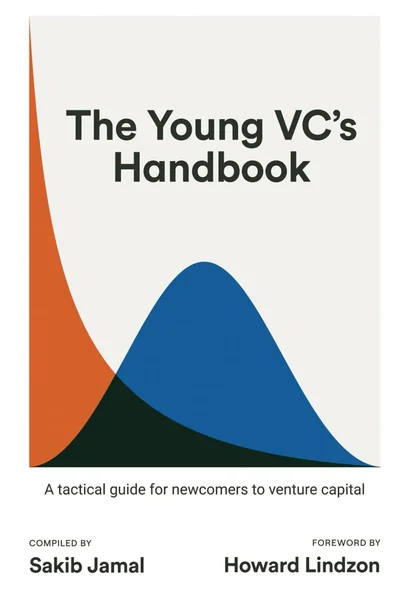
The Young VC's Handbook: A tactical guide for newcomers to venture capital_main_0

What the Book Is and Who It's For

The Young VC's Handbook is subtitled "a tactical guide for newcomers to venture capital," and its scope is precisely that: a practical resource designed to orient and equip people who are new to the VC profession. Published in March 2024 by Sakib Jamal through independent publishing, the book spans 342 pages and is structured around actionable advice rather than high-level theory. Its intended reader is someone stepping into a venture capital role — whether an analyst, associate, or aspiring investor — who needs concrete guidance on how the industry actually operates day to day, rather than a conceptual survey of the asset class.
navigated the intricate landscape of venture capital with continued success
The book is not a memoir, a history of venture capital, or an academic text. It positions itself firmly in the how-to and professional-reference category, built for career utility.

The Author and Contributors

Jamal brings direct practitioner credentials to the project. A 2019 Cornell University graduate, he serves as vice president at Crossbeam Venture Partners and was named to the Forbes 30 Under 30 list — a recognition that Cornell's news coverage noted was tied in part to this very book. That public profile lends the handbook a degree of authority unusual for an independently published title in this space.
Critically, the book is not solely Jamal's voice. As Cornell's coverage notes, contributors include some of the industry's younger practitioners who share actionable advice across the book's chapters. One Amazon contributor — who identifies as a co-author — describes Jamal as having "navigated the intricate landscape of venture capital with continued success" and characterizes the book as an "invaluable resource" built around his commitment to mentorship and knowledge-sharing. This collaborative structure means the handbook draws on a wider range of working perspectives than a single-author title would.

The Tactical Design and Content Approach

The handbook's defining quality is its tactical orientation — it is explicitly designed to give newcomers the kind of working knowledge that is rarely written down. The framing throughout, per its positioning, is actionable: the book aims to surface what practitioners actually do, not just what venture capital is. This makes it a different kind of resource than the broader business-press books about VC investing aimed at founders or general audiences.
The multi-contributor format reinforces this design intent, assembling perspectives from people at various points in early-career VC trajectories. For a field where so much institutional knowledge is passed informally through networks, a written, structured synthesis of that knowledge is the book's core value proposition.

Reception and Credibility

The book's public reception is most concretely anchored by Jamal's Forbes 30 Under 30 recognition, which Cornell University's news coverage directly linked to the handbook's publication and reach. Beyond that, a retailer summary at American Book Warehouse notes an abundance of positive reader reviews, though that characterization comes from a bookseller's product description rather than an independent critical source and should be read accordingly.
Because the book is independently published, it has not accumulated the wide-press review coverage that a major trade release would. Reader commentary on Amazon U.K. — from contributors and practitioners in the VC space — is broadly enthusiastic, though reviewers in that context have an inherent connection to the project. The most credible external signal remains the Forbes 30 Under 30 association, which represents meaningful third-party validation in the professional context this book targets.

Scope, Limitations, and Who May Find It Most Useful

As a functional reference, the true test of The Young VC's Handbook lies in how well its tactical frameworks hold up in practice — something this review, based on published sources and documented content, cannot assess firsthand. Readers should approach it as a structured entry point into practitioner knowledge, not as a substitute for firm-specific training or mentorship.
The independent-publishing format also means the book lacks the editorial apparatus — fact-checking layers, developmental editing, wide peer review — that a major publisher typically provides. Whether that affects the depth or consistency of specific sections is a question individual readers will need to judge. What the book does offer is direct access to working practitioners' perspectives, assembled by an author with real standing in the industry, at a price point accessible to early-career professionals who are the book's stated audience.

Sources & Further Reading

The key facts and claims in this review are grounded in the retrieved, verified sources listed below.

  1. Cited in this review
  2. 1
  3. 2
  4. Further reading
  5. 3