9 min read
4.6
· 27,410 Amazon ratingsShare This Review
Start with Why by Simon Sinek Review: A Purpose-Driven Leadership Classic
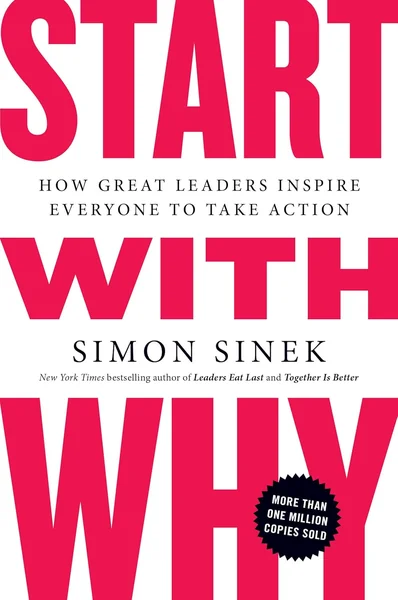
Simon Sinek's Start with Why: How Great Leaders Inspire Everyone to Take Action argues that the most influential leaders and organizations in history succeed not because of what they do or how they do it, but because they are clear about why they do it — and that clarity, communicated outward, is what drives genuine inspiration over manipulation. Originally published in hardcover in 2009 and reissued in a paperback edition with a new preface and afterword by Portfolio in 2011, the book draws on case studies including Martin Luther King Jr., Steve Jobs, John F. Kennedy, and Apple to build its central framework: the Golden Circle. According to NPD BookScan data, it ranked as the bestselling leadership book by printed paperback copies sold in the mid-2016 to mid-2017 period. Business readers, aspiring leaders, and professionals in sales and organizational culture represent the book's core audience, though those seeking granular operational tools may find the framework's broad scope a limitation.
LuvemBooks Verdict
Best for
Managers, executives, and sales or marketing professionals who are new to purpose-driven leadership ideas and want a single, memorable conceptual framework — the Golden Circle — to introduce across a team or use to reorient how they present their work to clients.
Worth it if
The core thesis of leading with purpose is new to you, or you need a shared, instantly communicable language for why-first thinking to align a team or reshape an organization's outward communication.
Skip if
You already have a strong grounding in organizational psychology or leadership theory and are looking for novel empirical research or a detailed, step-by-step operational playbook for building a purpose-led culture — the book's scope is primarily philosophical and evangelical, not prescriptive.
What readers & critics say
Neil Gaught's review (neilgaught.com) describes it as one of the most influential books in the crowded genre of leadership literature, crediting Sinek's argument — that leaders who articulate a clear sense of purpose are more likely to inspire loyalty and achieve long-term success — as "as simple as it is compelling." Deliberate Owl (deliberateowl.com) offers the most consistent critical note found in the retrieved sources, judging the book too long, flagging repeated stories and rambling sections, and finding it lacking in practical examples and actionable steps.
Sources: Neil Gaught, Deliberate Owl, Cranfield University Business Book Review, Sonya Noonan, Berczuk.comAsk LuvemBooks
Was this helpful?
- Is it worth reading?
- For readers new to purpose-driven leadership thinking, Start with Why delivers genuine value: the Golden Circle is immediately accessible, the case studies — Martin Luther King Jr., Steve Jobs, Apple, JFK — are richly drawn and consistently reinforce the central argument, and the chapter grounding the Why-first approach in neuroscience adds structural credibility beyond storytelling. The book's sustained commercial impact — 171,000 printed paperback copies sold in a single year-long NPD BookScan tracking period more than seven years after publication — reflects how thoroughly it has been absorbed into business culture. The key caveat is that the thesis is established early, and readers who arrive expecting escalating complexity or a detailed operational playbook may find the later chapters more repetitive than revelatory.
- Similar books
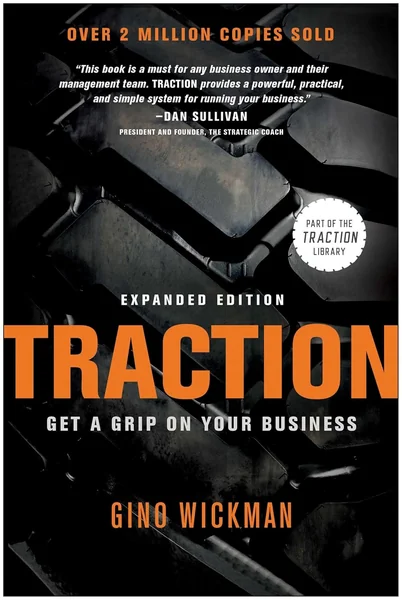
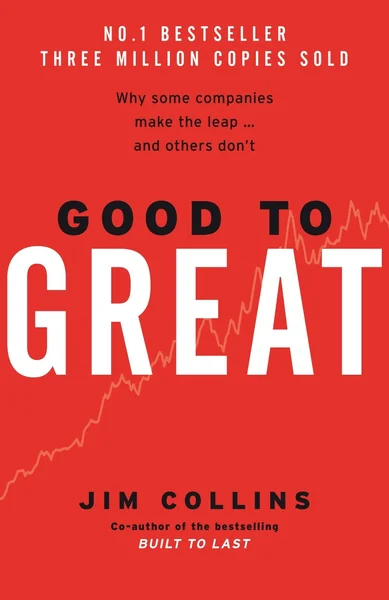
- Readers who connect with Start with Why's purpose-first framework often find strong overlap with Jim Collins' Good to Great, which similarly diagnoses what separates enduring organizations from average ones using case study evidence. Gino Wickman's Traction: Get a Grip on Your Business complements Sinek's philosophical case by offering the operational scaffolding — concrete systems for executing on vision — that Start with Why deliberately leaves to the reader. For the neuroscience angle that Sinek introduces in his biology chapter, Daniel Kahneman's Thinking, Fast and Slow provides a rigorous, full-length treatment of how the brain actually drives decision-making. Sinek's own follow-up works, Leaders Eat Last and Find Your Why, extend and operationalize the ideas introduced here, as does Daniel H. Pink's Drive: The Surprising Truth About What Motivates Us, which explores intrinsic motivation from a similarly research-informed perspective.
- Who should read this?
- Start with Why is best suited to three overlapping audiences: professionals encountering purpose-driven leadership ideas for the first time; managers and executives who want a shared conceptual language to introduce across a team; and practitioners in sales, marketing, or organizational communication who need a framework for reorienting how they present their work to clients and stakeholders. The Wikipedia reception summary cited in the review notes that Sinek's argument is regarded as particularly relevant to selling modern technology — a point that generalizes to any field where differentiation is difficult and buyer trust is the deciding variable. Readers with deep existing backgrounds in organizational psychology or leadership theory, and who are seeking novel empirical research, may find the book covers familiar ground.
- What are the main themes?
- The book's central themes are purpose, inspiration versus manipulation, and the inside-out structure of effective leadership communication. Sinek contrasts manipulation — price drops, promotions, fear — with inspiration rooted in a clear sense of Why, arguing that only the latter builds lasting loyalty. A secondary theme is the biological and neurological basis for why purpose-first communication works, explored in the chapter 'This Is Not Opinion, This Is Biology,' which grounds the Golden Circle in how the brain processes decision-making. Throughout, recurring figures like Martin Luther King Jr., Steve Jobs, Apple, and John F. Kennedy serve not as isolated anecdotes but as evidence for a single underlying pattern.
- How influential has this book been?
- Start with Why has demonstrated the kind of sustained cultural traction that is rare in the business book category. According to NPD BookScan data, it ranked as the bestselling leadership book by printed paperback copies sold during the mid-June 2016 to mid-June 2017 period — moving 171,000 copies in that single year-long window more than seven years after its original 2009 publication. The review notes that Sinek's framework has been absorbed into the vocabulary of business culture, management training, and organizational strategy, making it one of the more culturally embedded leadership titles of its era.
- Where should I start with Simon Sinek?
- Start with Why is the natural entry point into Simon Sinek's work — it introduces the Golden Circle framework that underpins everything he has written since. Readers who want to go deeper into the philosophical and organizational dimensions of leadership can follow it with Leaders Eat Last, which extends the Why-first thinking into team culture and trust, while Find Your Why offers the more practical, workshop-style companion for readers who want help discovering and articulating their own personal or organizational purpose.
Summarize this book
Follow up
Synthesized from verified book data & published reviews · How we review
Press Enter to ask. Answers come from our editorial Q&A — start typing to see related questions.
Age & Reading Level
Recommended age
Adult
Reading level
Adult
Skip if you want a detailed, step-by-step operational playbook for implementing a purpose-driven culture rather than a philosophical case for why purpose matters.
Our Review
What the Book Argues and How It Is Structured
Significance and Cultural Reach
Core Strengths: Case Studies and the Clarity of the Framework
Genuine Limitations: Repetition and Depth of Prescription
Who This Book Is For
Sources & Further Reading
The key facts and claims in this review are grounded in the retrieved, verified sources listed below.
- Cited in this review
- 1
- 2
en.wikipedia.org
- 3
- Further reading
- 4
- 5
rpsglearniverse.com
- 6
- 7
- 8
- 9
- 10
- 11
- 12
pushbusinesstraining.com
- 13
johnolivant.com
Books like Start with Why
Curated picks for readers who enjoyed Start with Why, with our reasoning for each match.
If you liked Start with Why