9 min read
4.8
· 58 Amazon ratingsShare This Review

Our review
The Young VC's Handbook by Sakib Jamal Review: Tactical Career Guide for Aspiring Investors
The Young VC's Handbook is an independently published, 342-page tactical reference for newcomers to venture capital, written by Sakib Jamal — a Cornell University alumnus, vice president at Crossbeam Venture Partners, and Forbes 30 Under 30 honoree. Drawing on contributions from multiple practitioners in the VC ecosystem, the book is designed to deliver actionable, ground-level guidance for those entering or advancing in the industry. This review is based on the book's documented content, positioning, and published reception — not hands-on application.
LuvemBooks Verdict
Best for
Early-career venture capital professionals — analysts, associates, and aspiring investors — who need a structured, practitioner-built introduction to how the industry actually operates day to day, rather than a conceptual or founder-facing survey of the asset class.
Worth it if
You are new to venture capital and want a tactically oriented, multi-contributor reference that surfaces the kind of working knowledge normally passed informally through networks, written by an active VC practitioner with real industry standing.
Skip if
You are an experienced investor seeking advanced strategy, a founder looking for fundraising guidance, or someone who wants the editorial rigour and independent critical validation of a major trade publication.
What readers & critics say
Cornell University's entrepreneurship programme lists the handbook as a notable resource, reflecting the institutional recognition tied to Jamal's Forbes 30 Under 30 profile, which Cornell's coverage directly linked to the book's publication and reach (eship.cornell.edu). American Book Warehouse, a bookseller, characterises it as "widely popular" and notes "an abundance of positive reviews" from readers, though that assessment comes from a retailer's product description rather than an independent critical source (americanbookwarehouse.com).
Sources: Cornell Entrepreneurship (eship.cornell.edu), American Book Warehouse, VC SheetAsk LuvemBooks
Was this helpful?
- Is it worth reading?
- For its stated audience — analysts, associates, and aspiring venture capital investors who are new to the profession — The Young VC's Handbook fills a genuine gap that broader VC titles aimed at founders or general audiences do not address. Jamal's Forbes 30 Under 30 recognition and his active role as a vice president at Crossbeam Venture Partners lend the content direct professional grounding, and the multi-contributor format widens the range of working perspectives on offer. The main caveat is that, as an independently published title, it lacks the developmental editing and wide peer-review layers of a major trade release, and fully independent critical reviews are limited. Readers should approach it as a structured entry point into practitioner knowledge rather than a substitute for firm-specific training or mentorship.
- Similar books
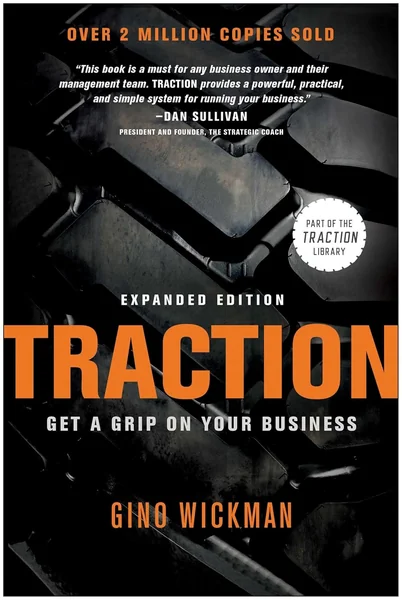
- Readers drawn to The Young VC's Handbook for its career-building and strategic-thinking orientation may also find value in Start with Why by Simon Sinek, which tackles the foundational leadership question of purpose-driven decision-making, and Traction by Gino Wickman, a practical operational framework for building and scaling organisations — both useful complements for early-career professionals moving into high-growth environments. For those wanting to go deeper into the mechanics of VC deals and the broader landscape of venture capital, Venture Deals by Brad Feld and Jason Mendelson and The Power Law by Sebastian Mallaby are widely cited reference points, and Zero to One by Peter Thiel remains a canonical text on startup thinking from the investor's perspective — though none of these three are currently in the LuvemBooks catalogue.
- Who should read this?
- The Young VC's Handbook is written specifically for people entering or advancing in the venture capital profession — analysts, associates, and aspiring investors who need concrete, day-to-day working guidance rather than a high-level conceptual survey of the asset class. It is not aimed at founders seeking funding, nor at general business readers looking for a history of venture capital. Someone with no prior VC experience who is about to step into their first role, or who is actively trying to break into the industry, represents the book's core reader. The multi-contributor format also makes it relevant to early-career practitioners who want exposure to a range of working perspectives from peers at similar career stages.
- About Sakib Jamal
- Sakib Jamal is the author of The Young VC's Handbook, a practical guide designed to help early-career professionals navigate venture capital and leadership roles. The book distills insights on career development and strategic decision-making for those entering or advancing in high-growth professional environments.
- What's this book about?
- The Young VC's Handbook is a tactical, practitioner-built reference designed to give newcomers to the venture capital profession the ground-level working knowledge that is rarely written down. Published in March 2024, it spans 342 pages and covers how the VC industry actually operates day to day — from the perspective of an analyst, associate, or aspiring investor entering the field. Rather than surveying venture capital as a concept or telling Jamal's personal story, the book is structured as actionable how-to guidance, with contributions from multiple working professionals across the VC ecosystem.
- What are the main themes?
- The central themes of The Young VC's Handbook are professional orientation, tactical career development, and the democratisation of institutional knowledge in venture capital. A recurring concern is that so much practical VC wisdom is passed informally through networks — the book's purpose is to synthesise that tacit knowledge into a structured, written resource. Other threads include actionable decision-making frameworks, the mechanics of how VC firms operate at ground level, and the value of a multi-practitioner perspective over any single individual's experience.
- What format or source is it?
- The Young VC's Handbook is an independently published book, released in March 2024 by Sakib Jamal, running to 342 pages in standard print format. Because it is independently published rather than issued by a major trade house, it has not accumulated wide press recognition; the most credible external validation is Jamal's Forbes 30 Under 30 recognition and Cornell University's news coverage linking that honour to the book. Readers should note that the book lacks the developmental editing and peer-review infrastructure of a traditional trade release.
Summarize this book
Follow up
Synthesized from verified book data & published reviews · How we review
Press Enter to ask. Answers come from our editorial Q&A — start typing to see related questions.
Age & Reading Level
Recommended age
Adult
Reading level
Adult
who it suits
Skip if you're looking for a broad conceptual history of venture capital or a founder-focused guide to raising investment.
Our Review
What the Book Is and Who It's For
The Author and Contributors
The Tactical Design and Content Approach
Reception and Credibility
Scope, Limitations, and Who May Find It Most Useful
Sources & Further Reading
The key facts and claims in this review are grounded in the retrieved, verified sources listed below.
- Cited in this review
- 1
- 2
amazon.com
- Further reading
- 3
Books like The Young VC's Handbook
Curated picks for readers who enjoyed The Young VC's Handbook, with our reasoning for each match.