


8 min read
4.4
· 1,387 Amazon ratingsShare This Review
Freakonomics by Steven D. Levitt & Stephen J. Dubner Review: A Cultural Phenomenon With Real Bite
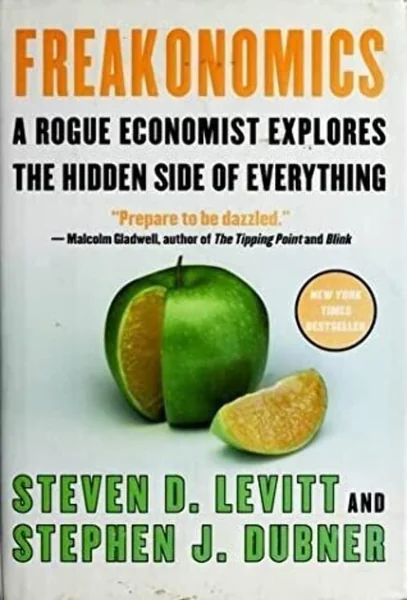
Freakonomics, the debut non-fiction collaboration between University of Chicago economist Steven D. Levitt and New York Times journalist Stephen J. Dubner, published by William Morrow on April 12, 2005, applies economic theory to a deliberately provocative range of subjects — from sumo wrestling corruption and crack-cocaine earnings to the role of legalized abortion in reducing crime — and went on to sell over 4 million copies worldwide by late 2009, spawning a multi-media franchise that redefined popular economics writing.
LuvemBooks Verdict
Best for
Curious general readers who enjoy having their assumptions challenged and want an accessible, data-driven introduction to incentive-based thinking across subjects ranging from crime and parenting to baby names.
Worth it if
You're drawn to counterintuitive arguments grounded in real data and can engage critically with contested conclusions — particularly the abortion-crime thesis — without needing the book to deliver a single unified theory.
Skip if
You're looking for a rigorous, cohesive work of economics proper or expect every provocative claim to be settled science — the episodic structure offers no sustained argument, and several core theses remain actively disputed in academic literature.
What readers & critics say
Wikipedia records that Freakonomics has been widely described as melding pop culture with economics, selling over 4 million copies worldwide by late 2009 and spawning a multi-media franchise. The Guardian's review captures the book's rhetorical engine — that incentives govern modern life, conventional wisdom is frequently wrong, and experts exploit informational advantages — and notes Levitt's standing in academic circles as "a demi-god, one of the most creative people in economics and maybe in all social science."
“Levitt is considered a demi-god, one of the most creative people in economics and maybe in all social science.”
— The GuardianAsk LuvemBooks
Was this helpful?
- Is it worth reading?
- For readers curious about how economic thinking can illuminate everyday behavior, Freakonomics remains a rewarding and genuinely mind-shifting read — it is a book that, as LuvemBooks notes, 'rewards the open-minded and is guaranteed to unsettle at least one conviction the reader arrived with.' Its chapter-by-chapter puzzle structure makes it an unusually approachable entry point into incentive-based thinking for non-specialists. That said, readers looking for a unified theoretical framework will be frustrated by its episodic structure, and those with a background in economics or social science should approach the book's more provocative claims — particularly the abortion-crime thesis — knowing they remain actively debated in the academic literature.
- Similar books
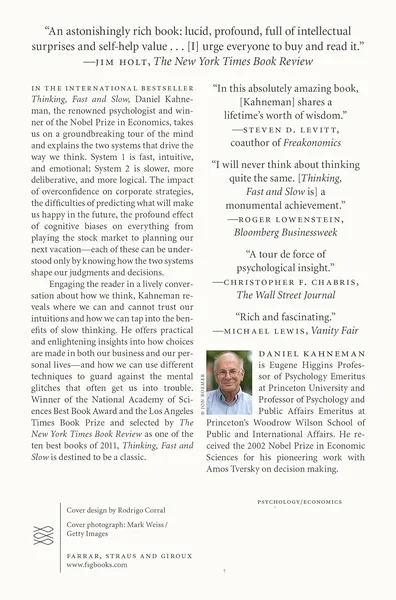
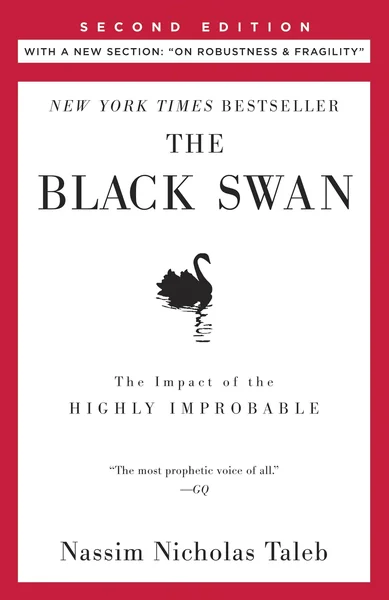
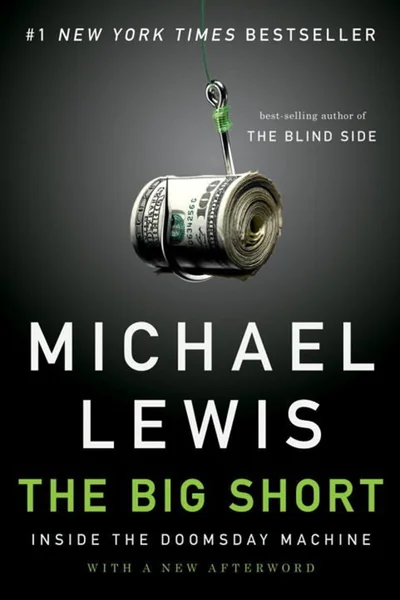
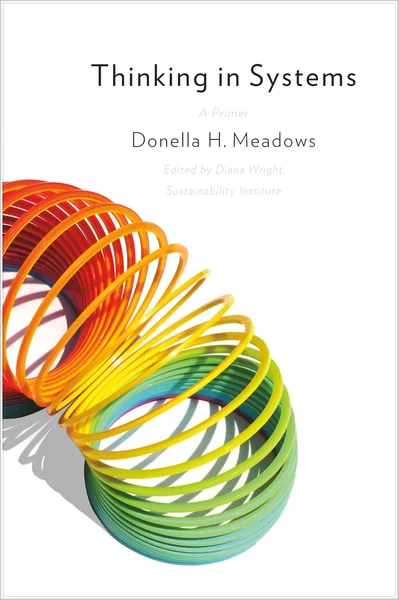
- Readers who enjoy Freakonomics tend to gravitate toward other books that use rigorous, data-driven frameworks to challenge received wisdom. Daniel Kahneman's Thinking, Fast and Slow offers a deeper psychological grounding for why human intuition so often misfires — a natural complement to Levitt and Dubner's thesis that conventional wisdom is routinely wrong. Nassim Nicholas Taleb's The Black Swan: The Impact of the Highly Improbable tackles a similarly counterintuitive subject — the outsized role of rare, unpredictable events — with the same provocateur energy. Michael Lewis's The Big Short applies sharp narrative journalism to the economics of the 2008 financial crisis, much as Freakonomics applies it to crime and social behavior. For readers who want a more systematic grounding in how economic systems actually work, Donella H. Meadows's Thinking in Systems provides a rigorous but accessible framework.
- Who should read this?
- Freakonomics is ideally suited for curious, open-minded adult readers who have found traditional economics inaccessible and want an engaging entry point into incentive-based thinking. It works especially well for readers drawn to social science, behavioral economics, or the kind of counterintuitive data journalism popularized by writers like Malcolm Gladwell and Michael Lewis. Readers with a strong academic background in economics or social science may find the book's treatment of contested claims — particularly the abortion-crime thesis — insufficiently rigorous, and those seeking a unified theoretical framework will be frustrated by its deliberately episodic structure.
- What are the book's most provocative claims?
- The book's most debated argument — covered in Chapter 4 — is that the legalization of abortion following Roe v. Wade was a primary driver of the dramatic U.S. crime decline of the 1990s, a thesis Levitt developed in a peer-reviewed paper co-authored with John Donohue. Elsewhere, the book argues that most crack cocaine street dealers earn below minimum wage because the organizational structure of a drug gang resembles a franchise with rewards concentrated at the top; that real-estate agents routinely exploit information asymmetry to the detriment of their own clients; and that the 'good parenting' behaviors promoted by the parenting industry have little measurable effect on educational outcomes. Each claim is supported by data analysis, though critics have noted the book sometimes prioritizes the surprise of a conclusion over the rigor of the path to it.
- What are the main criticisms of the book?
- Freakonomics has attracted criticism on several fronts. Israeli economist Ariel Rubinstein argued the book misrepresents economics as a discipline, blurring it with sociology and criminology rather than demonstrating what economic analysis genuinely does. The abortion-crime thesis of Chapter 4 remains actively contested in academic literature, and John Lott filed a defamation suit in 2006 against Levitt and the publisher over its treatment of his gun-crime research. Structurally, the episodic chapter format — while accessible — means the book never builds a sustained theoretical argument, and critics have noted that the Freakonomics brand of counterintuitive reasoning can, at its weakest, prioritize a surprising conclusion over analytical rigor.
- What influence has the book had?
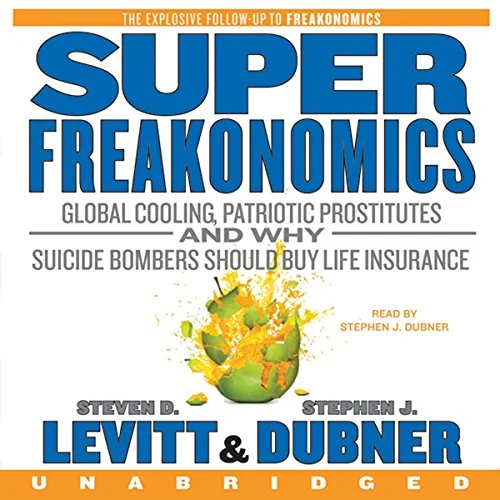
- Freakonomics is widely credited with helping establish the data-driven, counterintuitive popular non-fiction genre — the wave of books that apply rigorous analytical thinking to surprising or taboo subjects for a general audience. The book sold over 4 million copies worldwide by late 2009 and spawned a genuine multimedia franchise: a sequel (SuperFreakonomics), a feature film, a National Public Radio segment, and a long-running blog. The Guardian described Levitt as considered 'a demi-god, one of the most creative people in economics and maybe in all social science,' and the book's commercial success translated into lasting cultural influence well beyond its own pages.
Summarize this book
Follow up
Synthesized from verified book data & published reviews · How we review
Press Enter to ask. Answers come from our editorial Q&A — start typing to see related questions.
Age & Reading Level
Recommended age
Adult
Reading level
Adult
2 content notes · who it suits
Content to know about
Skip if you want a unified, rigorous economic theory rather than a collection of provocative case studies.
Our Review
What the Book Actually Is and Does
The Central Arguments and Chapter Breakdown
Reach, Significance, and Cultural Impact
Strengths: Accessibility and the Power of Incentive Thinking
Limitations and Genuine Controversies
Sources & Further Reading
The key facts and claims in this review are grounded in the retrieved, verified sources listed below.
- Cited in this review
- 1
- 2
en.wikipedia.org
- 3
- 4
mrbeland.weebly.com
- Further reading
- 5
- 6
- 7
- 8
Books like Freakonomics
Curated picks for readers who enjoyed Freakonomics, with our reasoning for each match.
If you liked Freakonomics
Why It’s Trending
Freakonomics Back in the Conversation as Readers Revisit Classic Pop-Economics
Freakonomics, the 2005 bestseller that turned economic thinking into a pop culture phenomenon, is getting fresh attention right now. With no single splashy news hook, it's the kind of book people keep returning to when they want help making sense of a confusing world.