9 min read
4.8
· 18 Amazon ratingsShare This Review
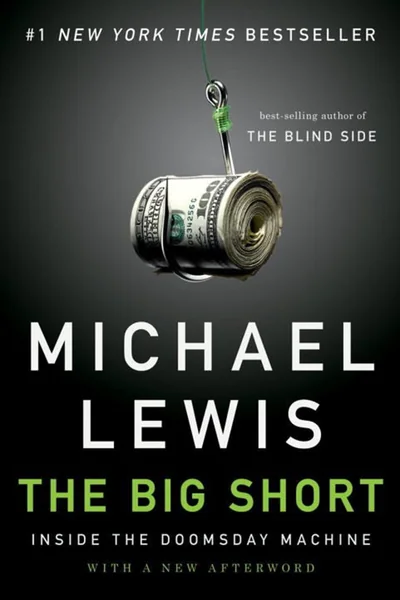
The Big Short by Michael Lewis Review: Essential Nonfiction on Wall Street's Collapse
Michael Lewis's The Big Short: Inside the Doomsday Machine is a landmark work of financial nonfiction that reconstructs the lead-up to the 2008 financial crisis through the stories of the contrarian investors who saw the collapse coming — and profited from it. Released on March 15, 2010, by W. W. Norton & Company, it spent 28 weeks on The New York Times nonfiction bestseller list, was shortlisted for the 2010 Financial Times and Goldman Sachs Business Book of the Year Award, received the 2011 Robert F. Kennedy Center for Justice and Human Rights Book Award, and served as the basis for the acclaimed 2015 film adaptation. Vanity Fair editor Graydon Carter called it "the work of our greatest financial journalist, at the top of his game" and "essential reading."
LuvemBooks Verdict
Best for
Curious general readers who want to understand how the 2008 financial crisis actually happened — told through the vivid, character-driven stories of the contrarian traders who saw it coming — without needing any prior background in finance.
Worth it if
You want one book that makes credit default swaps, CDOs, and Wall Street's structural rot genuinely comprehensible — and dramatically compelling — without wading through technical or regulatory literature.
Skip if
You're looking for a comprehensive institutional or regulatory history of the crisis — covering the full scope of Congressional oversight failures, ratings agencies, or the experiences of ordinary borrowers — rather than a selective, character-driven narrative focused on the contrarian winners.
What readers & critics say
According to Wikipedia, the book spent 28 weeks on The New York Times nonfiction bestseller list and became the basis for the widely seen 2015 film adaptation. Bookmarks.reviews synthesises critical consensus as calling it "the best book I know of about the financial catastrophe," praising Lewis for "bringing us close to the deluded and duplicitous minds that caused it," while the Guardian situates it within Lewis's body of work as a continuation of the unflinching Wall Street scrutiny he established with Liar's Poker.
Sources: Wikipedia, Bookmarks.reviews, The GuardianAsk LuvemBooks
Was this helpful?
- Is it worth reading?
- The Big Short is widely regarded as a landmark of financial journalism — it spent 28 weeks on the New York Times nonfiction bestseller list, was shortlisted for the 2010 Financial Times and Goldman Sachs Business Book of the Year Award, and received the 2011 Robert F. Kennedy Center for Justice and Human Rights Book Award. Vanity Fair editor Graydon Carter called it "the work of our greatest financial journalist, at the top of his game" and "essential reading." For general readers, its particular value is Lewis's ability to demystify instruments like credit default swaps and CDOs through character-driven narrative — a craft achievement that makes the book accessible without being reductive. The key caveat: readers seeking a comprehensive institutional or regulatory history of the crisis will find its scope deliberately bounded by the stories of its protagonists.
- Similar books
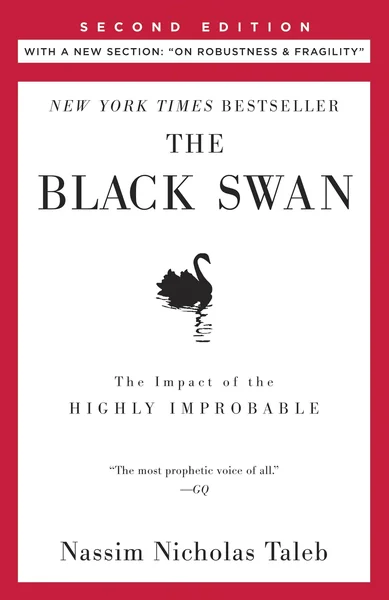
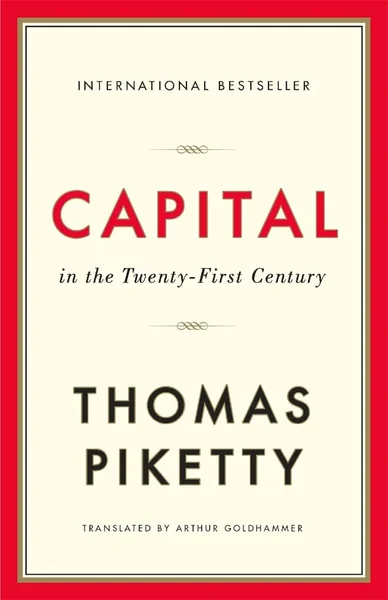
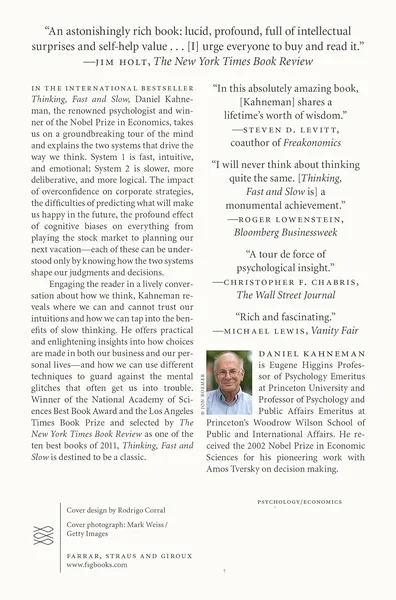
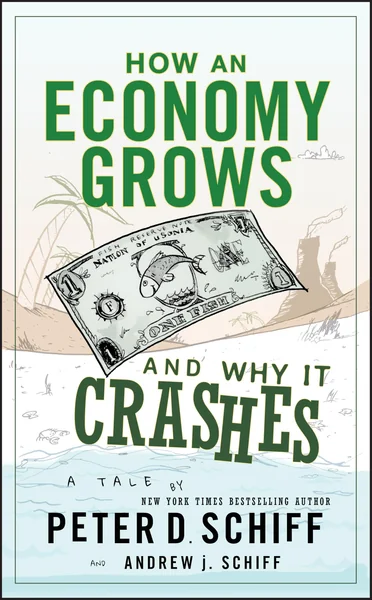
- Readers drawn to The Big Short's blend of economic insight and accessible narrative will find strong company in several related works. Nassim Nicholas Taleb's The Black Swan: The Impact of the Highly Improbable explores how rare, high-impact events blindside institutions — a natural complement to Lewis's account of Wall Street's collective failure of imagination. Daniel Kahneman's Thinking, Fast and Slow examines the cognitive biases that drive flawed financial and everyday decision-making, offering a psychological lens on the same institutional failures Lewis documents. Thomas Piketty's Capital in the Twenty-First Century takes a broader, more academic approach to systemic economic inequality, for readers who want deeper structural analysis. Peter D. Schiff and Andrew J. Schiff's How an Economy Grows and Why It Crashes uses accessible storytelling — much as Lewis does — to explain economic principles and systemic fragility. Michael Lewis's own Liar's Poker, his debut account of Salomon Brothers' bond trading culture in the 1980s, and Flash Boys, his investigation of high-frequency trading, are natural extensions for readers who want more from Lewis directly.
- Who should read this?
- The Big Short is designed for a general readership, not a specialist one — Lewis builds each financial concept from the ground up, making it suitable for curious adults with no background in finance or economics. It will resonate especially with readers interested in how systemic failures happen, how institutional incentives distort behavior, and how a small number of outsiders — like Michael Burry, Steve Eisman, and the Cornwall Capital founders — can see what the establishment cannot. It is also essential reading for anyone who has seen the 2015 film adaptation and wants the full, more detailed account. Readers seeking a comprehensive regulatory or institutional history of the 2008 crisis, rather than a character-driven narrative, will want to supplement it with other sources.
- About Michael Lewis
- Michael Monroe Lewis is an American author and financial journalist.
- Tell me about the adaptation
- The 2015 film adaptation of The Big Short was directed by Adam McKay and stars Christian Bale, Ryan Gosling, and Brad Pitt. Paramount acquired the adaptation rights in 2013, and the film brought Lewis's account to a far broader mainstream audience. It won the Academy Award for Best Adapted Screenplay and is widely credited with continuously introducing new readers to the source book. The film captures the book's irreverent tone and core characters but, by necessity, condenses the narrative — readers who have seen the film will find the book provides considerably more depth, particularly on figures like Howie Hubler and Joseph Cassano's AIG Financial Products division.
Summarize this book
Follow up
Synthesized from verified book data & published reviews · How we review
Press Enter to ask. Answers come from our editorial Q&A — start typing to see related questions.
Age & Reading Level
Recommended age
Adult
Reading level
Adult
who it suits
Skip if you want a comprehensive institutional or regulatory history of the 2008 financial crisis that covers Congressional oversight failures and the full role of ratings agencies in systemic detail.
Our Review
What the Book Is and What It Covers
Significance and Reception
What the Book Does Well: Demystifying Complexity
Lewis's Central Argument About Systemic Failure
Who the Book Is For — and Where It Has Limits
Sources & Further Reading
The key facts and claims in this review are grounded in the retrieved, verified sources listed below.
- Cited in this review
- 1
- 2
en.wikipedia.org
- 3
- Further reading
- 4
Michael Lewis, Wikipedia
- 5
- 6
adventuresincre.com
- 7
bookbrowse.com
- 8
financegates.com
- 9
- 10
- 11
summrize.com
- 12
Books like The Big Short
Curated picks for readers who enjoyed The Big Short, with our reasoning for each match.
If you liked The Big Short