Henry Hazlitt
American
1894 – 1993
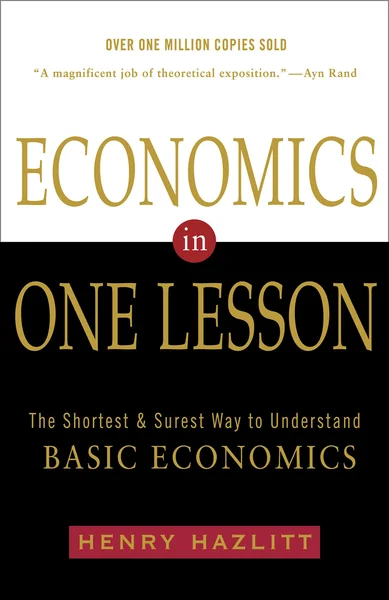
Henry Stuart Hazlitt was an American journalist, economist, and philosopher known for his advocacy of free markets and classical liberal principles. Over a career spanning more than seven decades, Hazlitt wrote extensively on business, economics, and public policy for prominent publications, including The Wall Street Journal, The Nation, The American Mercury, Newsweek, and The New York Times. He is best known for his 1946 book, Economics in One Lesson, a work grounded in the Austrian school of economics and its belief in the importance of individual liberty in economic decision-making.
On LuvemBooks, we've reviewed Economics in One Lesson.
1
Books ReviewedHenry Hazlitt books in order
17 books; 1 reviewed on LuvemBooks. Dates and covers from Amazon.
 1948Our review →
 1959The Failure of the New EconomicsAmazon ↗
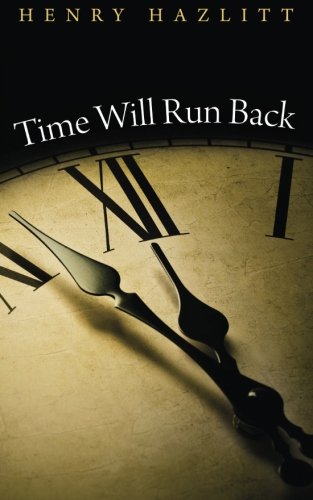 1966Time Will Run BackAmazon ↗
 1969Man vs. The Welfare StateAmazon ↗
 1973Conquest of PovertyAmazon ↗
 1977Critics of Keynesian EconomicsAmazon ↗
 1980The Gold ClauseAmazon ↗
 1984From Bretton Woods to World InflationAmazon ↗
 1988Foundations of MoralityAmazon ↗
 1995The Inflation Crisis and How to Resolve ItAmazon ↗
 1997Is Politics Insoluble?Amazon ↗
 2005Thinking as a ScienceAmazon ↗
 2008Wisdom ofAmazon ↗
 2010The Free Man's LibraryAmazon ↗
 2010What You Should Know About InflationAmazon ↗
 2010Will Dollars Save The World?Amazon ↗
 2016The Way to WillpowerAmazon ↗
Ask LuvemBooks about Henry Hazlitt
Henry Hazlitt was an American journalist and economist who made free-market economics accessible to general readers without sacrificing intellectual rigor. LuvemBooks has reviewed one of his works: Economics in One Lesson, which dismantles common economic fallacies by applying a single analytical principle — that good economics requires looking beyond the immediate, visible effects of a policy to its long-term and unseen consequences. With a reader rating of 4.6/5 across nearly 5,000 Amazon ratings, it remains one of the most widely read introductions to classical liberal economic thought.
- Where should I start?
- Economics in One Lesson is both Hazlitt's most celebrated work and the natural entry point for any new reader. It is deliberately short and structured around a single organizing idea — that economic policies must be judged by their full consequences, not just their immediate, visible effects — making it easy to read in a weekend without prior economics knowledge. Its reader rating of 4.6/5 across nearly 5,000 Amazon ratings suggests it consistently delivers on that promise.
- What's their writing style?
- Hazlitt writes with the economy and directness of a seasoned newspaper columnist: short paragraphs, plain vocabulary, and arguments built through concrete examples rather than abstraction. In Economics in One Lesson he adapts a technique from the nineteenth-century French economist Frédéric Bastiat — systematically tracing the unseen, downstream effects of economic policies — and applies it repeatedly to topics like tariffs, minimum wages, and public works. The result is a voice that feels more like a sharp editorial than a textbook, which is precisely what makes it stick with readers who would bounce off academic prose.
- Books we've reviewed
- LuvemBooks has reviewed one Hazlitt title to date. Economics in One Lesson (reader rating 4.6/5 from 4,925 Amazon ratings) is a brisk, example-driven demolition of common economic fallacies, organized around the principle that all economic consequences — visible and invisible — must be weighed together.
- What genre do they write?
- Hazlitt's reviewed work falls under Business & Economics, but it sits closer to popular economic commentary than to either academic economics or business advice. Economics in One Lesson is fundamentally a work of applied economic reasoning aimed at a general audience — closer in spirit to a long-form opinion essay than to a textbook or a management guide. Readers drawn to the history of economic ideas, libertarian political philosophy, or policy debate tend to find his work most relevant.
- What should I read after Economics in One Lesson?
- If Economics in One Lesson resonated with you, the most natural next step is Frédéric Bastiat's The Law or his essay collection Economic Sophisms — Hazlitt explicitly acknowledges Bastiat as the inspiration for his central method. For a longer treatment of free-market economics in the same tradition, Milton Friedman's Free to Choose covers similar ground with more empirical depth. If you want to go deeper into the Austrian economics that underpins Hazlitt's thinking, Ludwig von Mises's Human Action is the rigorous primary source, though it is considerably more demanding.
Who is Henry Hazlitt?
Where should I start?
What's their writing style?
Books we've reviewed
What genre do they write?
What should I read after Economics in One Lesson?
Who is Henry Hazlitt?
Henry Stuart Hazlitt (1894–1993) was an American journalist, economist, and philosopher who spent much of his career arguing for free markets and classical liberal principles in accessible, non-technical prose. He wrote for publications including The Wall Street Journal, The New York Times, and Newsweek, which gave him an unusually wide platform for economic ideas. He is best remembered today for Economics in One Lesson, a slim but influential book that has introduced generations of readers to market-oriented economic reasoning.
Follow up
What is classical liberalism?
Was Hazlitt an academic economist?
Synthesized from verified book data & published reviews · How we review
Press Enter to ask. Answers come from our editorial Q&A — start typing to see related questions.
Authors Like Henry Hazlitt
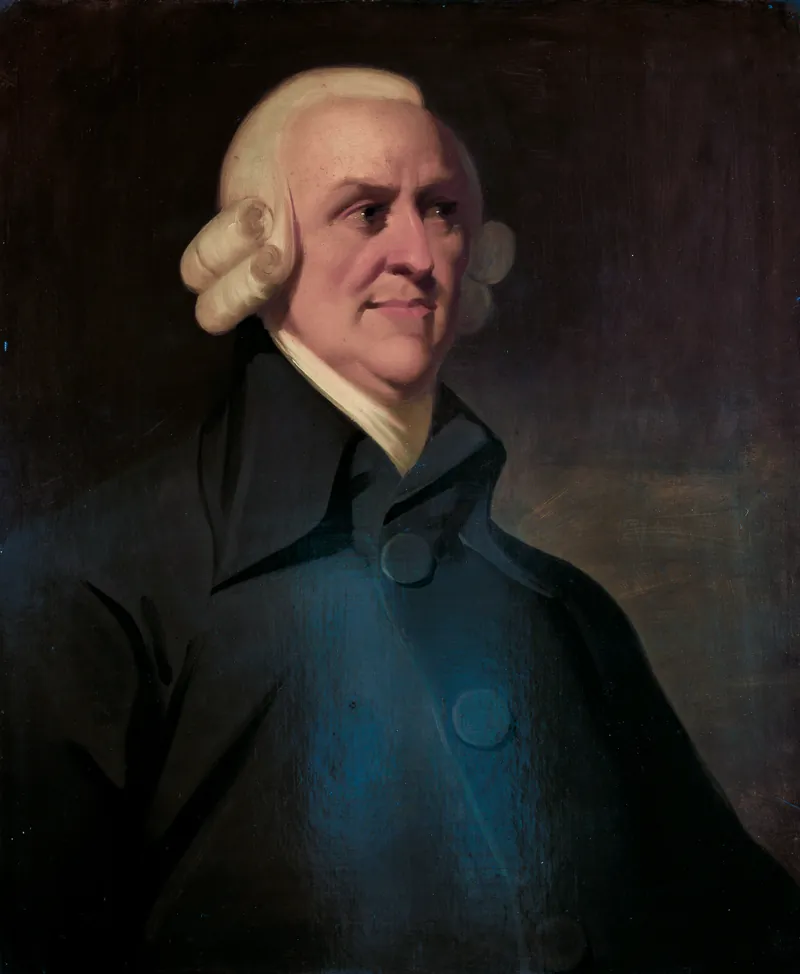
Adam Smith
Philosophy & Religion
Business & Economics
Adam Smith's The Wealth of Nations provides the foundational, historical case for free markets and the division of labour behind Hazlitt's economic framework.
1 book reviewed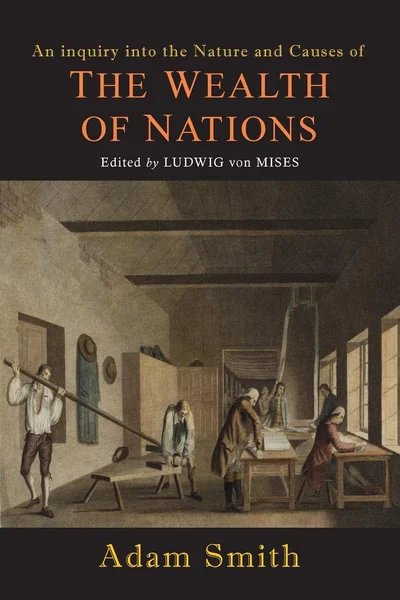

Thomas Sowell
Business & Economics
Thomas Sowell’s Basic Economics shares the same plain-English, zero-math approach to tracing policy consequences, applying that principle across far more real-world case studies in greater depth.
1 book reviewed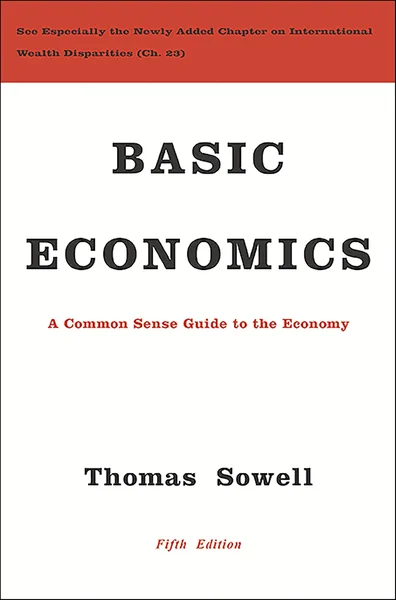
F
F. A. Hayek
Business & Economics
F. A. Hayek's The Road to Serfdom serves as an ideological partner to Hazlitt, showing where unchecked economic intervention leads politically.
1 book reviewed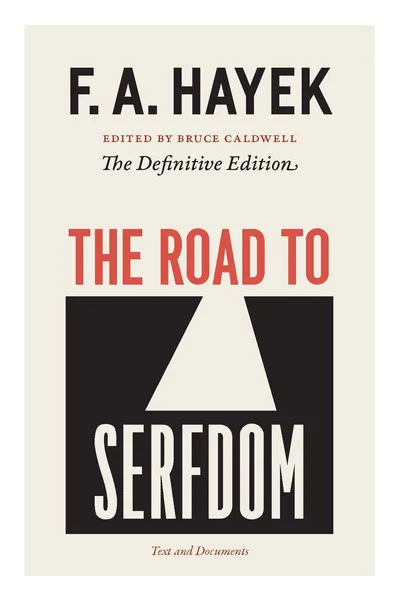

Peter D. Schiff
Business & Economics
Peter D. Schiff’s How an Economy Grows and Why It Crashes teaches the same free-market principles as Hazlitt, using an extended, story-driven fable.
1 book reviewed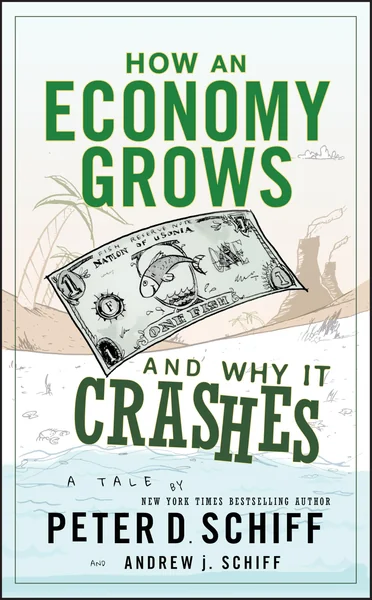
A
Andrew J. Schiff
Business & Economics
Andrew J. Schiff’s How an Economy Grows and Why It Crashes uses an extended fable to teach the same free-market principles Hazlitt covers through a visual, story-driven format.
1 book reviewedD
Daniel Kahneman
Business & Economics
Daniel Kahneman’s Thinking, Fast and Slow explores behavioral economics and cognitive biases, revealing the psychological drivers behind decision-making and economic fallacies.
1 book reviewed