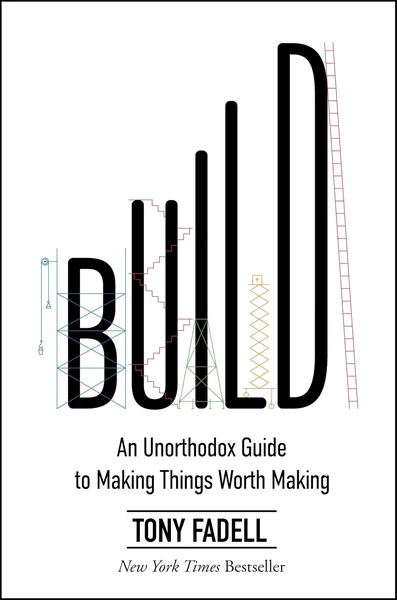
Build: An Unorthodox Guide to Making Things Worth Making – An NYT Bestselling Entrepreneurship and Product Design Manual by Tony Fadell Review: A Hardware-Centric Manual
Build: An Unorthodox Guide to Making Things Worth Making – An NYT Bestselling Entrepreneurship and Product Design Manual by Tony Fadell Review: A Hardware-Centric Manual
Tony Fadell’s 2022 manual distills thirty years of Silicon Valley experience into a practical reference for physical product builders. The book delivers specific advice for entrepreneurs, though its hardware-focused framework limits its direct applicability to software-only startups.
Readers who are hardware product managers or physical goods entrepreneurs seeking practical, mentor-like guidance grounded in decades of Silicon Valley experience.
Worth it if
Worth reading if you want actionable frameworks for product leadership and unflinching honesty about career missteps, even if some advice leans heavily on physical manufacturing constraints.
Skip if
Skip it if you work exclusively in pure-software environments or expect a strictly novel theoretical framework, as the book’s hardware-centric focus and occasional unresolved bitterness may limit its direct utility for you.
Where reviewers agree and split
Readers rate it 4.7 on Amazon. The reviews we read that discuss it in depth split on some points:
Rcrdo · Book blog: compelling personal stories and helpful lessons for builders and employees
Positive
Íñigo Medina · Book blog: best book for product entrepreneurs, though hardware bias limits software applicability
Overall verdicts are our summary of each review we read, from its headline, rating and conclusion.
What readers & critics say
Critics and readers widely praise the book as a practical, mentor-like guide for product builders (Archive, Rcrdo, Íñigo Medina), highlighting its honesty about failure and its focus on treating products as physical objects with emotional relationships. However, some reviewers note that its hardware-centric framework and occasional unresolved bitterness limit its appeal for pure-software professionals and those seeking strictly novel advice (Scott J. Pearson’s Book Review, The StoryGraph).
Tony Fadell’s Build distills thirty years of Silicon Valley experience into a practical manual for physical builders, offering honesty about professional failure and actionable leadership frameworks. While the book excels in its hardware-centric approach to manufacturing and product design, its strict reliance on physical constraints limits direct applicability for those in pure-software startups. It is a necessary, mentor-like reference for entrepreneurs navigating the tangible realities of bringing a product to market.
Is it worth reading?
It is highly recommended for managers and entrepreneurs seeking guidance grounded in decades of industry experience. The book delivers frameworks for product leadership and aligns executives and engineers through storytelling, though readers may find the focus limits its utility.
Similar books
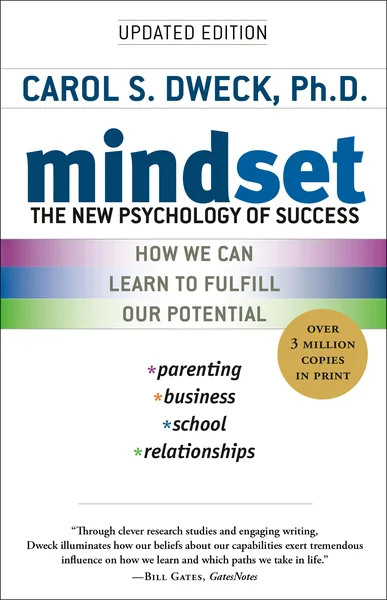
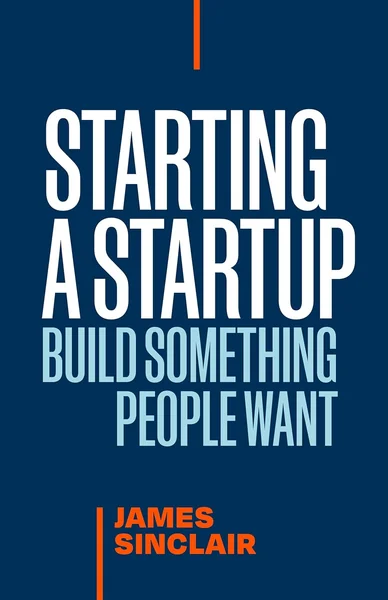
Readers interested in Fadell's hardware-centric framework will likely appreciate The Lean Startup by Eric Ries for its foundational approach to product development, The Personal MBA by Josh Kaufman for its broad business principles, and Starting a StartUp by James Sinclair for its practical entrepreneurial guidance. Those seeking to understand the psychological foundations of success may also find Carol S. Dweck's Mindset valuable for its exploration of growth and learning.
Who should read this?
The manual is best suited for managers, entrepreneurs, and leaders who value tangible results over abstract metrics. It serves as a direct guide for anyone launching a product, particularly those seeking mentor-like advice from Silicon Valley experience.
What age is it for?
This business manual is written for adults and focuses on professional mistakes, manufacturing strategy, and Silicon Valley leadership. Its complex business concepts and unflinching discussion of failure are best suited for mature readers navigating early career stages or established professionals.
What is the reading level?
The text operates at a professional adult level, utilizing industry-specific terminology and complex business frameworks without simplification. It assumes a foundational understanding of product management, manufacturing constraints, and executive leadership dynamics.
Is the audiobook worth it?
No source covers the audiobook narrator or specific audio production details. Readers seeking the full mentor-like experience may prefer the print version to fully engage with Fadell's detailed frameworks.
Summarize this book
Is it worth reading?
Who should read this?
What age is it for?
What is the reading level?
Is the audiobook worth it?
Summarize this book
Tony Fadell distills three decades of Silicon Valley into a manual for physical builders. The volume functions as an advice encyclopedia, addressing immediate professional challenges like securing funding or deciding when to quit a job, while explicitly rejecting the industry's obsession with constant reinvention in favor of established management principles.
Follow up
What are the main themes?
How does Fadell approach failure?
Synthesized from verified book data & published reviews · How we review
Ask LuvemBooks
What would you like to know about Build?
Answers come from our editorial notes on this book. If we haven't covered something, we'll say so.
Readers often ask
Our Review
We review the evidence: reader verdicts, gathered and weighed with AI assistance and edited by LuvemBooks, rather than one reader's first-hand take.
Build: An Unorthodox Guide to Making Things Worth Making – An NYT Bestselling Entrepreneurship and Product Design Manual by Tony Fadell Review: A Hardware-Centric Manual
Tony Fadell’s 2022 manual distills thirty years of Silicon Valley experience into a practical reference for physical product builders. The book delivers specific advice for entrepreneurs, though its hardware-focused framework limits its direct applicability to software-only startups.
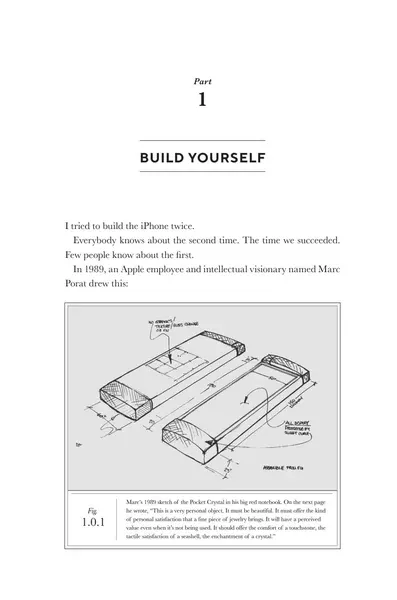
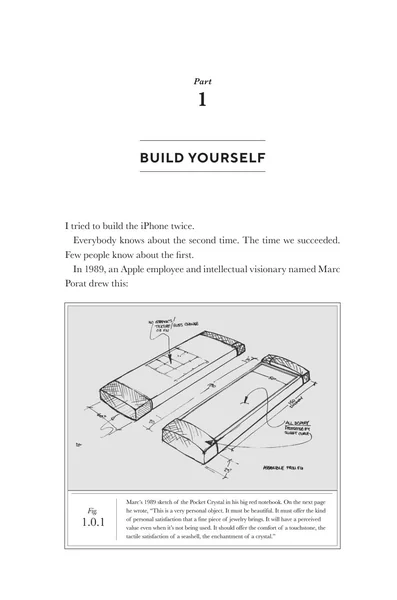
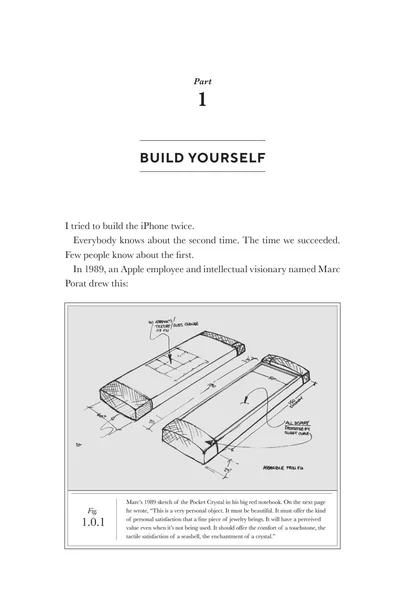
Interior page showing a chapter titled Build Yourself with a technical sketch of a rectangular device.
What the Book Covers
The volume functions as an advice encyclopedia addressing immediate professional challenges like securing startup funding or deciding when to quit a job. Each entry spans five to twenty pages, illustrating lessons with examples from the creation of the first iPod and iPhone.
Fadell draws on his time mentoring alongside figures like Steve Jobs and Bill Campbell. The text explicitly rejects the Silicon Valley obsession with constant reinvention, favoring established management principles instead.
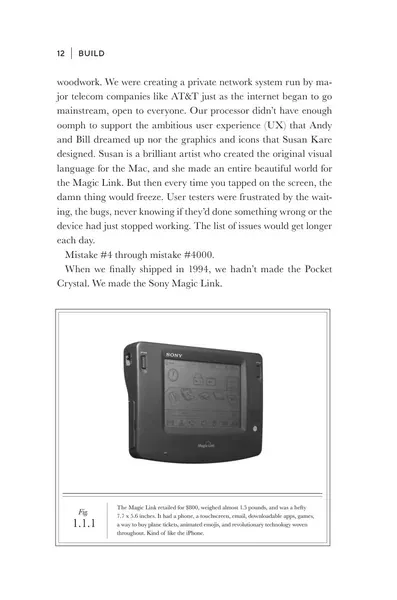
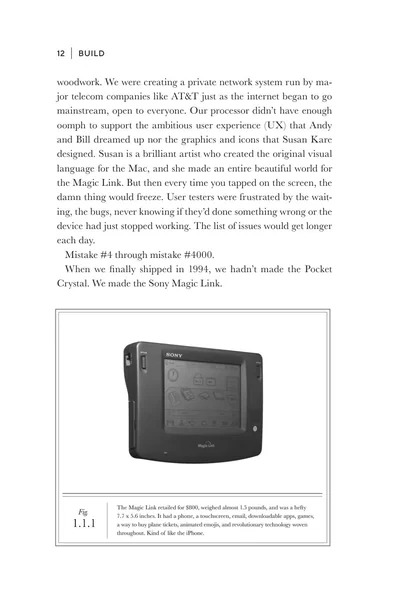
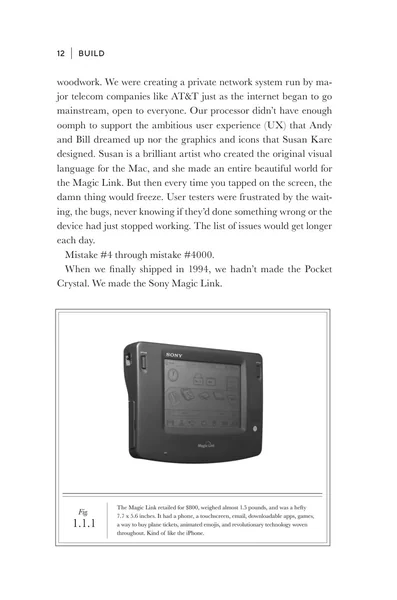
A page showing a photo of the Sony Magic Link device and a caption describing its features.
Design Strengths
The text excels in its unflinching honesty about professional failure and career missteps. The chapters distinguishing data from opinion and emphasizing storytelling as a leadership competency provide actionable frameworks for aligning executives and engineers.
The book argues that making products worth making requires treating them as physical objects with emotional relationships rather than feature sets or metrics dashboards. This approach offers a defensible framework for product leaders who must override quantitative data in favor of qualitative judgment.
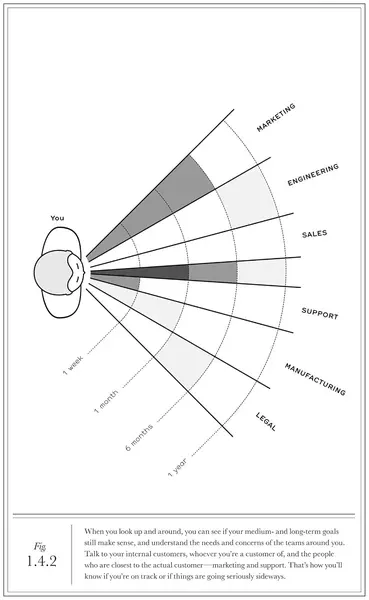
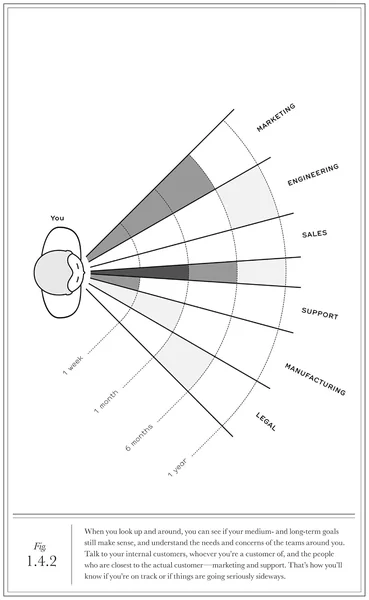
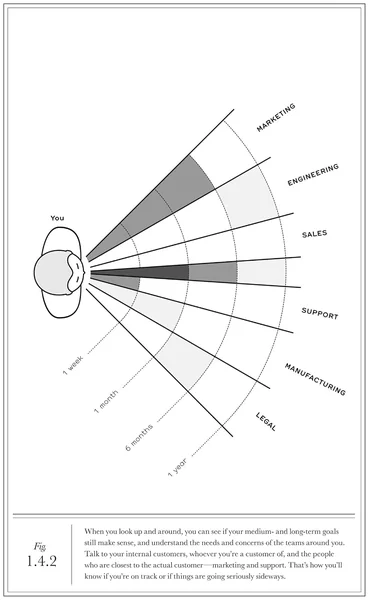
Interior diagram showing a radial timeline connecting a central figure to departments like marketing and engineering.
Genuine Limitations
The framework relies heavily on hardware product experience, where physical constraints and manufacturing timelines impose strict discipline. Pure-software environments rarely face the same cost structures or reversibility challenges, making some advice on iteration speed less applicable to SaaS contexts.
The book also presents a tension between its anti-corporate posture and Fadell’s background operating inside Apple, a resource-rich and brand-protected environment. Readers seeking guidance on digital platforms may find the focus on retail presence and physical manufacturing limits the material's direct utility.
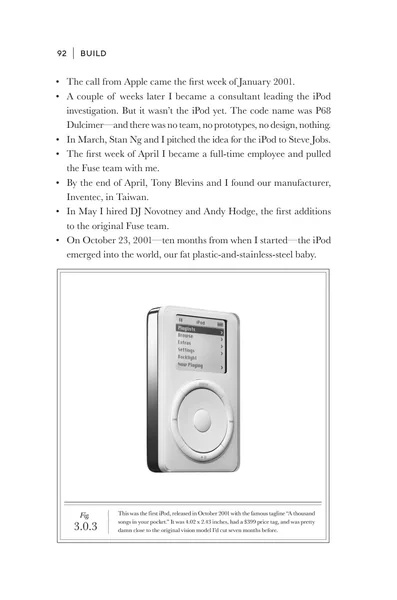
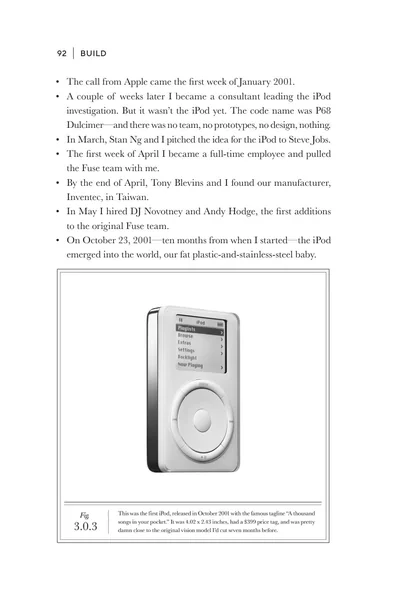
Interior page with a timeline of early iPod development and a figure of the first prototype device.
Is It Worth Reading?
Weighing these reviews, the manual serves as a direct, highly specific guide for hardware product managers and physical goods entrepreneurs. The tension between old-school hardware discipline and modern software agility defines the book's appeal.
It points toward builders who value tangible results over abstract metrics, while steering away from those focused exclusively on digital ecosystems. The volume remains a necessary reference for anyone navigating the physical realities of bringing a product to market.
Sources & Further Reading
The key facts and claims in this review are grounded in the retrieved, verified sources listed below.
Tony Fadell discusses his book 'Build' and insights from his decades of hardware innovation in conversation with John Markoff at The Commonwealth Club.
Fadell conceived Build as a mentorship encyclopedia with concise chapters designed for a younger audience, aiming to guide his younger self and people starting out in their careers. He sought to show the realities of developing products and businesses across all stages, from high school and college through large corporate environments.
Writing Collaboration With Dina Lovinsky
Fadell wrote the book with Dina Lovinsky, a former colleague from Nest who had previously drafted company web copy and manuals. They spent six to nine months simply developing the formatting and structure before drafting the content together.
Why Build Is Called 'Unorthodox'
Fadell explains that while management books constantly tout shifting trends and strategies, human nature remains consistent across centuries. His advice is considered unorthodox because it contrasts with prevailing tech-industry dogma by emphasizing enduring human principles over management fads.
From our readers
Reader reviews
No LuvemBooks readers have answered yet.
Read it? Was it right for you?
Books like Build
Curated picks for readers who enjoyed Build, with our reasoning for each match.