Skip to content
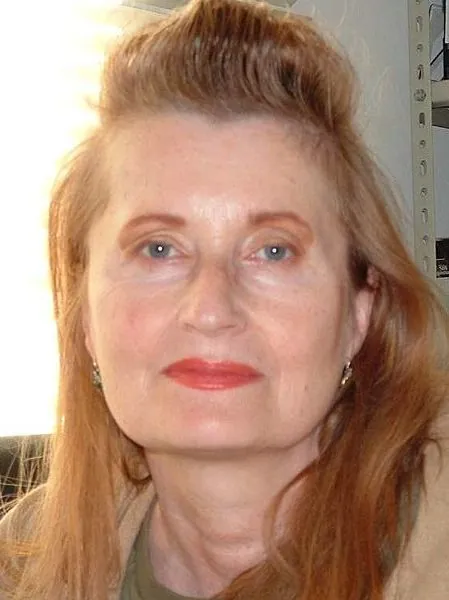
Elfriede Jelinek, author portrait
Photo:The original uploader was Ghuengsberg at English Wikipedia.·CC BY-SA 3.0·
Commons

Elfriede Jelinek

German
Born 1946
Elfriede Jelinek is an Austrian playwright and novelist. She is one of the most decorated authors to write in German and was awarded the 2004 Nobel Prize in Literature for her "musical flow of voices and counter-voices in novels and plays that, with extraordinary linguistic zeal, reveal the absurdity of society's clichés and their subjugating power". She is considered to be among the most important living playwrights of the German language.
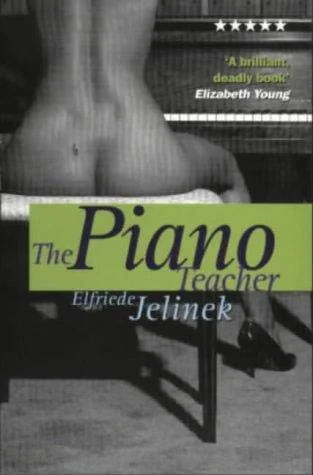
On LuvemBooks, we've reviewed The Piano Teacher.
1
Books Reviewed

In Elfriede Jelinek's own words

Elfriede Jelinek delivers her 2004 Nobel Lecture in Literature, entitled 'Sidelined' ('Im Abseits').

Uploaded by Teatro Due, 2015 · Watch on YouTube ·

The writer's exile to the sidelines

Jelinek explains that writers are swept away from reality into the sidelines, where they are able to observe reality better from the outside but have no place within it.

Describing reality properly by describing it wrongly

Jelinek observes that writing must intentionally portray reality falsely, as this is the only way readers can immediately detect its falseness and underlying truth.

Language turning against its writer

Jelinek reflects that while she sought protection in writing, language behaves like a guard dog that turns and snaps at her heels instead of sheltering her.

Fatherhood of the mother tongue

Jelinek describes herself as the father of her mother tongue after her own father abandoned their small family along with the language.

Imprisonment by an outgrown language

Jelinek recounts how language began quietly as her child, but grew uncontrollably large until it overpowered her and became her prison warden.

Ask LuvemBooks about Elfriede Jelinek

Elfriede Jelinek is an Austrian Nobel laureate whose prose — the Nobel committee praised its 'musical flow of voices and counter-voices' — turns extraordinary linguistic pressure on society's clichés and the power they exert over individuals. We have reviewed 1 of her books, The Piano Teacher, a grueling psychological study of repression and control that currently holds a 3.2/5 reader rating from over 500 Amazon ratings — a score that reflects how deliberately punishing her fiction can be for readers expecting conventional narrative comfort.
Where should I start?
The Piano Teacher is the natural starting point — it's the Jelinek novel we've reviewed, and it's her best-known work (originally published as Die Klavierspielerin). Be prepared, though: it's an intense, deliberately uncomfortable study of psychological control, and its 3.2/5 reader rating on Amazon reflects how divided readers are over its punishing style. Resilient readers who want formally daring literary fiction will find it deeply rewarding.
What's their writing style?
Jelinek's style is defined by what the Nobel committee called a 'musical flow of voices and counter-voices' — layered, polyphonic prose driven by extraordinary linguistic zeal. Her fiction uses that verbal intensity to expose the absurdity of social clichés and the ways they subjugate people. In The Piano Teacher, that translates into an unflinching, claustrophobic study of repression and psychological control that many readers find as grueling as it is brilliant.
Books we've reviewed
We've reviewed 1 Elfriede Jelinek book. The Piano Teacher (3.2/5 reader rating from 517 Amazon ratings) follows repressed piano teacher Erika Kohut through a suffocating relationship with her mother and a destructive obsession with a young student — a grueling but vital study of psychological control.
What genre do they write?
Jelinek writes literary fiction and drama. Her novel The Piano Teacher, the one book of hers we've reviewed, sits firmly in literary fiction — a psychologically intense, formally daring novel rather than a conventional page-turning narrative. Beyond novels, she's also celebrated as one of the most important living playwrights in the German language.
Why is The Piano Teacher so divisive?
The Piano Teacher holds a 3.2/5 reader rating from 517 Amazon ratings, which reflects a genuinely split readership. The novel is an unflinching study of repression and psychological control — our review calls it vital and grueling in equal measure. Readers who embrace its intensity find it rewarding; those seeking conventional narrative comfort tend to bounce off it hard.
Who is Elfriede Jelinek?

Who is Elfriede Jelinek?

Elfriede Jelinek is an Austrian playwright and novelist, and one of the most decorated authors writing in German. She won the 2004 Nobel Prize in Literature for her 'musical flow of voices and counter-voices in novels and plays that, with extraordinary linguistic zeal, reveal the absurdity of society's clichés and their subjugating power.' She is considered among the most important living playwrights of the German language, and her notable works include Die Klavierspielerin (The Piano Teacher).

Follow up

What did Jelinek win the Nobel Prize for?
What is Elfriede Jelinek known for besides novels?

Synthesized from verified book data & published reviews · How we review

​

Press Enter to ask. Answers come from our editorial Q&A — start typing to see related questions.