Skip to content
D

Daniel Kahneman

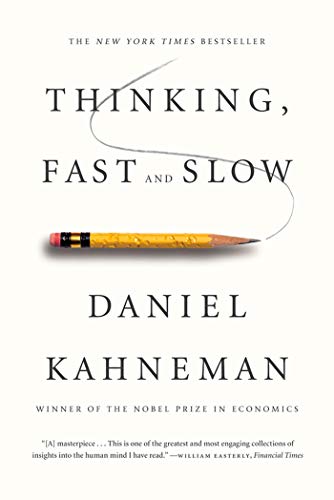
Daniel Kahneman (March 5, 1934 – March 27, 2024) was an Israeli-American psychologist best known for his work on the psychology of judgment, decision-making, and behavioral economics. Born in Tel Aviv, he was awarded the 2002 Nobel Prize in Economics and authored the bestselling popular science book Thinking, Fast and Slow (2011), which explores two distinct systems that drive human thought.
Biographical details sourced from Wikipedia.
On LuvemBooks, we've reviewed Thinking, Fast and Slow.
1
Books Reviewed

In Daniel Kahneman's own words

Daniel Kahneman presents his book 'Thinking, Fast and Slow' at Google, explaining System 1 and System 2 thinking, intuition, and cognitive biases.

Uploaded by Talks at Google, 2012 · Watch on YouTube ·

Subjective confidence is a feeling, not a judgment

Kahneman argues that confidence stems from System 1 evaluating the internal coherence and fluency of the story it constructed, not from an objective appraisal of the facts. Because a coherent narrative can easily be woven from sparse or unreliable data, confidence is a poor diagnostic tool for whether someone is actually right.

Also in this interview
In order

Daniel Kahneman books in order

4 books; 1 reviewed on LuvemBooks. Dates and covers from Amazon.

  1. International Differences in Well-Being cover
    2010
    International Differences in Well-Being
    Amazon ↗
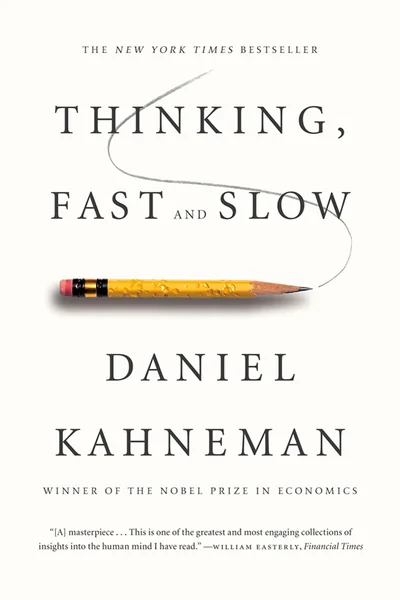
  2. Thinking, Fast and Slow cover
    2011
    Our review →
  3. HBR's 10 Must Reads on Making Smart Decisions cover
    2013
    HBR's 10 Must Reads on Making Smart Decisions
    Amazon ↗
  4. Noise cover
    2021
    Noise
    Amazon ↗

Ask LuvemBooks about Daniel Kahneman

Daniel Kahneman was a Nobel Prize–winning psychologist who spent decades studying how humans actually make decisions—often irrationally and predictably so. His single reviewed work, Thinking, Fast and Slow, translates decades of behavioral research into a framework showing how two mental systems drive our choices, biases, and judgments, earning a 4.6/5 reader rating.
Where should I start?
Thinking, Fast and Slow is the only book we've reviewed and the ideal entry point. It synthesizes Kahneman's lifetime of research into a readable narrative that explains the two mental systems—fast, intuitive thinking and slow, deliberate reasoning—and how they shape everything from everyday choices to major life decisions. The 4.6/5 reader rating reflects how accessible and illuminating readers find it.
What's their writing style?
Kahneman writes with clarity and restraint, favoring concrete examples and real experiments over jargon or speculation. His voice is measured and scientific, yet conversational—he explains complex psychological findings as if describing observations from everyday life. He avoids melodrama, letting the data and implications speak for themselves, which gives his work intellectual authority without sacrificing readability.
Books we've reviewed
We have reviewed one book by Daniel Kahneman: Thinking, Fast and Slow (2011), a behavioral economics and psychology classic that unpacks how intuitive and deliberate thinking shape human judgment and decision-making.
What genre does Kahneman write in?
Kahneman writes in the business, economics, and popular science category—specifically behavioral economics and applied psychology. His work sits at the intersection of academic rigor and accessible nonfiction, aimed at general readers, managers, and decision-makers who want to understand human behavior more deeply.
What should I read after Thinking, Fast and Slow?
Readers who finish Thinking, Fast and Slow often move to related works on behavioral economics and decision-making by authors like Richard Thaler or Dan Ariely, who build on Kahneman's foundations with their own research. Alternatively, revisiting Kahneman's work with his collaborator Amos Tversky's published papers offers deeper exploration of the original research.
Who is Daniel Kahneman?

Who is Daniel Kahneman?

Daniel Kahneman (1934–2024) was an Israeli-American psychologist and the 2002 Nobel Prize laureate in Economics. He is best known for his research on behavioral economics, judgment, and decision-making—fields he essentially founded by proving that human choices often deviate from rational economic theory. His work fundamentally changed how economists, managers, and psychologists understand human behavior.

Follow up

What was Kahneman's major research contribution?
Why did he win the Nobel Prize in Economics?

Synthesized from verified book data & published reviews · How we review

​

Press Enter to ask. Answers come from our editorial Q&A — start typing to see related questions.