
BOOKS
Published
Read Time
5 min read
Our Rating
3.5
A competently crafted psychological thriller that succeeds more as character study than pure suspense, with strong emotional themes undermined by predictable genre conventions.
Reviewed by
LuvemBooks
Share This Review
Every Last Lie by Mary Kubica Review: Psychological Thriller
Our Rating
3.5
A competently crafted psychological thriller that succeeds more as character study than pure suspense, with strong emotional themes undermined by predictable genre conventions.
In This Review
- What Works & What Doesn't
- When Tragedy Unveils Hidden Truths
- Complex Characters Driven by Desperation
- Themes of Trust and Self-Deception
- Where the Thriller Formula Shows Its Limits
- A Solid Entry in Domestic Suspense
- Where to Buy
What Works & What Doesn't
What Works
- Compelling exploration of grief and the lies we tell ourselves
- Strong central character in Clara whose emotional journey feels authentic
- Effective use of a child's perspective to reveal adult secrets
- Solid pacing that builds psychological tension gradually
- Thoughtful examination of how well we know our closest relationships
What Doesn't
- Plot revelations follow predictable thriller genre patterns
- Middle sections suffer from confusing timeline jumps
- Some secondary characters feel underdeveloped and plot-driven
- Resolution ties up loose ends too neatly for such a messy emotional story
Is Every Last Lie worth reading? Mary Kubica's psychological thriller delivers the kind of domestic suspense that keeps readers second-guessing every character's motives. This novel explores the aftermath of a tragic car accident that kills a young father, leaving behind a web of secrets, lies, and devastating revelations that challenge everything his widow believes about their marriage.
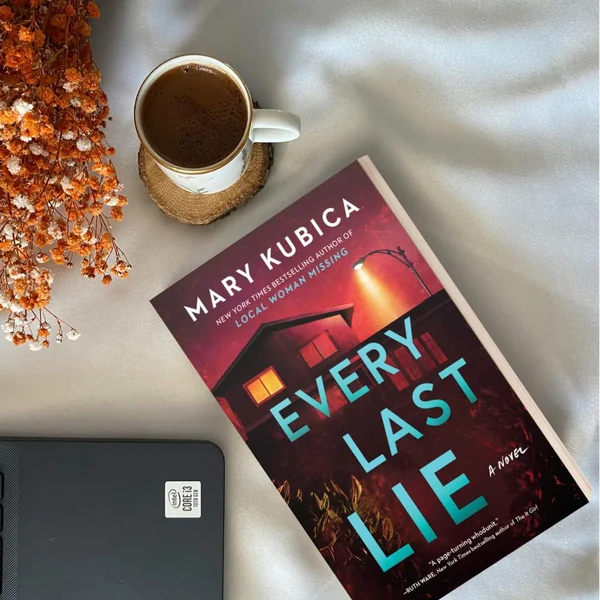
The book's striking red and black cover design perfectly captures the dark themes within—a visual representation of the blood, secrets, and moral ambiguity that drive the narrative forward. Fans of Gone Girl or The Girl on the Train will recognize the familiar territory of unreliable narrators and fractured relationships, though Kubica brings her own distinctive voice to the domestic thriller genre.
When Tragedy Unveils Hidden Truths
The story centers on Clara Solberg, whose world implodes when her husband Nick dies in a car crash with their four-year-old daughter Maisie as the sole survivor. What begins as grief quickly transforms into suspicion when Clara discovers that Nick wasn't where he claimed to be that night. The accident becomes a catalyst for uncovering layers of deception that force Clara to question everything she thought she knew about her marriage.
Kubica structures the narrative through alternating perspectives and timelines, gradually revealing the events leading up to the fatal crash. This approach creates mounting tension as readers piece together the truth alongside Clara, though the fragmented timeline occasionally feels more manipulative than organic. The author's prose maintains a steady pace that builds psychological pressure without relying on excessive action sequences.
Complex Characters Driven by Desperation
Clara emerges as a compelling protagonist—a grieving widow whose search for answers transforms her from passive wife to determined investigator. Her emotional journey feels authentic as she grapples with conflicting feelings of love, betrayal, and protective maternal instinct. The supporting cast includes Maisie, the traumatized daughter whose fragmented memories may hold crucial clues, and various neighbors and friends who may know more than they initially reveal.
Nick, despite being deceased for most of the narrative, becomes increasingly complex as his secrets emerge. Through flashbacks and Clara's discoveries, readers see him as both loving father and deeply flawed husband. The characterization avoids simple villain/victim dynamics, instead presenting people whose poor choices create cascading consequences.
Themes of Trust and Self-Deception
The central theme revolves around how well we truly know the people closest to us. Kubica explores the lies we tell ourselves about our relationships and the ways grief can both clarify and distort our perceptions. The novel examines maternal protection instincts, financial desperation, and the lengths people go to preserve their carefully constructed lives.
The theme of memory versus truth runs throughout, particularly through young Maisie's perspective. Her childlike interpretation of adult situations creates both heartbreaking moments and crucial plot revelations. However, the book sometimes heavy-handedly emphasizes these themes rather than allowing them to emerge naturally from character actions.
Where the Thriller Formula Shows Its Limits
While Kubica demonstrates solid craftsmanship in building suspense, the main weakness lies in the novel's adherence to genre conventions. The revelations, while shocking, follow predictable patterns that experienced thriller readers may anticipate. Some plot twists feel engineered for maximum surprise rather than growing organically from character development.
The pacing suffers in the middle sections where the alternating timelines create confusion without adding substantial depth. Certain secondary characters remain underdeveloped, functioning more as plot devices than fully realized people. The resolution, while emotionally satisfying, ties up loose ends perhaps too neatly for a story built on the messiness of real human relationships.
A Solid Entry in Domestic Suspense
Every Last Lie succeeds best when focusing on the emotional aftermath of tragedy and the way secrets corrode relationships from within. Kubica writes with particular strength when exploring Clara's maternal fears and the challenge of protecting her daughter while seeking dangerous truths. The psychological elements feel more convincing than the thriller mechanics.
Readers seeking psychological depth over action sequences will find more to appreciate here than those wanting fast-paced plot twists. The book works better as a character study of a woman rebuilding her understanding of her life than as a pure suspense novel. For fans of authors like Gillian Flynn or Paula Hawkins, this offers familiar pleasures with Kubica's own emotional sensibility.
Where to Buy
You can find Every Last Lie at Amazon, Barnes & Noble, your local independent bookstore, or through online retailers that support local bookshops.