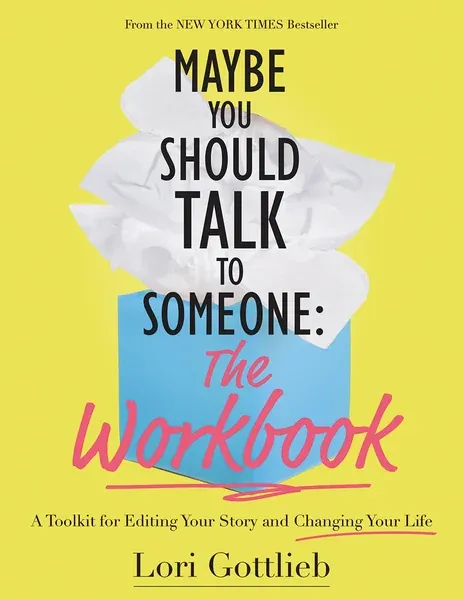
Lori Gottlieb's follow-up workbook to her bestselling memoir promises to transform readers from passive observers of therapy insights into active participants in their own emotional growth. But is Maybe You Should Talk to Someone workbook worth it when you could simply reread the original book or invest in actual therapy? The answer depends largely on whether you're ready to move beyond consuming self-help content and into the messier work of genuine self-examination.
Unlike workbooks that feel like homework assignments dressed up as healing, Gottlieb's approach mirrors the conversational, non-judgmental tone that made her memoir so compelling. Readers familiar with The Body Keeps the Score or Feeling Good will recognize similar therapeutic frameworks, but Gottlieb's workbook stands apart by focusing specifically on narrative reconstruction—how we tell ourselves the stories of our lives.
A Practical Bridge Between Memoir and Therapy
The workbook functions as a structured companion to Gottlieb's original memoir, translating her insights about therapy into actionable exercises. Rather than simply offering generic journal prompts, Gottlieb draws directly from her dual perspective as both therapist and therapy patient to create exercises that feel genuinely therapeutic rather than superficial.
The activities range from identifying recurring patterns in relationships to examining the stories we tell ourselves about failure and success. What distinguishes this from typical self-help fare is Gottlieb's recognition that change requires more than insight—it demands practice in reframing our internal narratives.
The Exercise Structure and Methodology
Gottlieb organizes the workbook around key therapeutic concepts: examining our "presenting problems," understanding our patterns, and developing new ways of thinking about our circumstances. The exercises progress logically from self-assessment to deeper exploration to practical application.
Some activities work better than others. The exercises focused on identifying relationship patterns prove particularly effective, offering concrete ways to examine how we show up in different relationships. However, sections dealing with trauma require careful navigation—Gottlieb acknowledges this isn't a substitute for professional help, but some readers may find certain prompts overwhelming without therapeutic support.
The Author's Therapeutic Approach
Gottlieb's background as both a practicing therapist and someone who has been in therapy herself informs every page of this workbook. Her approach draws heavily from cognitive behavioral therapy and narrative therapy techniques, but she presents these concepts in accessible language without therapeutic jargon.
The workbook reflects Gottlieb's belief that we are all unreliable narrators of our own lives. This perspective shapes exercises designed to help readers examine their assumptions, question their interpretations of events, and consider alternative explanations for their experiences.
Where It Succeeds and Where It Falls Short
The workbook's greatest strength lies in its practical application of therapeutic concepts. Rather than simply explaining why therapy works, Gottlieb provides tools for readers to experience some of those benefits independently. The exercises feel authentic rather than contrived, and many mirror actual therapeutic techniques.
However, the workbook cannot replace the dynamic interaction of real therapy. Some readers may find the self-directed format limiting, particularly when dealing with deeper emotional issues. The workbook also assumes a level of emotional readiness that not everyone possesses—readers struggling with severe depression or trauma may find the exercises overwhelming rather than helpful.
Additionally, while Gottlieb emphasizes that this isn't therapy, some readers may use it to avoid seeking professional help when they genuinely need it. The workbook works best as a supplement to, not a replacement for, therapeutic support.
Who Benefits Most From This Approach
This workbook serves readers who found Gottlieb's memoir insightful but want tools for applying those insights to their own lives. It's particularly valuable for people who are therapy-curious but not yet ready to make that commitment, or those currently in therapy who want additional resources for between-session work.
The exercises require genuine engagement—readers looking for quick fixes or simple answers will find this frustrating. Those willing to sit with difficult questions and examine uncomfortable patterns will find the workbook rewarding, though challenging.
Where to Buy
You can find Maybe You Should Talk to Someone: The Workbook at Amazon, Barnes & Noble, your local bookstore, or directly from Houghton Mifflin Harcourt.