
8 min read
4.5
· 902 Amazon ratingsShare This Review
A Simpler Life by The School of Life Review: A Psychologically Grounded Guide to Simplicity
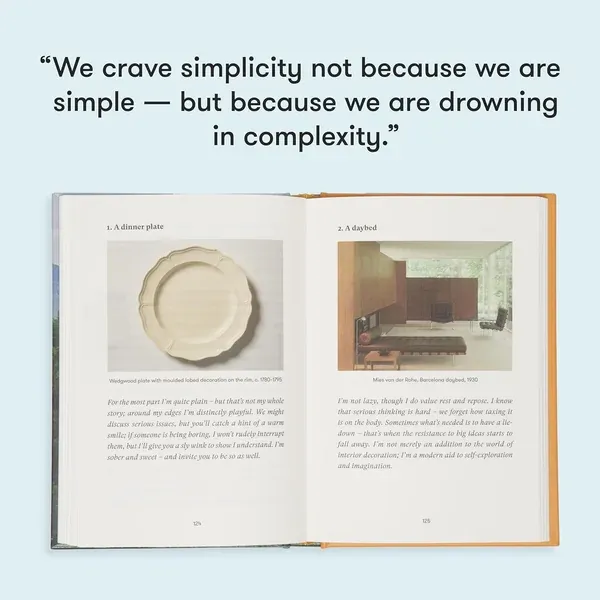
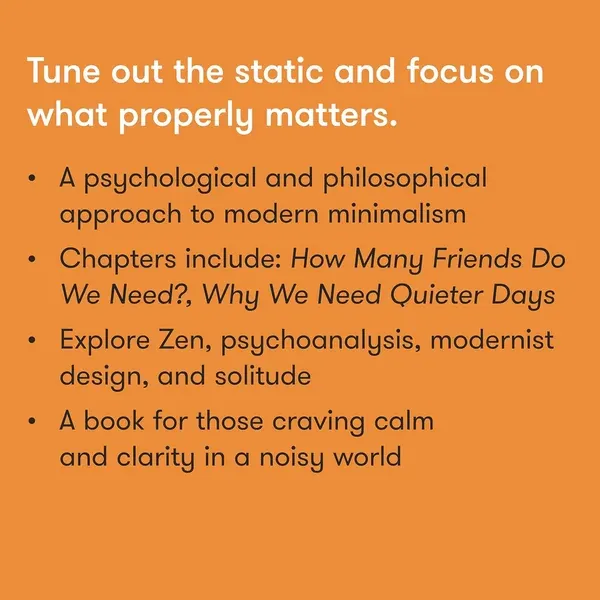
A Simpler Life is a self-help guide from The School of Life — the global organisation founded under the direction of series editor Alain de Botton — that takes a psychological approach to minimalism, addressing not just the clutter in closets and calendars but the deeper roots of distraction and complexity in relationships, work, social life, and culture. Published in hardcover by The School of Life Press in May 2022, the book is designed for readers who crave a more pared-down, peaceful, and focused existence but recognise that surface-level decluttering is rarely enough to get them there. Multiple NetGalley reviewers responded warmly to its short, accessible chapters and its invitation to self-examination.
 Tap to enlarge
LuvemBooks Verdict
Best for
Readers who feel overwhelmed by modern life and suspect the problem runs deeper than clutter or a packed schedule — particularly those open to philosophical and psychological self-examination across relationships, work, and lifestyle.
Worth it if
Worth reading if you want a reflective, returnable guide that interrogates *why* complexity accumulates in your life, not just a checklist for stripping it back.
Skip if
Skip it if you need numbered frameworks, habit trackers, or evidence-based behavioural science — the essayistic, philosophical register will likely feel too abstract to be actionable on its own.
What readers & critics say
The Guardian's coverage of The School of Life's publishing arm notes that its titles — including A Simpler Life — "purport to blend philosophical wisdom with practical advice" and that the books are "Marmite," finding a clear market despite criticism of the School for "peddling watered-down pop philosophy." NetGalley reader responses, surfaced via Barnes & Noble and Better World Books, describe the book as calming and motivational, praising its ability to help readers "disentangle what you can change and what you have to accept" and calling it "a book you will return to again and again."
“The School of Life's books are Marmite; while many critique them for peddling watered-down pop philosophy, their teachings have clearly found a market.”
— theguardian.comIn This Review
- What Works & What Doesn't
- What the Book Actually Is and Argues
- A Counterintuitive Central Argument
- Its Place in the Genre and the School of Life Catalogue
- Strengths Noted by Readers
- Honest Limitations and Who It Is For
What Works & What Doesn't
What Works
- Organised into distinct thematic sections — covering relationships, lifestyle, work, and culture — giving the guide clear practical scope rather than a single, abstract argument
- Takes a psychological rather than purely logistical approach, addressing the internal roots of complexity rather than stopping at wardrobe audits or schedule trimming
- Short chapter structure, praised by NetGalley reviewers as readable and conducive to reflection, makes the material accessible in incremental sittings
- Produced by The School of Life Press under series editor Alain de Botton, situating it within a coherent editorial voice described by the publisher as 'calm, reassuring, and sane'
- Tackles a genuinely counterintuitive argument — that achieving simplicity sometimes requires more honesty and complexity upfront, not less — giving the book intellectual texture beyond standard minimalism titles
What Doesn't
- Readers seeking granular, step-by-step systems or evidence-based frameworks may find the reflective, essayistic style more philosophical than prescriptive
- The School of Life's characteristic editorial voice — consistent and curated by design — means the book reads as a collective work rather than a single expert's personal account, which may feel impersonal to some readers
What the Book Actually Is and Argues

A Counterintuitive Central Argument

Its Place in the Genre and the School of Life Catalogue
Strengths Noted by Readers
Honest Limitations and Who It Is For
Frequently Asked Questions
Sources & Further Reading
The key facts and claims in this review are grounded in the retrieved, verified sources listed below.
- Cited in this review
- 1
- 2
- 3
- Further reading
- 4
The School of Life, Wikipedia
- 5
- 6
- 7
- 8
boffinsbooks.com.au
- 9
Related Reviews
Reviews of books we picked for readers who enjoyed A Simpler Life.
Reader Comments
No comments yet
Be the first to share your thoughts!