
8 min read
4.8
· 60 Amazon ratingsShare This Review
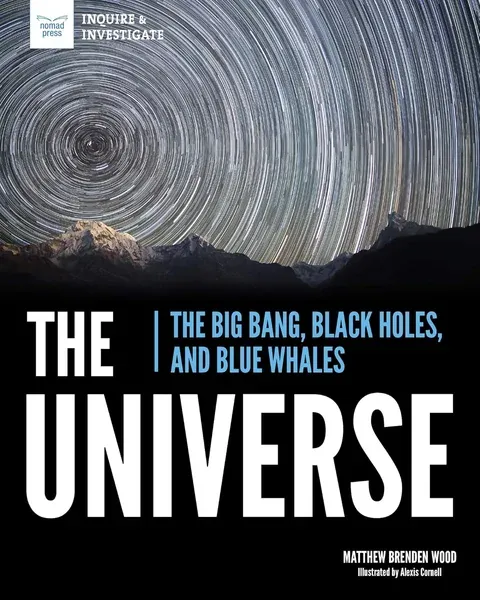
The Universe: The Big Bang, Black Holes, and Blue Whales by Matthew Brenden Wood Review: A STEM-Driven Cosmic Journey for Middle Schoolers
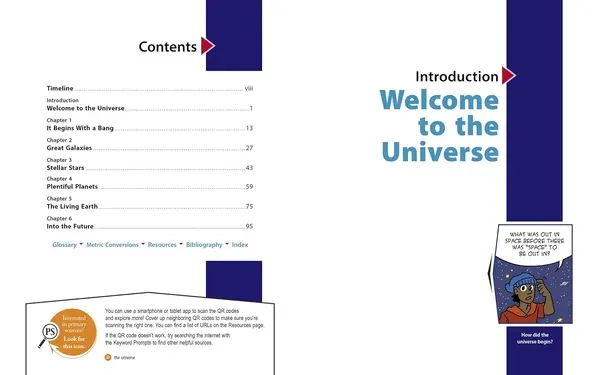
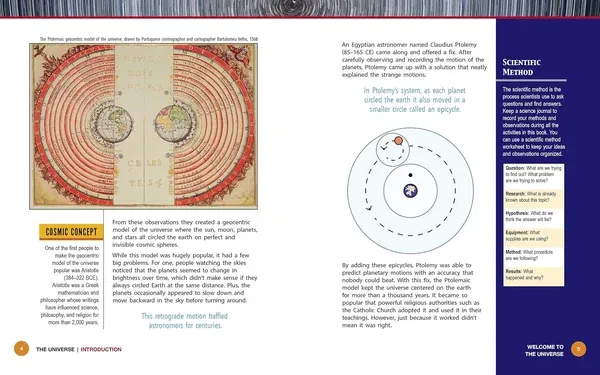
Published by Nomad Press in April 2021 as part of the Inquire & Investigate series, this illustrated nonfiction title for readers ages 12–15 guides young learners from the moment of the Big Bang through the large-scale structure and eventual fate of the universe, pairing content with hands-on STEM activities and research projects throughout.
 Tap to enlarge
LuvemBooks Verdict
Best for
Middle school students aged 12–15 with a budding curiosity about cosmology who thrive with hands-on, inquiry-based learning — and the teachers or homeschool educators looking for a standards-aligned STEM supplement for grades 7–9.
Worth it if
You want a curriculum-ready introduction to the universe — from the Big Bang to its projected end — that actively involves young readers through built-in STEM activities and research projects rather than asking them to passively absorb facts.
Skip if
If you're hoping for a deep-dive narrative on any single topic — the mechanics of black holes, say, or the evidence behind competing cosmological models — the 128-page scope means each subject gets a launchpad treatment rather than extended analysis, and the activity-driven structure may interrupt readers seeking a continuous read.
What readers & critics say
McNally Robinson describes the book as "an in-depth educational science resource for middle and high school readers" through which readers "will achieve a greater understanding of the science of cosmology and its related content, from the big bang to a star's life cycle." Mother Daughter Book Club highlights it as a go-to title for young readers curious about how our understanding of the universe has evolved over the centuries, positioning it within the well-regarded Nomad Press Inquire & Investigate series.
Sources: McNally Robinson, Mother Daughter Book ClubIn This Review
- What Works & What Doesn't
- What the Book Actually Covers
- Wood's Credentials and the Series Context
- Strengths: Participation-Forward Design and Academic Alignment
- Limitations: Scope and Audience Fit
- Who This Book Is For
What Works & What Doesn't
What Works
- Written by an author with a bachelor's degree in astronomy and hands-on experience as a math and science teacher, lending credibility to the subject matter
- Integrates STEM activities and research projects throughout, positioning readers as active investigators rather than passive learners
- Aligns with Common Core State Standards and Next Generation Science Standards, making it practical for classroom and homeschool use in grades 7–9
- Part of Nomad Press's established Inquire & Investigate series, a format School Library Connection praised in a companion volume for its 'readable, highly engaging style'
- Covers an ambitious sweep — from the Big Bang to the end of the universe — in a format designed for the 12–15 age range
What Doesn't
- At 128 pages spanning the entire history and future of the universe, individual topics receive introductory rather than in-depth treatment, limiting it as a reference for deeper study
- The activity-driven, inquiry-based format suits classroom use well but may feel structurally interrupted to readers seeking a continuous narrative read
What the Book Actually Covers

Wood's Credentials and the Series Context

Strengths: Participation-Forward Design and Academic Alignment
Limitations: Scope and Audience Fit
Who This Book Is For
Frequently Asked Questions
Sources & Further Reading
The key facts and claims in this review are grounded in the retrieved, verified sources listed below.
- Cited in this review
- 1
- 2
- 3
- Further reading
- 4
- 5
es.everand.com
Related Reviews
Reviews of books we picked for readers who enjoyed The Universe.
Reader Comments
No comments yet
Be the first to share your thoughts!