A Catalog of Human Quirks and Mental Shortcuts
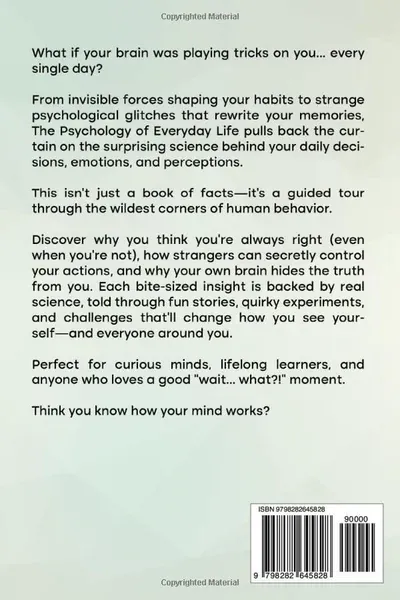
Is The Psychology of Everyday Life worth reading? Adrian Holt's collection of 100 psychology facts promises to illuminate the hidden forces that shape our daily decisions, from cognitive biases to behavioral patterns. This accessible guide attempts to bridge the gap between academic psychology and practical understanding, offering bite-sized insights into human nature that readers can immediately recognize in their own lives.
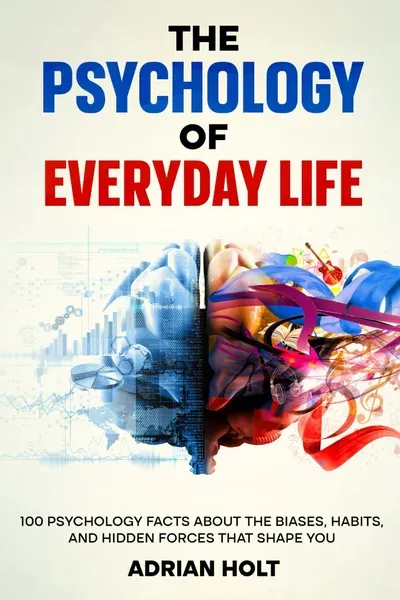
The book's visual presentation suggests its approach—the cover's brain imagery surrounded by colorful objects hints at the diverse range of psychological phenomena covered within. Readers seeking a comprehensive yet digestible introduction to behavioral psychology will find Holt's format appealing, though the execution varies in quality throughout the collection.
For those familiar with popular psychology works like Thinking, Fast and Slow or Predictably Irrational, this book covers similar territory but with a more fragmented, fact-based approach rather than building cohesive arguments about human cognition.
Holt's Accessible Presentation Style
Holt structures each psychological fact as a standalone entry, making the book highly scannable and suitable for casual browsing. The writing maintains clarity without oversimplifying complex psychological concepts, though some entries feel more substantial than others. Each fact typically includes a brief explanation of the underlying mechanism and real-world applications.
The author's approach emphasizes practical recognition over theoretical depth. Rather than diving into the neuroscience or experimental methodology behind each phenomenon, Holt focuses on helping readers identify these patterns in their daily interactions and decision-making processes.
The format works well for readers who prefer learning in short bursts, though it sacrifices the deeper understanding that comes from sustained exploration of psychological themes. Some facts feel more like interesting trivia than meaningful insights into human behavior.
Core Concepts and Mental Models
The 100 facts span familiar territory in cognitive psychology: confirmation bias, the halo effect, loss aversion, and social proof all make appearances. Holt covers both individual psychological processes and social dynamics, from how we form first impressions to why we conform to group behavior.
Practical exercises accompany many entries, encouraging readers to observe these biases in their own thinking or interactions. These applications range from workplace scenarios to personal relationships, though the depth of guidance varies significantly between entries.
The book's strength lies in its comprehensive scope—readers encounter everything from memory quirks to decision-making shortcuts to social influence tactics. However, this breadth comes at the cost of depth, with most topics receiving only surface-level treatment.
Some entries feel more research-backed than others, and Holt doesn't consistently indicate the strength of evidence behind each claim. This inconsistency may leave readers uncertain about which facts represent well-established findings versus emerging or contested research.
The bite-sized format makes psychology accessible to readers intimidated by academic texts or lengthy behavioral science books. Each fact can be consumed independently, making it perfect for beginners who want to explore psychology without committing to complex theoretical frameworks.
However, this same format prevents deeper understanding of how these psychological phenomena interconnect. Readers finish with a collection of interesting facts but may struggle to develop a cohesive mental model of human psychology. The lack of connecting themes or overarching frameworks limits the book's educational value.
The main weakness emerges in the uneven quality of entries. While some provide genuinely useful insights with clear applications, others feel like filler material that adds little value. The book would benefit from tighter curation and more consistent depth across all 100 facts.
The practical applications vary in usefulness. Some offer concrete strategies for recognizing and countering cognitive biases, while others remain at the level of interesting observations without actionable guidance.
Our Assessment for Different Readers
Highly recommended for psychology newcomers seeking an entertaining introduction to human behavior patterns. The accessible format and practical examples make complex psychological concepts approachable for general audiences.
Business professionals and managers may find value in the sections covering social influence and decision-making biases, though they'll likely need to supplement with more comprehensive resources for professional application.
Students or readers seeking academic rigor will find the treatment too superficial. Not recommended for those wanting deep psychological insights or research-backed strategies for behavior change. The book serves better as an appetizer than a main course in psychological education.
Parents and educators might appreciate the book's discussion of social psychology and influence, though the content isn't specifically tailored for understanding child development or learning processes.