BOOKS
Published

Read Time

9 min read

Reader rating

4.7

· 4,444 Amazon ratings
reader ratings, not a LuvemBooks score
Curated & edited by

LuvemBooks Editorial

How we create our reviews →
Share This Review

Our review

Made to Crave by Lysa TerKeurst Review: Faith-Rooted Motivation for Healthy Eating

Made to Crave by Lysa TerKeurst is a Christian living book published by Thomas Nelson that reframes food struggles as a spiritual issue, arguing that human cravings are designed to be satisfied by God rather than by food. Rather than offering a diet plan, it addresses the emotional and spiritual "want to" that TerKeurst contends conventional health advice misses. For readers seeking faith-based motivation rather than nutritional instruction, it fills a distinct niche.


Back cover with title, synopsis text, author photo, and publisher logo on blue and green background.Front cover featuring blue sky background, green grass strip, and red mailbox illustration with author name.Person holding open an interior book spread with text pages during daytime reading.Tap to enlarge

LuvemBooks Verdict

Best for

Women in the evangelical Christian tradition who have cycled through conventional diet advice and are looking for spiritual and motivational grounding — rather than another meal plan — to address their relationship with food.

Worth it if

You already know the practical "how to" of healthy eating but have repeatedly struggled to sustain the "want to," and you're open to a scripture-and-testimony-driven framework as the missing link.

Skip if

You're outside the evangelical Christian tradition, or you're seeking concrete nutritional guidance, dietary frameworks, or exercise programming — none of which this book provides.

Wmresources.org describes the book as "an empowerment tool for helping women to find a healthy way to find fulfillment through God," explicitly noting it is not a step-by-step weight-loss book and offers no calorie or points counting. Christianbook.com carries a five-star aggregate rating across 153 reader reviews, reflecting strong enthusiasm within its core Christian readership.

Sources: wmresources.org, christianbook.com
4.7from 4,444 Amazon ratings— reader ratings, not a LuvemBooks score
Buy on Amazon

Age & Reading Level

Recommended age

Adult

Reading level

Adult

Skip if you are looking for practical nutritional, dietary, or exercise guidance, or you do not approach food struggles through an evangelical Christian faith framework.

In This Review
  • What Works & What Doesn't
  • What the Book Actually Is and Argues
  • The Core Premise and Its Intended Audience

  • Significance and Reception
  • Strengths Grounded in the Record
  • Limitations and Considerations for Prospective Readers

What Works & What Doesn't

What Works
  • Addresses the emotional and spiritual dimension of food struggles that conventional diet advice leaves untouched
  • Written by a New York Times bestselling author with a large, established readership in Christian women's nonfiction
  • Personal, testimony-driven narrative makes the premise accessible and relatable for its target audience
  • Published by Thomas Nelson with companion resources — including a 21-day challenge — that extend engagement beyond the book itself
  • Carries strong reader enthusiasm on major Christian retail platforms
What Doesn't
  • The theological framework is specific to evangelical Christian belief, making the book a poor fit for readers outside that tradition
  • Offers no nutritional, dietary, or exercise guidance — readers seeking practical health instruction will need to look elsewhere
This review covers the book's content, design, and reception from published sources — not hands-on application or personal use.

What the Book Actually Is and Argues

Made to Crave is a Christian living and personal development book, not a diet guide or nutrition manual. Lysa TerKeurst, president of Proverbs 31 Ministries and a New York Times bestselling author, frames the book around a central theological premise: that human beings were made to crave God, and that many people have misplaced that longing by overindulging in food and other physical pleasures. The book does not tell readers what to eat or how much to exercise. Instead, as the publisher describes it, TerKeurst explores why people make unhealthy food choices, and argues that the missing link between wanting to be healthy and actually becoming healthy is spiritual empowerment. The aim is to help readers identify what they are truly seeking — and to redirect that hunger toward what she describes as a faithful Heavenly Father.
“you know 'how to' get healthy… but now there's finally a book to help you find your 'want to'”
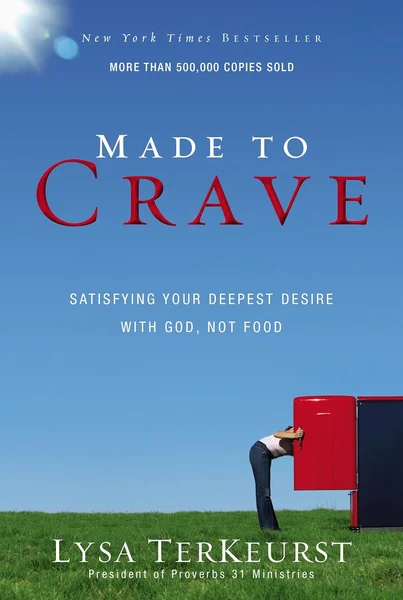
Front cover featuring blue sky, green grass, a red mailbox, and the author's name at bottom.

The Core Premise and Its Intended Audience

The book is positioned squarely for women who already know the practical mechanics of healthy eating but struggle to sustain motivation. TerKeurst's framing — "you know 'how to' get healthy… but now there's finally a book to help you find your 'want to'" — makes the audience explicit. This is not a book for someone looking for calorie counts or meal plans; it is for the reader who has cycled through conventional advice ("eat less and move more," as the publisher's copy puts it) and found it emotionally or spiritually insufficient. TerKeurst draws on her own experience, describing how she used to turn to food — a piece of chocolate cake after a hard day — before arriving at the conviction that what she truly needed was more of God. That personal, testimony-driven approach is central to the book's design.
Back cover with title, synopsis text, author photo, and publisher logo on blue and green background.

Significance and Reception

TerKeurst is a New York Times bestselling author of multiple titles, including Forgiving What You Can't Forget and Uninvited, which have reached the #1 position on that list. Made to Crave itself was published by Thomas Nelson, one of the leading Christian publishing houses, and was supported by companion resources including a 21-day email challenge and, per the publisher's ecosystem at madetocrave.org, an ongoing community infrastructure. Christianbook.com, a major Christian retail platform, carries a five-star reader rating for the title, reflecting strong enthusiasm within its core readership. The book sits in a well-established genre of faith-based wellness writing, but its explicit focus on the spiritual root of food cravings — rather than behavior modification alone — marked it as a distinctive entry at the time of its publication in December 2010.
Front cover featuring blue sky background, green grass strip, and red mailbox illustration with author name.

Strengths Grounded in the Record

The book's primary strength, as the publisher frames it, is its reorientation of the conversation. Where most wellness titles address behavior, Made to Crave addresses motivation at a spiritual level — a gap TerKeurst argues is responsible for why so many women repeatedly fall short of their health goals. The approach draws on scripture and personal narrative in tandem, designed to offer both theological grounding and relatable, autobiographical honesty. For readers within the evangelical Christian tradition, this combination — a recognizable public figure sharing her own struggle alongside a biblical framework — is precisely what the book is engineered to deliver. The 21-day challenge companion resource also extends the book's practical reach beyond the page, offering structured engagement for readers who want an applied component.
Person holding open an interior book spread with text pages during daytime reading.

Limitations and Considerations for Prospective Readers

Because the book's argument is theological at its core, readers outside the Christian faith tradition will find its central premise — that cravings for food are best addressed by redirecting them toward God — does not apply to their worldview. This is not a criticism of the book's internal logic, but it is the most significant factor in determining fit. Additionally, readers seeking concrete nutritional guidance, dietary frameworks, or exercise programming will not find them here; TerKeurst is explicit that the book operates in motivational and spiritual territory, not practical instruction. Those hoping for a hybrid approach — spiritual encouragement plus a structured health plan — should be aware that the book is designed to address the "want to," leaving the "how to" to other resources.

Sources & Further Reading

The key facts and claims in this review are grounded in the retrieved, verified sources listed below.

  1. Cited in this review
  2. 1
  3. 2
  4. 3
  5. Further reading
  6. 4

    Lysa TerKeurst, Wikipedia

  7. 5
  8. 6
  9. 7
  10. 8