A Framework for Systematic Reconstruction
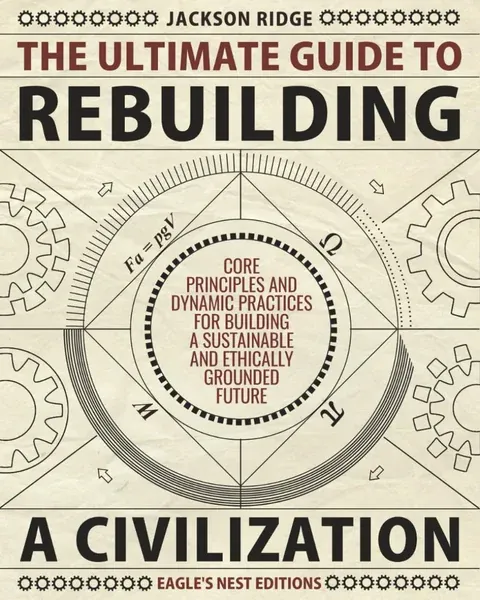
Is The Ultimate Guide to Rebuilding a Civilization worth reading? The answer depends largely on your appetite for detailed planning and theoretical frameworks. Ridge approaches civilization-building not as abstract philosophy but as practical engineering, breaking down complex societal systems into manageable components.
The author organizes his approach around what he terms "dynamic practices"—adaptable systems that can evolve with changing circumstances rather than rigid structures that break under pressure. This flexibility becomes central to his sustainability argument. Unlike traditional urban planning or policy texts that focus on incremental improvements, Ridge starts from a blank slate, asking fundamental questions about resource allocation, governance structures, and ethical foundations.
The book's strength lies in its comprehensive scope. Ridge doesn't cherry-pick favorite topics; he addresses everything from waste management and energy distribution to conflict resolution and cultural preservation. For readers seeking practical applications, each section includes implementation strategies and potential obstacles, though some feel more theoretical than immediately actionable.
The Engineer's Approach to Society
Ridge writes with the precision of someone who has spent considerable time thinking about systems and their interactions. His prose remains accessible without sacrificing technical accuracy, though dense sections on infrastructure planning may challenge casual readers.
The author's methodology becomes clear early: identify core functions, design redundant systems, and build in adaptability. This engineering mindset permeates every chapter, from food production to educational frameworks. He treats civilization-building as a design problem requiring both creativity and rigorous analysis.
Where Ridge excels is in connecting disparate elements. He shows how transportation networks affect economic opportunity, how educational approaches influence innovation capacity, and how governance structures either enable or constrain sustainability efforts. These connections aren't always obvious, making his integration valuable even for readers familiar with individual topics.
Core Principles and Sustainability Focus
The book's ethical foundation rests on what Ridge calls "intergenerational responsibility"—the idea that any rebuilt civilization must consider its long-term impact rather than optimizing for immediate gains. This principle influences every recommendation, from energy choices to social institutions.
Ridge argues convincingly that sustainable civilization building requires rethinking basic assumptions about growth, resource use, and success metrics. He challenges the notion that economic expansion necessarily improves quality of life, proposing alternative measures that prioritize stability and resilience over rapid growth.
His sustainability framework encompasses environmental protection, social equity, and economic viability—the traditional triple bottom line—but adds psychological well-being and cultural continuity as essential elements. This expanded view leads to recommendations that might seem counterintuitive to readers accustomed to efficiency-focused thinking.
The ethical grounding prevents the book from becoming purely technical. Ridge consistently returns to questions of fairness, inclusion, and human dignity, ensuring his systematic approach serves broader moral purposes rather than becoming an end in itself.
Practical Applications and Implementation
Ridge provides specific guidance for implementing his ideas, though some sections feel more realistic than others. His chapters on local food systems and renewable energy include detailed planning steps, resource requirements, and timeline estimates. These sections offer actionable advice for communities interested in increased self-sufficiency.
The governance sections prove more challenging to implement. While Ridge's ideas about participatory decision-making and transparent accountability sound appealing, he underestimates the practical difficulties of achieving consensus in diverse communities. His conflict resolution frameworks, though well-intentioned, assume levels of goodwill and rational discussion that don't always exist in real-world situations.
The book shines when addressing technical infrastructure. Ridge's background shows in his detailed treatment of water systems, waste processing, and energy distribution. These chapters provide enough specificity for serious planners while remaining accessible to general readers interested in understanding how modern conveniences actually work.
Economic sections blend idealism with pragmatism. Ridge acknowledges the need for markets and trade while proposing modifications that prioritize sustainability and equity. His suggestions for local currencies and cooperative ownership structures deserve serious consideration, though implementation would require significant cultural shifts.
Where It Falls Short
The book's comprehensiveness becomes both strength and weakness. At over 400 pages, it covers enormous ground but sometimes lacks the depth that specialized texts provide. Readers seeking detailed guidance on specific topics—renewable energy systems, permaculture techniques, or conflict mediation—would benefit from supplementary resources.
Ridge occasionally oversimplifies complex political and social dynamics. His optimism about human cooperation, while admirable, doesn't adequately address the historical challenges of building consensus around difficult decisions. Real communities struggle with resource allocation and priority-setting in ways his framework doesn't fully anticipate.
The book assumes readers have significant freedom to implement changes—either through starting new communities or dramatically restructuring existing ones. For most readers living within established systems, the practical applicability remains limited without broader social movement or policy change.
Some technical recommendations feel dated despite the book's recent publication. His treatment of digital infrastructure and communication technologies could benefit from updates reflecting rapid technological development.
The Bottom Line
The Ultimate Guide to Rebuilding a Civilization succeeds as a comprehensive framework for thinking systematically about societal organization. Ridge's integration of sustainability principles with practical planning makes complex topics accessible while maintaining intellectual rigor.
Highly recommended for readers interested in intentional communities, sustainability planning, or systems thinking approaches to social problems. Environmental activists and urban planners will find valuable perspectives, though they should supplement with specialized texts in their areas of focus.
The book works best as a starting point for deeper exploration rather than a complete implementation guide. Ridge provides the conceptual foundation and systematic approach that readers can adapt to their specific circumstances and interests.
Not recommended for readers seeking quick fixes or simple solutions to complex problems. This is a book that demands engagement and reflection rather than passive consumption.