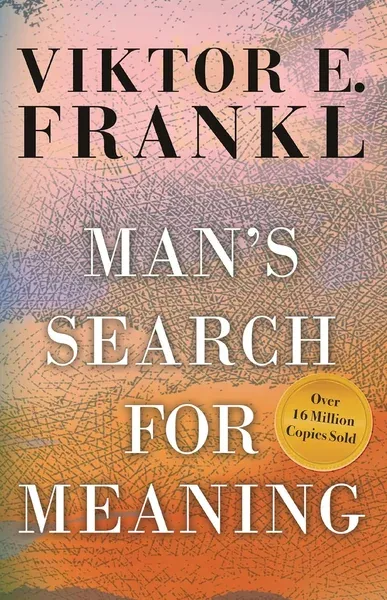
A Psychiatrist's Journey Through Hell
Viktor E. Frankl endured imprisonment in Nazi concentration camps, including Auschwitz and Dachau, losing his wife, parents, and brother to the Holocaust. What sets this memoir apart from other survivor accounts is Frankl's unique perspective as a trained psychiatrist. Throughout his imprisonment, he observed how fellow prisoners responded to extreme suffering, noting crucial differences between those who survived and those who perished.
This young adult adaptation of Frankl's classic work presents the book's first section, which details camp life with unflinching honesty yet avoids graphic sensationalism. Viktor Frankl describes the psychological phases prisoners experienced: shock upon arrival, apathy during imprisonment, and the complex process of readjustment to freedom. His clinical eye captures the mental deterioration many suffered while highlighting the remarkable resilience of those who maintained hope and purpose.
This adapted version includes helpful context about the Holocaust timeline and Nazi camp system, making historical references clearer for younger readers without oversimplifying Frankl's sophisticated observations.
The Birth of Logotherapy
The memoir's second half introduces logotherapy, Viktor Frankl's revolutionary approach to psychotherapy. Unlike Freud's emphasis on pleasure-seeking or Adler's focus on power, logotherapy centers on humanity's primary drive to find meaning. Frankl argues that even in the most hopeless situations, humans can choose their attitude toward unavoidable suffering.
This psychological framework emerged directly from his camp experiences. Viktor E. Frankl observed that prisoners who found purpose—whether through thoughts of loved ones, unfinished work, or helping fellow inmates—were more likely to survive. Those who lost their sense of meaning often succumbed to despair and death.
For young adults grappling with questions about life direction and personal purpose, Frankl's insights prove remarkably relevant. His three sources of meaning—creative values (what we give to the world), experiential values (what we take from the world), and attitudinal values (the stance we take toward unavoidable suffering)—provide a practical framework for navigating life's challenges.
Powerful Lessons for Modern Teens
The book's central message resonates powerfully with contemporary young adults facing academic pressure, social media comparison, and uncertainty about the future. Viktor Frankl's assertion that meaning must be discovered individually, not prescribed universally, speaks directly to a generation seeking authentic purpose beyond external validation.
Several key themes prove particularly relevant for teenage readers. Frankl's discussion of choosing one's attitude in difficult circumstances offers valuable perspective on handling setbacks, failures, and disappointments. His emphasis on responsibility—that freedom means being responsible for finding one's own meaning—challenges readers to move beyond blame and victimhood toward active engagement with life.
The logotherapy principle that suffering becomes bearable when it has meaning provides crucial insight for young people dealing with mental health challenges, family difficulties, or academic stress. Rather than dismissing pain, Viktor E. Frankl shows how unavoidable suffering can become a pathway to growth and deeper understanding.
Where the Adaptation Succeeds and Struggles
This young adult adaptation effectively bridges the gap between Frankl's profound insights and teenage comprehension levels. The additional context about Holocaust history and psychological concepts helps readers unfamiliar with either subject grasp the book's significance. Footnotes and explanatory sections clarify terminology without interrupting the narrative flow.
However, some adaptations feel unnecessary and potentially patronizing. Certain simplified explanations that teenage readers could easily understand in Viktor Frankl's original prose suggest underestimation of young adult intellectual capacity. The book's most powerful passages—Frankl's direct observations about human nature under extreme conditions—remain unchanged, as they should.
The psychological concepts, while complex, are presented clearly enough for motivated high school students to grasp. Teachers and parents should be prepared to discuss Holocaust history and existential themes that arise from the reading.
A Timeless Message for Any Generation
Man's Search for Meaning deserves its reputation as essential reading, and this adaptation successfully introduces Viktor E. Frankl's wisdom to younger audiences. The book's core insight—that meaning can be found in any circumstance, including the most horrific—offers hope without naive optimism.
For young adults questioning their direction, dealing with setbacks, or seeking deeper purpose beyond material success, Frankl's work provides both inspiration and practical guidance. The Holocaust context, while sobering, demonstrates that if meaning can be found in concentration camps, it can certainly be found in the challenges of modern life.
This adaptation works best for mature teenagers ready to engage with serious philosophical questions and difficult historical realities. While accessible, the content requires emotional maturity to process Viktor Frankl's experiences and apply his insights constructively.