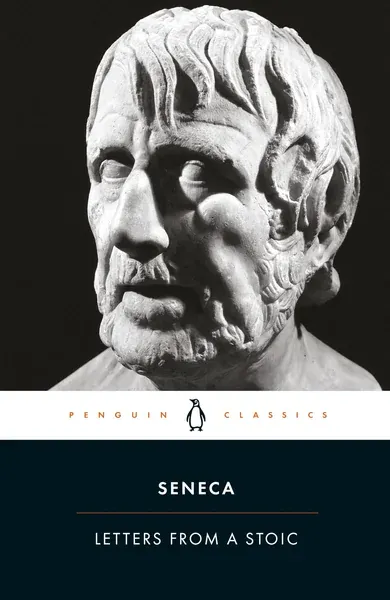
Nearly two thousand years after they were written, Seneca's philosophical letters to his friend Lucilius remain startlingly relevant. Is Letters from a Stoic worth reading in 2026? The answer depends on whether you're prepared to wrestle with ideas that challenge modern assumptions about happiness, success, and the good life. This collection offers practical philosophy wrapped in the voice of a man who lived through extraordinary contradictions—a Stoic teacher who advised the notoriously unstable Emperor Nero, a advocate for simple living who amassed considerable wealth.
Readers seeking quick self-help fixes might find disappointment here, but those willing to engage with deeper questions about human nature will discover a philosophical framework that has influenced everyone from Marcus Aurelius to modern cognitive behavioral therapy. Like Ryan Holiday's The Obstacle Is the Way or William Irvine's A Guide to the Good Life, this collection makes ancient Stoicism accessible, though Seneca's approach is more nuanced and often more challenging than contemporary interpretations.
A Roman Senator's Philosophical Correspondence
Seneca wrote these letters during his later years, ostensibly as philosophical guidance for his younger friend Lucilius. The epistolary format creates an intimate tone that distinguishes this work from more formal philosophical treatises. Rather than systematic doctrine, we get philosophy in conversation—practical wisdom emerging through discussion of daily concerns, from dealing with grief to managing wealth.
The letters range from brief meditations on single concepts to longer explorations of complex ethical questions. Some focus on immediate practical concerns: how to treat slaves humanely, how to face illness with equanimity, how to maintain friendship across social divisions. Others tackle weightier philosophical problems: the nature of virtue, the relationship between wisdom and happiness, the proper attitude toward death.
What makes these letters particularly compelling is their psychological realism. Seneca doesn't present himself as a sage who has achieved perfect wisdom, but as someone still learning, still struggling with the gap between philosophical ideals and human limitations.
The Philosopher's Contradictions
The most fascinating aspect of reading Seneca involves confronting his contradictions. Here was a man preaching detachment from worldly goods while serving as one of Rome's wealthiest citizens, advocating for simple living while navigating the complexities of imperial politics. Critics have long pointed to these inconsistencies as evidence of hypocrisy, but they might better be understood as the inevitable tensions of trying to live philosophically in an imperfect world.
Seneca's position as Nero's advisor adds another layer of complexity. The letters were written during and after his years of political influence, a period when he witnessed and perhaps enabled considerable imperial excess. This context gives weight to his repeated emphasis on moral courage and the importance of maintaining inner freedom regardless of external circumstances.
The philosophical content itself reflects this tension between ideal and reality. Seneca's Stoicism is less rigid than that found in Epictetus or Marcus Aurelius. He acknowledges the difficulty of achieving perfect philosophical detachment and offers a more gradualist approach to moral development.
Practical Philosophy for Modern Anxieties
Modern readers often find Seneca's advice surprisingly applicable to contemporary concerns. His discussions of time management, work-life balance, and emotional regulation speak directly to current anxieties. The letter on anger offers techniques that parallel modern anger management strategies. His thoughts on grief provide frameworks for processing loss that remain psychologically sound.
However, Seneca's advice isn't always comfortable or easy to implement. His approach to dealing with setbacks—viewing them as opportunities for moral growth—requires a fundamental shift in perspective that many readers find challenging. His advocacy for voluntary discomfort as preparation for inevitable hardship runs counter to modern comfort-seeking tendencies.
The letters work best when approached not as a self-help manual but as philosophical exercises designed to develop new ways of thinking about common problems. Seneca's goal isn't to eliminate suffering but to transform our relationship to it.
Where Ancient Wisdom Shows Its Age
While much of Seneca's advice transcends its historical moment, some aspects feel dated or problematic to modern readers. His casual acceptance of slavery, though he advocates for humane treatment, reflects the moral blindness of his era. His assumptions about gender roles and social hierarchy can feel jarring to contemporary sensibilities.
The letters also suffer from occasional repetitiveness. Seneca returns to the same themes—death, virtue, the proper use of time—throughout the collection, sometimes without adding new insights. The epistolary format, while intimate, can also feel artificial; these letters were clearly intended for a wider audience than just Lucilius.
Some readers find Seneca's tone preachy or self-satisfied, particularly when he discusses the behavior of others. His criticism of popular entertainments and social customs can come across as elitist, reflecting his privileged position in Roman society.
A Stoicism for the Imperfect
What ultimately makes Letters from a Stoic valuable is its realistic approach to philosophical living. Unlike more systematic philosophical works, these letters acknowledge the messiness of actual moral development. Seneca presents Stoicism not as a destination but as a practice—a set of mental tools for navigating an uncertain world.
The collection works particularly well for readers new to ancient philosophy, offering accessible entry points into complex ideas. However, it also rewards deeper study, with layers of meaning that emerge through careful reading and reflection.
For modern readers seeking practical philosophy, Seneca offers something more substantive than most contemporary self-help literature, but less systematic than academic philosophy. It's philosophy for people who live in the world rather than retreat from it—which may explain why these ancient letters continue to find new audiences more than two millennia after they were written.
Where to Buy
You can find Letters from a Stoic at Amazon, your local bookstore, or directly from Penguin Classics, with various editions available depending on your preference for translation and annotation.