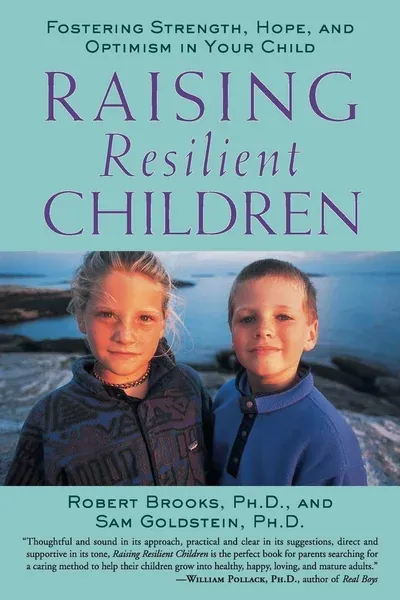
The Resilience Revolution in Modern Parenting
Is Raising Resilient Children worth reading for parents navigating today's complex world? In an era where childhood anxiety rates soar and parents grapple with screen time, social media pressures, and academic competition, Robert Brooks and Sam Goldstein offer a refreshing perspective that moves beyond mere problem-solving to genuine strength-building.
This comprehensive parenting book stands apart from quick-fix approaches by focusing on what the authors call "resilient mindsets" – the internal compass that helps children bounce back from setbacks and thrive despite challenges. Unlike parenting guides that promise overnight transformations, Brooks and Goldstein present evidence-based strategies rooted in decades of clinical psychology research and real-world application.
Two Experts, One Unified Vision
Brooks and Goldstein bring complementary expertise to this collaboration. Brooks, a clinical psychologist with extensive work in resilience research, partners with Goldstein's background in neuropsychology and learning differences. This dual perspective creates a well-rounded approach that addresses both emotional and cognitive aspects of child development.
Their writing style balances accessibility with authority, avoiding both dry academic jargon and oversimplified platitudes. The authors weave together case studies, research findings, and practical applications in a way that feels conversational yet credible. Parents seeking evidence-based guidance will appreciate the thorough citations, while those wanting immediate help will find actionable strategies throughout.
The book's strength lies in its systematic approach to building what Robert Brooks and Sam Goldstein term "resilient mindsets." Rather than focusing solely on self-esteem – which they argue can become hollow praise – the authors emphasize developing genuine competence and problem-solving abilities.
Key frameworks include teaching children to view mistakes as learning opportunities rather than personal failures, helping them develop realistic optimism, and fostering a sense of personal control over their responses to difficult situations. Brooks and Goldstein distinguish between helicopter parenting and what they call "charismatic adult" behavior – being present and supportive while allowing children to develop their own coping strategies.
Their emphasis on empathy development sets this parenting book apart from more behaviorally-focused guides. The authors demonstrate how teaching children to understand others' perspectives directly contributes to their own emotional resilience and social competence.
Practical Applications That Work
Where many parenting books fail in the implementation phase, Raising Resilient Children excels by providing specific, age-appropriate strategies. Brooks and Goldstein offer concrete examples of how to respond when a child faces academic struggles, peer conflicts, or family stressors without rushing to fix every problem.
Their approach to discipline emphasizes natural consequences and collaborative problem-solving rather than punitive measures. Parents will find detailed guidance on having difficult conversations with children, helping them develop emotional vocabulary, and creating family environments that naturally foster resilience.
These practical elements make the theoretical concepts immediately applicable to daily family life, distinguishing this child development guide from more abstract approaches.
Where the Approach Shows Limitations
Despite its strengths, the book occasionally oversimplifies complex family dynamics. Parents dealing with significant mental health issues, learning disabilities, or trauma may find some strategies insufficient without additional professional support. The authors acknowledge these limitations but could provide more specific guidance for when to seek specialized help.
Some critics argue that the resilience framework, while valuable, can inadvertently place too much responsibility on children to adapt to problematic systems rather than advocating for necessary changes in schools or communities. The book focuses primarily on individual and family solutions rather than addressing broader social factors that impact children's wellbeing.
The case studies, while helpful, tend toward middle-class families with relatively stable circumstances. Parents facing poverty, single parenthood challenges, or cultural conflicts may need supplemental resources to adapt these strategies effectively.
A Solid Investment for Thoughtful Parents
Raising Resilient Children offers genuine value for parents seeking to move beyond reactive parenting toward proactive strength-building. The book's evidence-based approach and practical applications make it particularly worthwhile for families wanting to develop long-term emotional intelligence and coping skills.
Parents of school-age children will find the most immediate applicability, though the principles extend well into adolescence and beyond. The collaborative approach between Robert Brooks and Sam Goldstein creates a comprehensive resource that addresses both everyday challenges and more significant developmental hurdles.
While not a magic solution, this parenting book review confirms that it provides the framework and tools for raising children who can navigate life's inevitable difficulties with confidence and compassion.