Delia Owens crafted something remarkable with her debut novel—a story that operates simultaneously as a murder mystery, coming-of-age tale, and love letter to the natural world. The question many parents ask is whether Where the Crawdads Sing is appropriate for teenagers, and the answer requires examining both its literary merits and mature content. This novel tackles themes of abandonment, survival, and sexual awakening with a sophistication that makes it ideal for older teens ready to grapple with complex emotional territory.
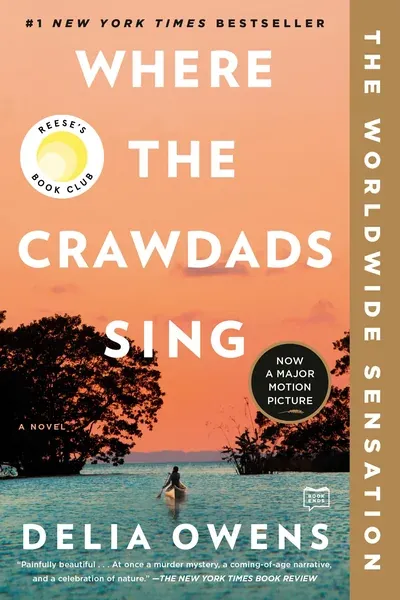
The cover imagery perfectly captures the novel's essence: a misty marsh landscape that promises both beauty and isolation. Like The Secret Garden or Island of the Blue Dolphins, this book centers on a young person finding strength in solitude, though Owens' treatment is far more psychologically complex than those childhood classics.
The Marsh Girl's World
Kya Clark, abandoned by her family in the North Carolina marshlands, grows up essentially feral. Owens constructs a narrative that spans decades, following Kya from childhood through young adulthood as she navigates complete social isolation. The marshland becomes more than setting—it's character, teacher, and sanctuary rolled into one. Owens, drawing on her background as a wildlife scientist, infuses the natural descriptions with scientific precision that never feels clinical.
The dual timeline structure—alternating between Kya's development and a murder investigation in 1969—creates sustained tension without resorting to cheap tricks. This isn't a thriller masquerading as literary fiction; it's a character study that happens to include mystery elements. The pacing allows readers to fully inhabit Kya's world before the central conflict emerges.
Owens' Lyrical Precision
The prose walks a careful line between accessible and elevated. Owens avoids the purple prose that often mars nature writing, instead crafting sentences that feel organic to Kya's perspective. When describing the marsh, the language becomes more poetic; when focused on human relationships, it turns sparse and guarded—mirroring Kya's emotional state throughout.
The scientific observations woven throughout never feel forced. Kya's autodidactic education through nature guides and Tate's teaching creates a believable framework for the detailed biological knowledge that enriches the narrative. This educational element makes the book particularly valuable for young readers interested in biology or environmental science.
Kya, Tate, and the Men Who Shape Her
Kya's character development drives the entire novel. Her transformation from frightened child to self-sufficient young woman feels earned rather than convenient. The relationships with Tate Walker and Chase Andrews reveal different aspects of her personality and highlight the central tension between her need for human connection and her hard-won independence.
Tate represents intellectual companionship and gentle guidance—he teaches Kya to read and respects her autonomy. Chase embodies a more predatory masculinity, though Owens avoids making him a simple villain. The contrast between these relationships illuminates Kya's growth and the choices available to women in her circumstances and era.
Supporting characters like Jumpin' and Mabel provide crucial moments of human kindness without overwhelming Kya's essential isolation. Their restrained support feels authentic to the time period and social dynamics of the rural South.
Themes That Resonate Beyond the Marsh
The novel explores abandonment not just as childhood trauma but as a defining force that shapes how we approach love, trust, and belonging. Kya's relationship with education—both formal schooling she's denied and the natural world that becomes her classroom—speaks to different ways of acquiring knowledge and wisdom.
The treatment of female sexuality is frank but not explicit. Kya's sexual awakening and the consequences of her choices receive serious attention without becoming sensationalized. This mature handling of intimate relationships makes the book appropriate for older teens while potentially challenging for younger readers.
Social class and prejudice form another significant thread. The townspeople's treatment of Kya reflects broader patterns of how communities ostracize those who don't conform, making this relevant to contemporary discussions about belonging and acceptance.
Where It Stumbles
The murder mystery resolution feels somewhat contrived after such careful character development. Without spoiling specifics, the final revelations require accepting coincidences that strain believability. The courtroom scenes lack the nuanced understanding of human nature that makes the rest of the novel so compelling.
Some of the dialogue, particularly from secondary characters, occasionally sounds more contemporary than the 1950s-60s setting would suggest. These moments briefly break the otherwise immersive historical atmosphere Owens creates.
The pacing drags in the middle sections, where the dual timeline structure sometimes feels more mechanical than organic. Readers seeking constant forward momentum may find these passages challenging.
A Literary Phenomenon Worth Understanding
Where the Crawdads Sing succeeds because it treats its young protagonist's inner life with complete seriousness. Kya's psychological complexity and the novel's exploration of how environment shapes identity make it particularly valuable for teenage readers navigating their own questions about belonging and self-determination.
The book works best for mature teens—roughly 15 and older—who can appreciate both the literary craftsmanship and handle the themes of sexual assault, abandonment, and social isolation. Parents should be aware that the novel includes attempted rape and discusses sexual relationships, though nothing is gratuitously explicit.
For readers who connected with The Book Thief or The Kite Runner, this offers similar emotional depth with a distinctly American perspective on resilience and survival.
Where to Buy
You can find Where the Crawdads Sing: Reese's Book Club at Amazon, Barnes & Noble, your local independent bookstore, or directly from Putnam Publishers.