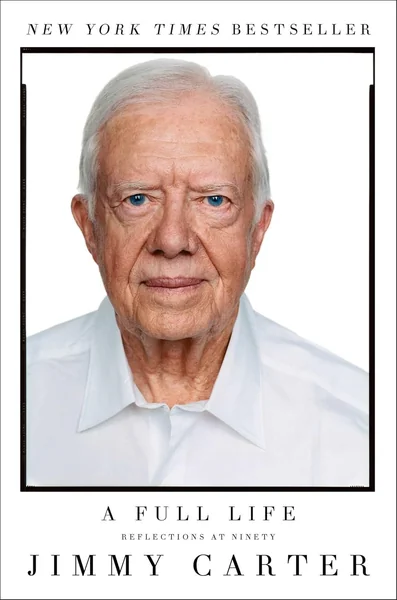
The Making of a President
Carter's early chapters trace his transformation from a peanut farmer's son to naval officer to reluctant politician. The former president doesn't romanticize his rural upbringing, instead examining how growing up in segregated Georgia shaped both his worldview and his later commitment to human rights. His account of the 1976 presidential campaign reveals a candidate who understood his outsider status was both his greatest asset and his eventual political weakness.
The book's treatment of Carter's single presidential term proves particularly valuable for understanding one of America's most consequential yet controversial presidencies. Rather than defending every decision, Carter acknowledges where his inexperience with Washington politics hindered his effectiveness. His frank assessment of the Iran hostage crisis and energy shortages demonstrates the kind of honest reflection rarely seen from former presidents.
Presidential Burdens and Humanitarian Triumphs
Carter's presidency occupies roughly a third of the memoir, but his treatment avoids both self-pity and excessive justification. He examines his administration's achievements—the Camp David Accords, environmental protection, human rights advocacy—alongside its failures with equal candor. The most revealing passages explore how his moral certainty sometimes blinded him to political realities, creating the perception of ineffectual leadership that contributed to his 1980 defeat.
Where the memoir truly shines is in Carter's discussion of his post-presidency humanitarian work. His accounts of disease eradication efforts, election monitoring, and Habitat for Humanity construction provide insight into what many consider the most successful ex-presidency in American history. These chapters demonstrate how Carter channeled his moral convictions into concrete global impact once freed from electoral constraints.
The Weight of Nine Decades
Carter's writing style remains accessible throughout, avoiding both political jargon and literary pretension. At ninety, he writes with the confidence of someone who no longer needs to impress anyone, resulting in prose that feels genuinely conversational. The book's greatest strength lies in Carter's ability to connect personal experiences with broader historical currents without losing sight of individual human costs.
However, the memoir occasionally suffers from uneven pacing, particularly in chapters covering his naval career and early political campaigns. Some readers may find his detailed policy discussions dry compared to more personal revelations. The book works best when Carter allows his natural storytelling ability to emerge, particularly in anecdotes about world leaders and his reflections on marriage and faith.
A President's Honest Reckoning
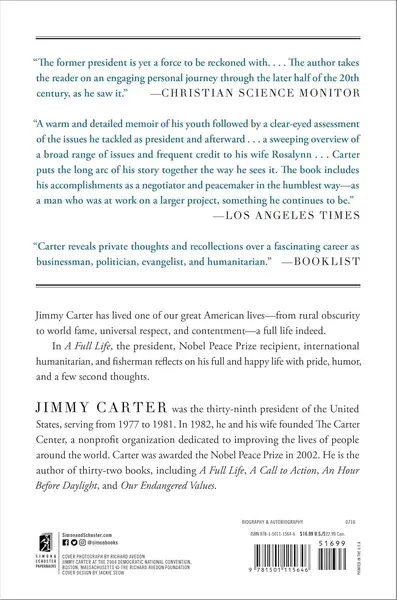
A Full Life succeeds because Carter refuses to airbrush his legacy. He acknowledges political mistakes, personal limitations, and the gap between his moral aspirations and practical achievements. This honesty makes his successes—both as president and humanitarian—more meaningful rather than less. The memoir serves as both historical document and moral reflection, offering lessons about leadership, service, and the long view of a life well-lived.
For readers seeking authentic presidential memoirs, Carter's reflections provide rare insight into how power shapes and reveals character. While not without its slower passages, the book rewards patient readers with genuine wisdom about American politics, international relations, and the possibility of redemption through service. The bottom line: A Full Life offers the kind of honest self-examination that makes it essential reading for anyone interested in presidential history or the moral dimensions of political leadership.