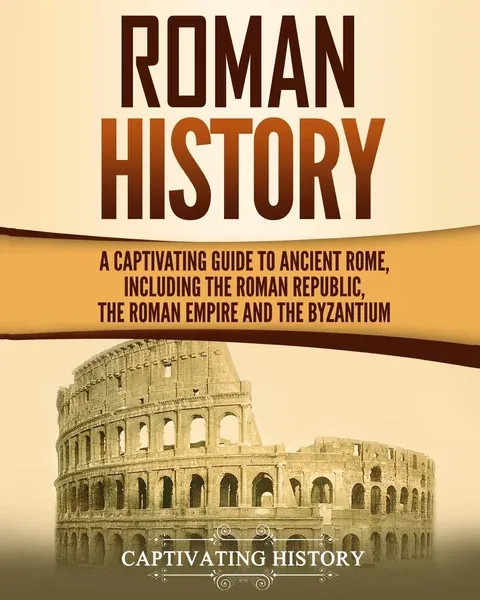
Three Civilizations in One Volume
Captivating History's approach reportedly divides Roman history into three distinct sections: the Roman Republic, the Roman Empire, and the Byzantine Empire. This organizational structure would help readers understand the major transitions and transformations that occurred over Rome's long existence. The Republic section would cover the familiar territory of Caesar, Pompey, and the civil wars that ended the republican system. The Empire portion would examine the Augustan settlement through later periods.
The inclusion of Byzantium would set this Captivating History guide apart from many introductory Roman histories that end with the fall of the Western Empire in 476 CE. By continuing the story through the Eastern Roman Empire's evolution into the Byzantine state, the book would provide continuity that many readers don't encounter elsewhere. This decision reflects a more complete understanding of Roman history's scope, though it means less space devoted to each period.
Accessible but Surface-Level Treatment
The writing style appears to prioritize clarity and readability over analytical depth. Captivating History presents information in digestible chunks with clear transitions between topics and time periods. The prose avoids academic jargon while maintaining respect for the complexity of the subject matter. This approach serves beginning readers well but may frustrate those seeking more sophisticated historical analysis.
The book's treatment of key events tends toward straightforward narrative rather than examining competing historical interpretations or the challenges of sources. While this makes for easier reading, it misses opportunities to engage with the fascinating debates that make Roman history so compelling to scholars. Captivating History presents events with confidence that sometimes obscures the uncertainty and disagreement that characterizes much ancient history.
Rather than focusing extensively on individual personalities, the guide emphasizes institutional developments and major political changes. Historical figures receive attention proportional to their historical significance, but the treatment remains relatively brief given the book's scope. The approach works better for understanding broad patterns than for developing deep appreciation of historical personalities.
The coverage of military campaigns and political developments forms the backbone of the narrative. Major conflicts like the Punic Wars and other conquests receive adequate attention within the space constraints. However, social and cultural developments often take a backseat to political and military events, which limits the book's ability to convey the full richness of Roman civilization.
Strengths and Notable Limitations
The Captivating History book succeeds in providing a coherent overview that connects different periods of Roman history. The chronological organization helps readers understand causation and continuity across centuries of development. For students preparing for exams or general readers wanting historical context, this systematic approach proves valuable.
However, the survey format inevitably leads to oversimplification of complex issues. The rise of Christianity, the crisis of the third century, and the gradual transformation of the empire receive compressed treatment that loses much nuance. The book also shows limited engagement with recent scholarship that has complicated traditional narratives about decline, transformation, and cultural change.
The absence of maps, timelines, or other visual aids represents a missed opportunity to help readers navigate the geographical and chronological complexity of the subject. Given the book's introductory nature, these elements could have significantly enhanced comprehension.
Best Suited for Specific Readers
This Captivating History guide works best for readers who want a systematic introduction to Roman history without the commitment required by more comprehensive academic treatments. High school students, college students taking survey courses, or adults seeking to fill gaps in their historical knowledge will find the book's scope and organization helpful.
However, readers looking for engaging storytelling, detailed character studies, or sophisticated analysis should look elsewhere. The ancient Rome book functions more as a reference overview than as compelling narrative history. Those seeking dramatic historical storytelling may find this approach somewhat dry by comparison.