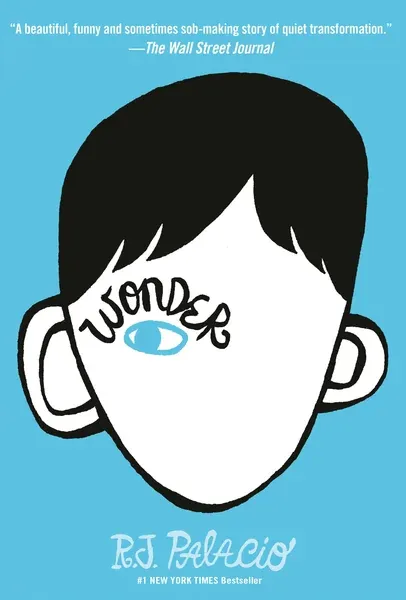
When considering whether Wonder is appropriate for 4th graders, parents often wonder about the emotional weight and mature themes in R. J. Palacio's acclaimed middle grade novel. This story of August Pullman, a boy with a facial difference starting mainstream school for the first time, has become a classroom staple since its 2001 publication—but its unflinching look at bullying and social cruelty raises legitimate questions about age appropriateness.
Fans of Bridge to Terabithia and Because of Winn-Dixie will recognize the same blend of childhood authenticity and emotional depth that makes certain books both beloved and challenging for young readers.
A Boy's Journey into the World
Wonder follows ten-year-old August "Auggie" Pullman as he navigates fifth grade at Beecher Prep after years of homeschooling. Born with a severe facial difference caused by a combination of genetic conditions, Auggie has endured numerous surgeries but still looks markedly different from his peers. Palacio crafts the narrative through multiple perspectives, allowing readers to see through Auggie's eyes as well as those of his sister Via, his friend Jack Will, and others in his orbit.
The story structure works brilliantly, preventing any single character from becoming a simple victim or villain. Each voice reveals different layers of the central conflict: how we treat those who look different, and how difference affects not just the individual but entire families and communities.
Palacio's Accessible Yet Powerful Prose
R. J. Palacio, an art director turned novelist, writes with remarkable clarity and emotional precision. Her prose never talks down to young readers while remaining thoroughly accessible. The dialogue feels authentic—capturing how kids actually speak without sanitizing the occasional cruelty that emerges in school hallways.
The author's background in visual arts shows in her vivid character descriptions and her understanding of how physical appearance affects social dynamics. She handles Auggie's medical condition with clinical accuracy while never reducing him to his diagnosis.
Auggie, Via, and the Complex Cast
August Pullman emerges as a fully realized character—funny, insecure, brave, and occasionally bratty in the way real ten-year-olds can be. His love of Star Wars and science grounds him as a typical kid, while his experiences with medical procedures and public stares add layers of maturity beyond his years.
Via, Auggie's teenage sister, provides crucial perspective on how having a sibling with special needs affects family dynamics. Her resentment and guilt feel painfully authentic. Jack Will's friendship with Auggie—complicated by peer pressure and moments of betrayal—captures the messy reality of childhood loyalty.
Even Julian, the primary antagonist, receives nuanced treatment. His cruelty stems from fear and social conditioning rather than pure malice, making him a more realistic and ultimately more disturbing villain.
Themes That Resonate Beyond the Classroom
The novel's central message—"choose kind"—could easily become saccharine, but Palacio earns her moral authority through honest depiction of how difficult kindness can be. The R.J. Palacio book explores themes of acceptance, empathy, and courage without offering easy answers or unrealistic resolutions.
Bullying receives particularly thoughtful treatment. Palacio shows how exclusion and cruelty operate on multiple levels—from outright harassment to subtle social ostracism. The adult characters don't always handle situations perfectly, reflecting real-world limitations of institutional responses to bullying.
The theme of identity runs throughout: how we see ourselves versus how others see us, and how physical appearance influences but doesn't determine our worth. These concepts prove sophisticated enough for adult book clubs while remaining accessible to elementary readers.
Where the Story Stumbles
Wonder occasionally veers toward the inspirational in ways that might make some readers uncomfortable. Auggie's journey sometimes feels too neatly resolved, with transformation and acceptance coming perhaps too readily. The book's overwhelmingly positive resolution, while emotionally satisfying, doesn't fully acknowledge how persistent and systemic ableism can be.
Some secondary characters feel underdeveloped, existing primarily to demonstrate points about kindness rather than as fully realized individuals. The multiple-perspective structure, while generally effective, sometimes repeats emotional beats unnecessarily.
My Take: Age-Appropriate with Guidance
Wonder works well for most 4th graders, but parents should consider their child's emotional maturity and previous exposure to discussions about disability and difference. The reading level sits comfortably at upper elementary—complex enough to challenge growing readers without overwhelming them with difficult vocabulary or syntax.
The bullying content, while realistic, can be intense. Children who have experienced exclusion or teasing may find certain scenes particularly affecting. However, the book's ultimate optimism and clear moral framework make it an excellent conversation starter for families ready to discuss these topics.
Teachers consistently report that Wonder generates meaningful classroom discussions about empathy and acceptance. The book's popularity means many children will encounter it through school or peer recommendations regardless of parental decisions.
Where to Buy
You can find Wonder at Amazon, your local bookstore, or directly from Knopf Books for Young Readers.