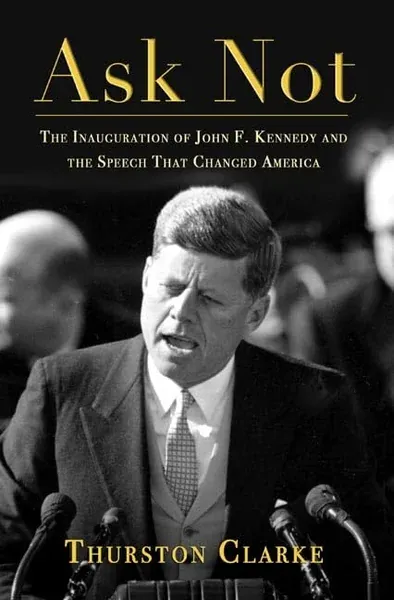
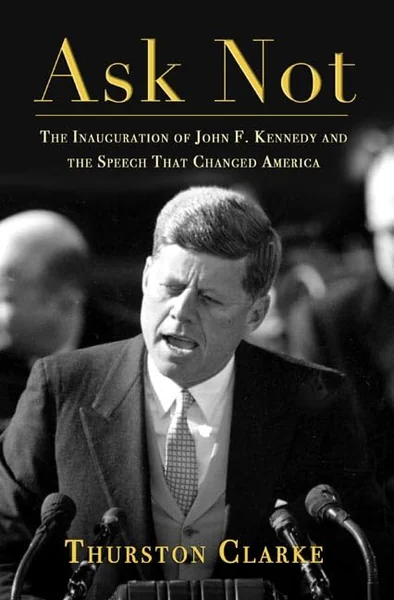
The Twenty-Day Countdown
The book's structure mirrors the urgency of its subject matter, following Kennedy through the final weeks before his inauguration with documentary precision. Clarke captures the president-elect juggling cabinet appointments, managing party politics, and wrestling with the monumental task of articulating his vision for America during the height of the Cold War.
What sets Ask Not apart from other Kennedy biographies is its laser focus on process over personality. Clarke doesn't attempt to psychoanalyze JFK or rehash familiar Camelot mythology. Instead, he examines how presidential rhetoric gets crafted, revised, and refined under extraordinary pressure. The author demonstrates remarkable access to primary sources, including previously unpublished correspondence and interview transcripts that illuminate the collaborative nature of presidential speechwriting.
The Architects of Presidential Rhetoric
While Kennedy remains the central figure, Clarke skillfully profiles the advisors, speechwriters, and political operatives who shaped the inaugural address. Theodore Sorenson emerges as a key collaborator, though Clarke resists the temptation to diminish Kennedy's own contributions to the speech's creation. The author navigates the delicate question of authorship with nuance, showing how great presidential speeches result from intensive collaboration rather than solitary genius.
Clarke's research methodology proves particularly impressive here. Rather than relying solely on published memoirs or secondary sources, he conducted extensive interviews with surviving participants and accessed private papers that previous biographers overlooked. This groundwork allows him to reconstruct conversations and decision-making processes with remarkable specificity.
Crafting Cold War Optimism
The book excels at placing Kennedy's rhetoric within its historical context. Clarke demonstrates how the inaugural address responded to specific domestic and international challenges facing America in 1961. The speech's famous call to service wasn't merely inspirational flourish but calculated political strategy designed to rally public support for ambitious domestic programs and assertive foreign policy.
Clarke analyzes how Kennedy's team studied previous inaugural addresses, particularly Lincoln's and FDR's, to understand how presidents use these ceremonial moments to define their administrations. The author shows Kennedy consciously choosing between competing rhetorical traditions—populist versus patrician, confrontational versus conciliatory—as he shaped his message for maximum political impact.
Where Historical Narrative Stumbles
Despite its many strengths, Ask Not occasionally suffers from pacing issues that diminish its narrative momentum. Clarke's commitment to comprehensive research sometimes produces passages that read more like academic footnotes than compelling storytelling. The book's middle sections bog down in procedural details about scheduling conflicts and staff meetings that, while historically accurate, don't advance the central story about speechwriting and presidential communication.
Additionally, Clarke's analysis would benefit from greater attention to the inaugural address's reception and long-term influence. While he effectively documents the speech's creation, he provides limited insight into how it was received by different audiences or how it shaped subsequent presidential rhetoric. Readers seeking broader cultural analysis of Kennedy's rhetorical legacy may find themselves wanting more interpretive depth.
Essential Reading for Political History Enthusiasts
Ask Not succeeds brilliantly at demystifying presidential speechwriting without diminishing the significance of Kennedy's inaugural address. Clarke's meticulous research and engaging prose make this ideal for readers fascinated by political process rather than personality-driven biography. The book works particularly well for those interested in understanding how great political rhetoric gets crafted under pressure.
History buffs who appreciated David McCullough's Truman or Robert Caro's The Power Broker will find Clarke's approach similarly rigorous and rewarding. The bottom line: This is essential reading for anyone seeking to understand not just what Kennedy said on January 20, 1961, but why those words resonated so powerfully and how they came to be spoken at exactly the right moment in American history.