BOOKS
Published
Read Time
6 min read
Our Rating
3.5
A provocative exposé that challenges Kennedy mythology through women's experiences, though relying heavily on unverifiable sources and maintaining an unrelentingly adversarial tone throughout.
Reviewed by
LuvemBooks
Share This Review
Ask Not by Maureen Callahan: Kennedy Family Expose Review
Our Rating
3.5
A provocative exposé that challenges Kennedy mythology through women's experiences, though relying heavily on unverifiable sources and maintaining an unrelentingly adversarial tone throughout.
In This Review
- What Works & What Doesn't
- A Dynasty Built on Silence
- Callahan's Investigative Method
- The Women at the Center
- Controversial Claims and Evidence
- Historical Context and Impact
- Who Should Read This Political Biography
- Where to Buy
What Works & What Doesn't
What Works
- Fills significant gaps in Kennedy family historical record by centering women's experiences
- Extensive use of previously sealed legal documents and insider testimony
- Clear, accessible prose that makes complex legal and political machinations understandable
- Challenges decades of sanitized Kennedy narratives with specific, documented allegations
- Reveals institutional mechanisms that protected powerful men from consequences
What Doesn't
- Heavy reliance on single-source testimony that cannot be independently verified
- Adversarial tone sometimes obscures distinction between documented facts and reasonable inferences
- Limited attempt to provide balanced perspective or historical context for Kennedy-era behavior
- Some claims may not meet rigorous investigative journalism standards
A prosecutorial account that lands more blows than it misses — though readers should come prepared to weigh its evidence carefully. Is Ask Not worth reading for those seeking an unvarnished look at America's most famous political dynasty? Maureen Callahan's 2024 exposé pulls no punches in examining the Kennedy family's treatment of women, delivering a scathing indictment that challenges decades of carefully crafted public mythology. This controversial Kennedy book presents a stark counternarrative to the Camelot legend, focusing specifically on the women who were allegedly silenced, discarded, or destroyed in service of Kennedy ambitions.
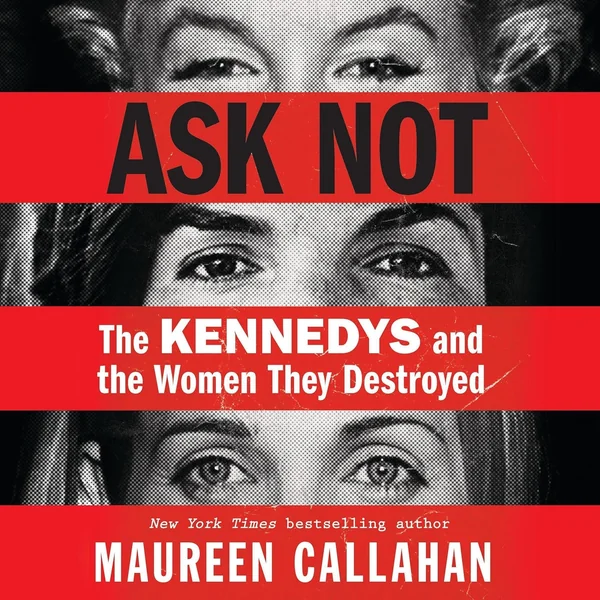
The book's cover design, featuring repeating eyes, serves as an apt metaphor for the watchful scrutiny Callahan applies to her subjects. The imagery suggests both surveillance and the many perspectives of women whose stories have long been overlooked or suppressed. Readers familiar with investigative works like The Crown in Crisis or Chappaquiddick will recognize Callahan's commitment to presenting uncomfortable truths about powerful families.
A Dynasty Built on Silence
Maureen Callahan structures her narrative around the experiences of multiple women across generations of Kennedy men, from Joseph Kennedy Sr. through to more recent family members. Rather than chronological biography, she employs a thematic approach that traces patterns of behavior and institutional cover-ups. The main strength of this organizational method is how it reveals systemic issues rather than isolated incidents.
The author draws extensively from previously overlooked sources, including sealed court documents, private correspondence, and interviews with family insiders who agreed to speak only after decades of silence. Maureen Callahan's background as a New York Post columnist and author of previous celebrity exposés informs her approach, which combines tabloid sensibilities with serious investigative journalism.
Callahan's Investigative Method
The prose style here is deliberately confrontational, eschewing the reverent tone typically applied to Kennedy family narratives. Callahan writes with the urgency of someone determined to puncture myths, and her sentences carry the punch of courtroom arguments. This approach serves the material well, as deferential language would undermine the book's central thesis about institutional power protecting privileged men.
Where the writing succeeds is in its clarity and accessibility. Complex legal proceedings and family machinations are presented in straightforward terms that general readers can follow. Callahan avoids academic jargon while maintaining the gravity her subject matter demands.
The Women at the Center
Rather than treating the female subjects as peripheral figures in Kennedy men's stories, Maureen Callahan attempts to center their experiences and agency. She profiles women ranging from well-known historical figures like Marilyn Monroe and Mary Jo Kopechne to lesser-known individuals whose encounters with the family resulted in legal settlements or personal devastation.
The book's most compelling sections focus on the institutional mechanisms that enabled alleged misconduct—the lawyers, fixers, and media allies who worked to protect the Kennedy reputation. These behind-the-scenes figures emerge as subjects in their own right, revealing how power operates through networks of complicity.
Controversial Claims and Evidence
Callahan makes serious allegations that extend well beyond previously reported incidents. She argues that the Kennedy family's political success was built partly on a foundation of silenced women and covered-up scandals. The evidence presented includes financial records of settlements, testimony from sealed depositions, and accounts from family employees who witnessed events firsthand.
However, the book's main weakness lies in its reliance on sources who often cannot be independently verified. Some key claims rest on single-source testimony or circumstantial evidence that, while suggestive, may not meet the standards readers expect from serious investigative work. The author's adversarial stance toward her subjects sometimes obscures the distinction between documented facts and reasonable inferences.
Historical Context and Impact
Ask Not arrives at a cultural moment when powerful men face increased scrutiny for past behavior toward women. Callahan explicitly connects Kennedy-era incidents to contemporary discussions about institutional protection of predatory behavior. This framing gives the historical material immediate relevance but also risks imposing current frameworks on past events in ways that may distort understanding.
For readers interested in Kennedy family history, Ask Not functions as a necessary corrective to hagiographic treatments, though it represents the opposite extreme. The truth likely lies somewhere between the Camelot mythology and Callahan's prosecutorial account.
Who Should Read This Political Biography
This book is essential reading for those studying how political dynasties maintain power and control narratives, particularly regarding scandals involving women. It will appeal to readers of investigative journalism who want aggressive reporting on how lawyers, fixers, and media allies close ranks around a powerful family.
However, those seeking balanced Kennedy family biography may find Callahan's approach too one-sided. The author makes little attempt to present sympathetic portrayals of her subjects or acknowledge the complexities of wielding political power in turbulent times. The book works best when read alongside more traditional Kennedy biographies that provide broader historical context.
Where to Buy
If you want a serious challenge to the Camelot myth — told through the women the Kennedy machine allegedly left behind — Ask Not earns a place on the shelf; the Amazon link in the sidebar has the current price.
Related Reviews
Reviews of books we picked for readers who enjoyed Ask Not.