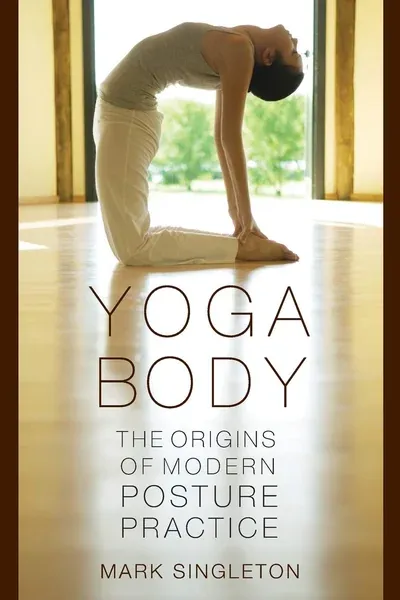
Challenging Sacred Assumptions About Yoga
Mark Singleton's "Yoga Body: The Origins of Modern Posture Practice" delivers a scholarly bombshell that questions everything modern practitioners think they know about yoga. Published in 2010 and based on his PhD thesis, this meticulously researched work argues that contemporary postural yoga represents a radical departure from traditional hatha yoga—not the ancient, unbroken lineage many believe it to be. For yoga practitioners seeking to understand their practice's true origins, this Mark Singleton book offers eye-opening revelations that may reshape how they view their mat time.
Unlike popular yoga books that celebrate the practice's supposed ancient purity, Singleton presents uncomfortable truths backed by historical evidence. His central thesis challenges the widespread belief that modern yoga flows directly from ancient Indian traditions, instead revealing a complex evolution influenced by 19th and 20th-century physical culture movements.
The Scholar's Methodology
Singleton approaches yoga history with academic rigor rarely seen in popular yoga literature. His research methodology combines historical documentation, textual analysis, and cross-cultural examination of physical practices. The author traces how Western gymnastics, bodybuilding, and military exercises influenced the development of modern postural yoga, particularly through figures like Krishnamacharya and his students.
The book's strength lies in Mark Singleton's careful documentation of how asanas (yoga postures) gained unprecedented prominence in modern practice. He demonstrates that traditional hatha yoga texts contained relatively few physical postures, focusing instead on breathing techniques, meditation, and energy work. This scholarly approach sets "Yoga Body" apart from the mystical or purely experiential yoga books that dominate the market.
Dismantling the Ancient Lineage Myth
Perhaps the most provocative aspect of Singleton's work involves his examination of how 19th-century attitudes toward yoga differed dramatically from today's reverence. He reveals that by the 1800s, hatha yoga practitioners were often viewed with suspicion or outright contempt in Indian society, seen as marginal figures practicing degraded forms of spirituality.
The transformation of yoga's reputation, according to Mark Singleton, occurred through strategic rebranding by reformers like Vivekananda, who emphasized yoga's philosophical aspects while downplaying its physical components. This historical context explains how yoga evolved from a despised practice to the globally celebrated phenomenon it is today.
Singleton's research uncovers how many postures now considered "traditional" were actually borrowed from European gymnastics and physical culture systems during the early 20th century. This revelation challenges the authenticity claims made by many modern yoga schools and teachers.
The Modern Posture Revolution
The book extensively examines how the emphasis on asanas became yoga's defining characteristic in the West, a development Singleton argues was historically unprecedented. Traditional yoga texts like the Hatha Yoga Pradipika contained far fewer postures than modern classes, focusing primarily on seated meditation positions.
Singleton traces this shift to influential teachers like Krishnamacharya, who incorporated gymnastic sequences and calisthenic exercises into yoga instruction. The resulting "vinyasa" style, with its flowing movements and athletic demands, bears little resemblance to classical hatha yoga practice.
This transformation wasn't accidental but reflected deliberate choices by yoga innovators who sought to make the practice appealing to modern audiences, particularly those already engaged with physical fitness culture.
Where the Analysis Falls Short
While Mark Singleton's historical research is impressive, "Yoga Body" occasionally suffers from academic density that may alienate general readers. The extensive footnotes and scholarly apparatus, while necessary for credibility, can interrupt the narrative flow. Some practitioners may find the book's tone overly clinical, lacking the inspirational quality they seek in yoga literature.
The author's focus on debunking myths sometimes overshadows discussion of what modern yoga does accomplish for practitioners. While historical accuracy matters, Singleton gives limited attention to the genuine physical and psychological benefits that millions derive from contemporary practice, regardless of its historical authenticity.
Additionally, the book's concentration on postural yoga means other aspects of modern yoga culture—meditation apps, philosophy workshops, therapeutic applications—receive minimal treatment.
A Necessary Disruption for Serious Practitioners
"Yoga Body" serves as essential reading for yoga teachers, serious practitioners, and anyone interested in how spiritual traditions evolve and adapt. Mark Singleton's scholarship provides crucial context for understanding why modern yoga looks and feels so different from its historical predecessors.
The book's revelations need not diminish appreciation for contemporary yoga practice. Instead, they offer a more nuanced understanding of how traditions transform to meet new cultural needs. For practitioners comfortable with yoga's hybrid nature—part ancient wisdom, part modern innovation—Singleton's work enhances rather than threatens their practice.
However, readers seeking validation of yoga's ancient purity or mystical origins will likely find this book review challenging. Singleton writes for those who value historical truth over comforting mythology, making "Yoga Body" a rewarding but potentially uncomfortable read for devoted practitioners.