The Trinity of Addiction
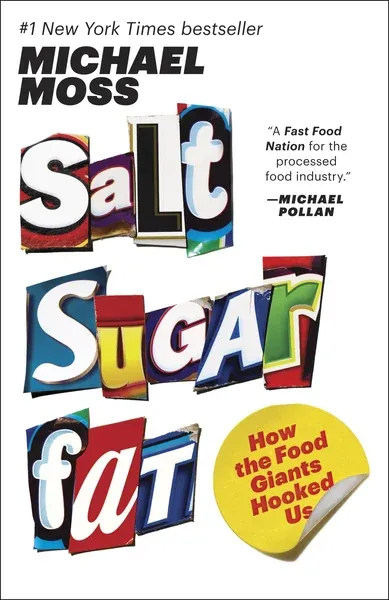
Michael Moss delivers a damning investigation into how food giants weaponized three simple ingredients to create products that hijack our biology. Salt Sugar Fat isn't just another diet book—it's investigative journalism that reads like a corporate thriller, exposing how companies like Nestlé engineered addiction into everyday foods. More than a decade after its 2013 publication, this exposé remains disturbingly relevant as processed food consumption continues to climb globally.
Fans of Fast Food Nation will find similar corporate accountability themes here, though Moss focuses more on the food science laboratories than the agricultural supply chain. Where Eric Schlosser examined the broader fast-food ecosystem, Moss zeroes in on the precise engineering of taste that keeps consumers coming back for products like Oreos and countless other processed foods.
Moss's Investigative Approach
Moss brings his investigative journalism background to bear with methodical precision. Rather than relying on sensationalism, he builds his case through internal company documents, interviews with former food scientists, and analysis of marketing strategies. His approach resembles the best corporate exposés—think The Smartest Guys in the Room—where the evidence accumulates gradually until the full scope of manipulation becomes undeniable.
The author structures his investigation around the three titular ingredients, dedicating substantial sections to each. He traces how salt became essential for extending shelf life while triggering cravings, how sugar evolved from sweetener to behavioral manipulator, and how fat transformed from nutritional necessity to industrial tool for creating "mouthfeel" that overrides satiety signals.
Inside the Food Laboratory
The book's strength lies in its access to the inner workings of major food corporations. Moss reveals how companies employ teams of food scientists—not nutritionists, but engineers—whose job is maximizing what the industry calls "bliss point": the precise combination of salt, sugar, and fat that triggers maximum consumption. These aren't accidents of food production; they're calculated strategies tested in laboratories and focus groups.
He documents how Nestlé and other giants use brain imaging technology to understand exactly how their products affect neurological reward pathways. The parallels to tobacco industry research become uncomfortably clear—both industries studied addiction mechanisms not to prevent them, but to exploit them more effectively.
The Marketing Machine Behind the Science
Beyond the laboratory, Moss exposes sophisticated marketing campaigns designed to normalize overconsumption. He details how companies target children with cartoon mascots and tie products to emotional experiences, creating brand loyalty that persists into adulthood. The marketing isn't selling food—it's selling behavioral patterns.
The book reveals internal company discussions where executives acknowledge their products contribute to obesity and diabetes, yet continue aggressive marketing to vulnerable populations. These moments read like scenes from tobacco litigation, complete with the same deflection tactics and public health denials.
Where Science Meets Corporate Strategy
Moss excels at making complex food science accessible without oversimplifying. He explains how companies manipulate texture, temperature, and even packaging sounds to enhance the eating experience. The infamous "crunch" of certain snacks isn't accidental—it's engineered to register as fresh and appealing at a neurological level.
However, the Michael Moss book occasionally gets bogged down in technical details that may overwhelm general readers. Some sections read more like industry reports than narrative journalism, though this thoroughness also serves as evidence of Moss's meticulous research.
A Decade Later Assessment
The book's predictions about rising obesity rates and processed food dependency have proven prescient. If anything, the strategies Moss documented in 2013 have intensified with the rise of delivery apps and pandemic-driven processed food consumption. The corporate playbook he exposed remains largely unchanged, making this investigation more relevant, not less.
Yet some readers may find the solutions section underdeveloped. While Moss effectively diagnoses the problem, he offers fewer concrete strategies for individuals or policymakers seeking change. The book functions better as exposé than action plan.