The Promise of Better Living Through Breathing
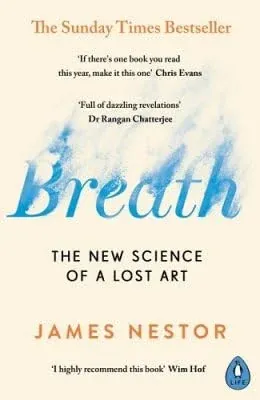
Is Breath: The New Science of a Lost Art worth reading for anyone seeking to improve their health through simple techniques? James Nestor makes bold claims about humanity's forgotten breathing wisdom, promising everything from better sleep to enhanced athletic performance through proper respiration. The book presents a journey through both ancient practices and modern scientific research that challenges how we think about this most basic human function.
Nestor positions breathing as a lost art that modern humans have abandoned to our detriment. Unlike books such as The Oxygen Advantage by Patrick McKeown, which focuses primarily on athletic performance, James Nestor casts a wider net, exploring how breathing affects everything from facial structure to longevity. The author weaves together personal experimentation, historical research, and interviews with breathing experts to build his case that most of us are doing it wrong.
Nestor's Investigative Approach
The author takes a participatory journalism approach, subjecting himself to various breathing experiments while researching the topic. Nestor spent time with breathing practitioners, sleep researchers, and even underwent medical monitoring while deliberately breathing through his mouth for weeks. This experiential element distinguishes the book from purely academic treatments of respiratory science.
James Nestor's writing style balances accessibility with scientific rigor, though he occasionally ventures into breathless enthusiasm that can feel oversold. He presents complex physiological concepts clearly enough for general readers while providing enough detail to satisfy those seeking deeper understanding. The pacing moves between personal narrative, historical exploration, and scientific explanation, creating variety that keeps readers engaged even through denser technical sections.
The Science Behind the Claims
The book's strength lies in its compilation of research from diverse fields—anthropology, medicine, evolutionary biology, and sports science. Nestor examines how mouth breathing versus nose breathing affects facial development in children, drawing on orthodontic research and anthropological evidence. He explores the work of researchers like Konstantin Buteyko, whose breathing method has gained scientific support for treating asthma and anxiety.
However, Nestor sometimes presents correlations as causations and cherry-picks studies to support his thesis. While the core premise about breathing's importance has solid scientific backing, some claims venture into territory where the evidence is more preliminary. The author's enthusiasm occasionally outpaces the research, particularly when discussing more dramatic health transformations attributed solely to breathing changes.
Ancient Wisdom Meets Modern Research
One of the book's most compelling aspects is how Nestor connects ancient breathing practices with contemporary scientific findings. He examines pranayama from yoga traditions, Tibetan breathing exercises, and indigenous practices, showing how these age-old techniques align with modern understanding of respiratory physiology. This synthesis reveals that many traditional cultures intuited breathing's importance long before scientists could explain the mechanisms.
The historical perspective adds depth beyond typical health books. James Nestor traces how industrialization and modern lifestyle changes may have contributed to breathing dysfunction, examining everything from food texture changes to architectural influences on respiratory health. These connections, while sometimes speculative, provide thought-provoking context for understanding breathing as more than just a mechanical process.
Practical Applications and Limitations
The book offers specific breathing techniques readers can implement, from simple nose breathing exercises to more advanced practices like the Wim Hof method. Nestor provides clear instructions and explains the physiological rationale behind each technique. The practical guidance ranges from immediately applicable tips (taping your mouth during sleep) to more intensive practices requiring dedication and potentially supervision.
Where the book falters is in its sometimes evangelical tone about breathing as a panacea. While improved breathing can certainly benefit health, Nestor occasionally oversells its impact, suggesting it can address conditions that typically require comprehensive medical treatment. Readers with serious health conditions should approach the more dramatic claims with appropriate skepticism and medical consultation.
The Breathwork Movement Context
Nestor's work arrives amid growing interest in breathwork, following books like Wim Hof Method and the rise of breathing-focused wellness practices. His contribution stands out for its journalistic rigor and scientific grounding, even when conclusions stretch beyond current evidence. The book serves as both introduction to breathing science and exploration of why this fundamental process has gained renewed attention in wellness circles.
The author successfully argues that breathing deserves more attention in health discussions, even if not all his claims prove equally persuasive. His synthesis of research and practice provides a comprehensive overview of breathing's role in human health, making complex topics accessible to general readers seeking practical improvements.
A Worthwhile Read with Caveats
Breath succeeds as an engaging exploration of respiratory science and its practical applications, despite occasional overreach in its claims. James Nestor's investigative approach and clear writing make this breathing book accessible to readers seeking to understand and improve their breathing patterns. The combination of scientific research, historical context, and practical techniques provides value for those interested in optimizing this fundamental bodily function.
The book works best when readers approach it with informed skepticism, appreciating the solid research while questioning the more dramatic claims. For those seeking evidence-based approaches to better breathing, it offers a solid foundation, provided they supplement it with professional guidance for any serious health concerns.