6 min read
3.5
A beautifully crafted but morally complex children's book that sparks important conversations about love, sacrifice, and healthy relationships, though its controversial themes require careful discussion with young readers.
LuvemBooks
Our Rating
3.5
A beautifully crafted but morally complex children's book that sparks important conversations about love, sacrifice, and healthy relationships, though its controversial themes require careful discussion with young readers.
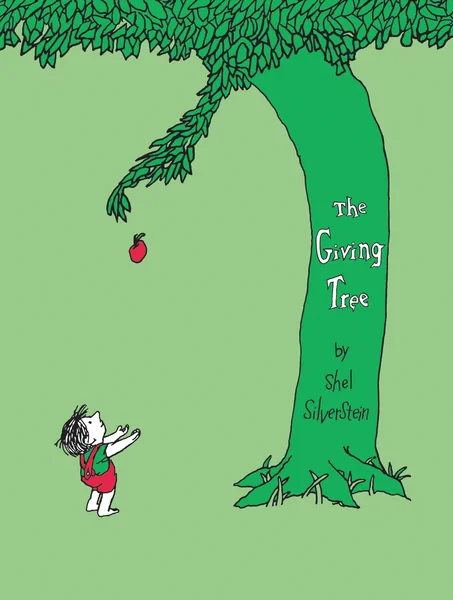
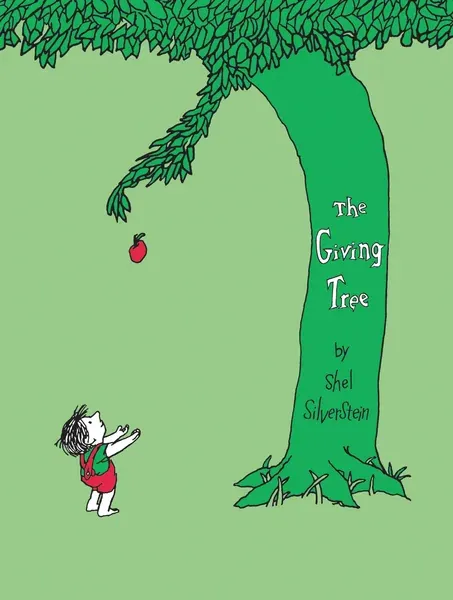
Silverstein's prose is spare and rhythmic, perfectly suited to read-aloud sessions. The black-and-white illustrations complement the text with clean lines that focus attention on the relationship between tree and boy. This visual simplicity makes the book accessible to very young children, which is precisely what concerns many critics.
The narrative structure follows a clear pattern: the boy needs something, the tree provides it, the tree is happy. This repetition creates a hypnotic quality that can feel soothing or deeply troubling, depending on your interpretation. Silverstein's choice to gender the tree as female while leaving the human character male has prompted extensive analysis about the messages this sends about sacrifice and relationships.
Unlike picture books that celebrate mutual friendship, The Giving Tree presents a relationship that becomes increasingly one-sided. The tree's repeated phrase "and the tree was happy" becomes more haunting with each iteration as she literally diminishes herself for someone who never reciprocates her love.
What makes The Giving Tree so divisive isn't what it says explicitly, but what it implies about love, sacrifice, and healthy boundaries. Critics argue the book normalizes several problematic dynamics that concern child development experts.
The tree's unconditional giving, while presented as noble, models self-destructive behavior. She enables the boy's selfishness by never asking for anything in return, never setting boundaries, and celebrating her own destruction. This has led some educators to worry that children might internalize the message that love requires complete self-sacrifice.
The gendered nature of this dynamic adds another layer of concern. With the tree as female and the taker as male, some interpret the story as reinforcing traditional gender roles where women are expected to give endlessly without receiving care in return. Child psychologists have noted that children who identify with the tree might learn to equate love with self-erasure.
Conversely, defenders of the book argue that it beautifully illustrates unconditional parental love. They see the tree as a metaphor for how parents naturally want to provide for their children, finding joy in giving even when it requires sacrifice. From this perspective, the story celebrates the profound bond between parent and child rather than promoting unhealthy relationship patterns.
The reading level of The Giving Tree makes it accessible to children as young as four, but the emotional complexity suggests it's better suited for older children who can engage in discussion about its themes. Many child development experts recommend using it as a conversation starter rather than a simple bedtime story.
For preschoolers (ages 3-5), the book's core message may be too abstract, and they might simply see it as a story about a nice tree. Elementary-age children (6-10) are more likely to grasp the relationship dynamics but may need guidance to understand concepts like boundaries and reciprocity. Middle-grade readers (11-13) can engage with the book's controversial aspects and form their own opinions about its messages.
The key is not whether to read it, but how to read it. Parents and teachers who share this book should be prepared to discuss questions like: "Do you think the tree was happy? What could the boy have done differently? Is it fair for one friend to always give while the other always takes?"
The Giving Tree stands apart from other classic children's books in its moral ambiguity. While books like Where the Wild Things Are or Charlotte's Web also deal with complex themes, they typically offer clearer moral frameworks. Charlotte sacrifices for Wilbur, but their friendship is mutual and Charlotte's death serves a natural purpose rather than enabling bad behavior.
Similarly, books like The Very Hungry Caterpillar or Silverstein's own Where the Sidewalk Ends celebrate growth and imagination without the troubling undertones that make The Giving Tree so divisive. This unique position in children's literature is precisely what has kept it relevant—and controversial—for nearly sixty years.
Whether The Giving Tree represents the best or most problematic aspect of Silverstein's work depends largely on your interpretation of its central relationship. His other works, particularly his poetry collections, showcase his ability to capture childhood wonder without the moral complexity that surrounds this particular story.
The book's enduring popularity suggests it resonates with many readers, but its critics raise valid concerns about the messages it sends. In an era increasingly focused on teaching children about healthy relationships and emotional boundaries, The Giving Tree requires more contextual discussion than many classic picture books.
For families who choose to include it in their library, the key is approaching it as a conversation starter rather than a simple lesson about love and generosity. Used thoughtfully, it can help children think critically about relationships, boundaries, and what healthy love actually looks like.
You can find The Giving Tree at Amazon, your local bookstore, or directly from HarperCollins Publishers.