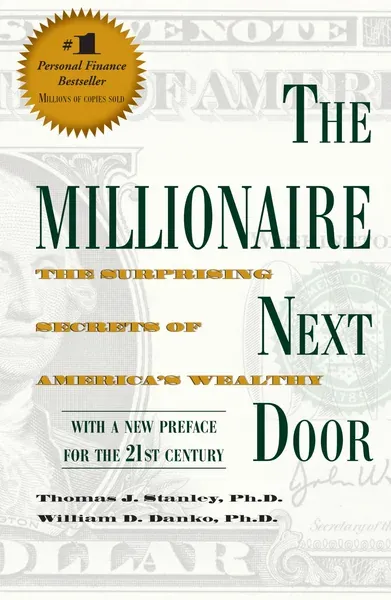
The wealthy drive flashy cars, live in mansions, and flaunt designer clothes, right? Thomas J. Stanley and William D. Danko's groundbreaking research shatters this assumption completely. Is The Millionaire Next Door worth reading in 2026? Absolutely—but perhaps not for the reasons you'd expect. This book reveals that America's truly wealthy are more likely to drive used Toyota Camrys than luxury vehicles, a finding that remains as relevant today as when first published.
Readers familiar with Rich Dad Poor Dad or Your Money or Your Life will recognize similar themes about challenging conventional wisdom around wealth, but Stanley and Danko's approach relies heavily on empirical data rather than personal anecdotes.
The Research Behind the Revelations
Stanley and Danko's methodology forms the backbone of their argument. The authors conducted extensive interviews with millionaires across America, surveying over 1,000 wealthy individuals to identify patterns in their behavior, spending habits, and mindset. Their findings consistently pointed to a crucial distinction between those who appear wealthy and those who actually are wealthy.
The book introduces the concept of "Prodigious Accumulators of Wealth" (PAWs) versus "Under Accumulators of Wealth" (UAWs). PAWs typically live below their means, invest consistently, and prioritize financial independence over status symbols. UAWs, conversely, spend heavily on luxury items while building little actual wealth. This framework provides readers with a clear lens for evaluating their own financial behaviors.
What sets this research apart from other personal finance books is its statistical rigor. Rather than relying on motivational stories or theoretical frameworks, the authors present hard data about spending patterns, investment choices, and lifestyle decisions among America's millionaires.
Core Wealth-Building Principles That Still Apply
The seven characteristics of wealthy individuals that Stanley and Danko identify remain remarkably applicable decades later. Millionaires live well below their means, allocate time and money efficiently toward building wealth, and prioritize financial independence over social status. They choose occupations and investments wisely, often starting their own businesses rather than climbing corporate ladders.
Perhaps most surprisingly, the research reveals that many millionaires are first-generation wealthy, meaning they didn't inherit their fortunes. They're often small business owners in unglamorous industries—think welding contractors, dry cleaners, or pest control services rather than investment bankers or tech entrepreneurs.
The book's emphasis on frugality and long-term thinking resonates particularly well with readers seeking practical wealth-building strategies. The authors demonstrate how consistent saving and investing, even modest amounts, can compound into significant wealth over time. Their approach to asset allocation and investment selection favors index funds and blue-chip stocks over speculative investments.
The Psychology of Wealth Accumulation
Beyond the numbers, Stanley and Danko explore the psychological factors that separate wealth builders from wealth spenders. They examine how parents' financial behaviors influence their children's money habits, often in counterintuitive ways. Children of frugal millionaires sometimes become spendthrifts, while children who witness financial struggle often develop strong saving habits.
The authors also address the social pressures that prevent wealth accumulation. They argue that many high-income professionals trap themselves in cycles of lifestyle inflation, spending increases that match or exceed income growth. The pressure to "look successful" through expensive cars, homes, and clothing ultimately undermines actual wealth building.
This psychological analysis extends to investment behavior as well. The book shows how wealthy individuals think about risk differently than the general population, often viewing steady, boring investments as preferable to exciting but volatile options.
Practical Applications and Limitations
The book's strength lies in its actionable insights. Readers can immediately apply the budgeting principles, investment strategies, and lifestyle choices outlined by Stanley and Danko. The authors provide specific guidelines for determining whether someone is on track to build wealth based on their age and income.
However, the research has notable limitations that become more apparent decades later. The data primarily reflects the experiences of white, male business owners from earlier generations. The wealth-building strategies that worked in the 1980s and 1990s may require adaptation for today's economic environment, including higher education costs, different housing markets, and changing employment patterns.
The book also lacks discussion of more recent wealth-building opportunities, such as technology investments, cryptocurrency, or the gig economy. Modern readers may need to supplement these classic principles with contemporary financial strategies.
Where the Analysis Falls Short
While Stanley and Danko's research methodology is generally solid, their conclusions sometimes oversimplify complex financial situations. The authors occasionally present correlation as causation, suggesting that certain behaviors directly cause wealth accumulation when the relationship may be more nuanced.
The book's focus on individual behavior also minimizes structural factors that influence wealth building, such as access to education, geographic location, or economic timing. A small business owner who started in the 1970s faced different economic conditions than someone starting today, factors the authors don't fully address.
Additionally, the writing style can feel repetitive at times, with key findings restated multiple times throughout different chapters. Some readers may find the pace slow compared to more recent personal finance books that prioritize actionable advice over detailed research presentation.
A Timeless Foundation with Modern Relevance
Despite its limitations, The Millionaire Next Door remains valuable for readers seeking evidence-based wealth-building guidance. The core principles of living below your means, investing consistently, and prioritizing assets over appearance have stood the test of time. The book's research-driven approach provides a solid foundation that readers can adapt to current economic conditions.
The book works best for readers who appreciate detailed analysis over quick tips, those starting their wealth-building journey, and anyone questioning whether lifestyle inflation is undermining their financial goals. It's less suitable for readers seeking cutting-edge investment strategies or those already well-versed in basic personal finance principles.
Where to Buy
You can find The Millionaire Next Door at Amazon, Barnes & Noble, your local bookstore, or directly from the publisher in both print and digital formats.