LuvemBooks
LuvemBooks

Expert Book Reviews & Recommendations

​
​
LuvemBooks
LuvemBooks

Expert book reviews and reading recommendations

Company
AboutPrivacy PolicyTerms of UseAffiliate Disclosure
Books
All Book ReviewsNew ReleasesTop Rated
Explore
FictionNon-Fiction
Our Network
LuvemBooks
LuvemPets
LuvemHome

© 2026 LuvemBooks. All rights reserved.

  1. Home
  2. Book Reviews
  3. Business & Economics
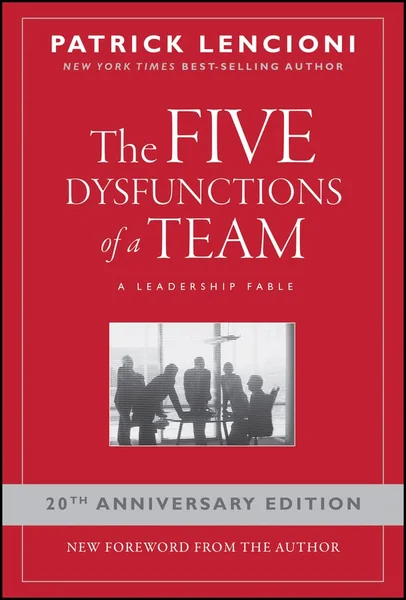
  4. The Five Dysfunctions of a Team: A Leadership Fable, 20th Anniversary Edition (J-B Lencioni by Patrick M. Lencioni

The Five Dysfunctions of a Team: A Leadership Fable, 20th Anniversary Edition (J-B Lencioni Series Book 43) by Patrick M. Lencioni front cover
BOOKS

The Five Dysfunctions of a Team by Patrick Lencioni - Review

4.2

·

8 min read

$16.00 on Amazon
Reviewed by

LuvemBooks

·

Mar 16, 2026

Lencioni's leadership fable effectively combines storytelling with practical team development frameworks, though the simplified narrative format occasionally limits the depth of implementation guidance for complex organizational contexts.

Our Review

In This Review
  • What Works & What Doesn't
  • A Business Fable That Actually Works
  • Lencioni's Storytelling Approach to Management Theory
  • The Five Dysfunctions Framework Explained
  • Practical Applications for Leadership Teams
  • Where the Fable Format Shows Its Limitations
  • My Take: Essential Reading with Realistic Expectations

What Works & What Doesn't

What Works
  • Clear, actionable framework for diagnosing team dysfunction
  • Engaging fable format makes management concepts accessible
  • Systematic approach prevents surface-level team-building solutions
  • Practical assessment tools and exercises included
  • Demonstrates interconnected nature of team problems
What Doesn't
  • Fable format limits depth of analysis and implementation guidance
  • Somewhat idealized progression through behavioral change
  • Assessment tools could be more sophisticated for complex situations
  • Limited exploration of industry-specific or cultural adaptation challenges
Ready to buy?
$16.00 - Amazon

A Business Fable That Actually Works

The Five Dysfunctions of a Team: A Leadership Fable, 20th Anniversary Edition (J-B Lencioni Series Book 43)_main_0
Is The Five Dysfunctions of a Team worth reading for leaders? Patrick Lencioni's approach transforms what could have been another dry management manual into something far more engaging—a leadership fable that delivers practical insights through storytelling. Unlike many business books that rely heavily on case studies and theoretical frameworks, Lencioni crafts a narrative around a struggling executive team, making complex organizational psychology accessible to readers at every management level.
The book follows Kathryn Petersen, a newly appointed CEO tasked with turning around a dysfunctional leadership team at a fictional technology company. Through her systematic approach to identifying and addressing team problems, readers encounter Lencioni's pyramid model of team dysfunction. This framework identifies five interconnected problems: absence of trust, fear of conflict, lack of commitment, avoidance of accountability, and inattention to results.
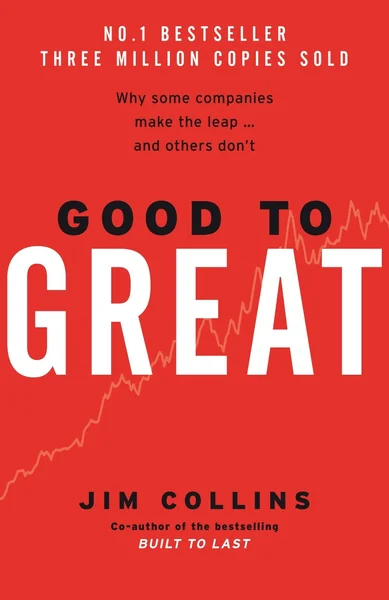
Fans of Good to Great by Jim Collins will appreciate Lencioni's focus on practical application over theoretical complexity. Where Collins examines broad organizational patterns, Lencioni zooms in on the specific interpersonal dynamics that make or break leadership teams. The fable format allows him to demonstrate how abstract concepts like psychological safety and productive conflict play out in real workplace scenarios.

Lencioni's Storytelling Approach to Management Theory

The author's decision to structure this as a business fable proves remarkably effective for conveying complex team dynamics. Rather than presenting the five dysfunctions as isolated concepts, Lencioni weaves them into a coherent narrative that shows how each dysfunction builds upon the previous one. The pyramid model becomes intuitive when readers see Kathryn systematically addressing trust issues before tackling conflict avoidance.
Lencioni's prose remains accessible throughout, avoiding the jargon-heavy language that often characterizes management literature. His background developing leadership concepts translates into clear, actionable insights that busy executives can immediately apply. The dialogue between team members feels authentic, capturing the subtle ways dysfunction manifests in boardroom discussions and strategic planning sessions.
The narrative structure also allows Lencioni to demonstrate the emotional components of team leadership—something traditional business books often overlook. When team members struggle with vulnerability-based trust or healthy conflict, readers witness the psychological barriers that prevent high-performing collaboration.

The Five Dysfunctions Framework Explained

Lencioni's pyramid model provides a systematic approach to diagnosing team problems, starting with trust as the foundation. The framework proves particularly valuable because it shows how superficial team-building exercises fail to address underlying dysfunction. Teams cannot engage in productive conflict without trust, cannot commit to decisions without healthy debate, and cannot hold each other accountable without genuine commitment to shared goals.
The absence of trust sits at the pyramid's base—team members unwilling to be vulnerable with one another about their weaknesses, mistakes, and concerns. This fundamental dysfunction creates a cascade effect, preventing teams from engaging in unfiltered conflict around important decisions. Fear of conflict leads to artificial harmony, where team members avoid difficult conversations that could lead to better outcomes.
Without healthy conflict, teams struggle to buy into decisions and commit to clear courses of action. Lack of commitment creates ambiguity around priorities and expectations, making it nearly impossible to hold team members accountable for their actions and results. The final dysfunction—inattention to results—occurs when team members prioritize individual goals or departmental objectives over collective team outcomes.
Each level of the pyramid requires specific interventions and behavioral changes. Lencioni provides concrete exercises and assessment tools that leaders can implement immediately, from trust-building exercises to structured conflict protocols.

Practical Applications for Leadership Teams

The book's strength lies in its actionable nature rather than theoretical depth. Leaders get specific tools for conducting team assessments, facilitating difficult conversations, and establishing accountability systems. The assessment questionnaire helps teams identify which dysfunctions most significantly impact their performance, providing a starting point for improvement efforts.
Lencioni's approach to building vulnerability-based trust involves structured exercises where team members share personal histories and acknowledge their professional strengths and weaknesses. While some readers may find these activities uncomfortable initially, the author demonstrates how this vulnerability creates the psychological safety necessary for productive conflict.
The conflict resolution framework proves particularly valuable for teams accustomed to artificial harmony. Rather than avoiding disagreement, Lencioni shows how healthy conflict around ideas—not personalities—leads to better decision-making and stronger commitment to outcomes. Teams learn to separate productive debate from destructive politics, focusing on finding the best solutions rather than winning arguments.
For organizations struggling with accountability, the book provides clear protocols for establishing behavioral standards and consequences. The emphasis on peer-to-peer accountability rather than top-down enforcement creates more sustainable behavioral change within leadership teams.

Where the Fable Format Shows Its Limitations

While the storytelling approach makes complex concepts accessible, it occasionally constrains the depth of analysis. Readers seeking comprehensive research backing or detailed implementation strategies may find the fable format limiting. The fictional narrative cannot explore the nuanced challenges that different organizational cultures or industries might present when applying the five dysfunctions framework.
The book assumes a relatively straightforward organizational context—a technology company with clear hierarchical structures and defined team roles. Teams operating in matrix organizations, cross-functional project groups, or highly regulated industries may need additional guidance for adapting Lencioni's concepts to their specific situations.
Some of the dialogue in the fable feels somewhat idealized, with team members progressing through behavioral changes more smoothly than often occurs in practice. Real organizational change typically involves more setbacks and resistance than the narrative suggests, potentially creating unrealistic expectations for leaders implementing these concepts.
The assessment tools, while practical, could benefit from more sophisticated measurement approaches. Teams with complex dysfunction patterns might need more nuanced diagnostic methods than the relatively simple questionnaires provided.

My Take: Essential Reading with Realistic Expectations

The Five Dysfunctions of a Team deserves its reputation as a foundational text for leadership development, particularly for managers transitioning into team leadership roles. Lencioni's pyramid framework provides a clear roadmap for diagnosing and addressing common team problems, while the fable format makes potentially dry material engaging and memorable.
The book works best as an introduction to team dynamics rather than a comprehensive guide to organizational development. Leaders should view it as a starting point for deeper exploration of concepts like psychological safety, productive conflict, and accountability systems. The frameworks require adaptation and persistence to implement effectively in most organizational contexts.
For executive teams experiencing dysfunction, this book offers both diagnostic tools and hope for improvement. The systematic approach prevents leaders from jumping to surface-level solutions without addressing underlying trust and communication issues. However, teams with deeply entrenched problems may need professional facilitation to implement Lencioni's concepts successfully.
Worth reading for managers at all levels, executive teams seeking improved collaboration, and anyone interested in understanding how high-performing teams actually function. The investment in reading time pays dividends through improved team performance and more effective leadership approaches.
Share This Review
Browse Categories

Business & Economics

Popular Reviews
POPULAR
RECENT
TRENDY

Kunitsa Co Travel Journal Review - Guided Planning & Reflection Notebook

3/16/2026

The Demon-Haunted World by Carl Sagan - Science Book Review

3/16/2026

The Road to Nowhere by Maurice Walsh - Book Review

3/15/2026