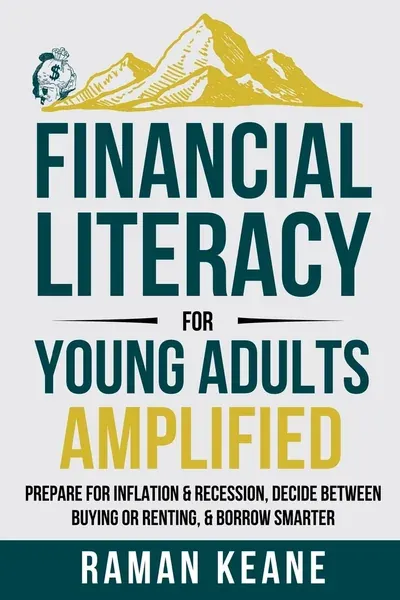
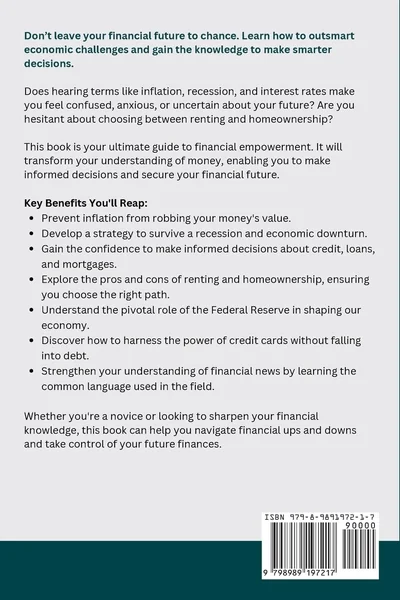
In an era where young adults face unprecedented economic challenges, from soaring housing costs to uncertain job markets, Financial Literacy for Young Adults Amplified arrives as a timely resource. Raman Keane's comprehensive guide tackles the money management skills that schools often skip, addressing everything from inflation's impact on purchasing power to the complex rent-versus-buy decision that defines many twentysomethings' financial futures.
Unlike generic financial advice books that recycle basic budgeting tips, Raman Keane's approach zeroes in on the economic realities facing today's young adults. The book's subtitle promises coverage of inflation preparation, recession planning, housing decisions, and smarter borrowing—ambitious territory that could either provide genuinely useful guidance or overwhelm readers with too many concepts at once.
The Economic Reality Check
Raman Keane opens by acknowledging what many financial guides ignore: young adults today face a fundamentally different economic landscape than previous generations. The author explores how inflation affects everything from grocery bills to student loan repayment, providing context that helps readers understand why traditional financial advice might feel disconnected from their reality.
The book's treatment of recession preparation stands out for its practicality rather than fear-mongering. Rather than suggesting young adults should hoard cash under their mattresses, Keane presents strategies for building financial resilience that acknowledge the reality of entry-level wages and existing debt burdens. The approach feels realistic for readers who are just starting their careers rather than those already established in high-paying positions.
Breaking Down the Buy-Versus-Rent Decision
One of the book's strongest sections tackles the housing decision that consumes so much mental energy for young adults. Raman Keane moves beyond the simplistic "renting is throwing money away" narrative to explore the genuine financial calculations involved in homeownership. The analysis includes factors like maintenance costs, property taxes, and opportunity costs that many first-time buyer guides gloss over.
The author provides frameworks for evaluating local housing markets and personal financial readiness that feel genuinely useful. Rather than pushing readers toward homeownership as an inevitable goal, this financial literacy book presents renting as a potentially smart financial strategy depending on individual circumstances and market conditions.
Smart Borrowing in a Debt-Heavy World
Raman Keane's approach to borrowing acknowledges that most young adults will need to take on some debt—whether for education, housing, or major purchases. The book's strength lies in helping readers distinguish between strategic borrowing and financial traps. The coverage of student loan management feels particularly relevant, addressing both federal and private loan options with an eye toward minimizing long-term costs.
The discussion of credit building provides practical guidance without the typical fear-based messaging around credit cards. Keane explains how responsible credit use can actually support financial goals rather than derail them, offering strategies that feel achievable for readers who might be intimidated by traditional credit advice.
Where the Guide Shows Its Limits
Despite its practical focus, the book occasionally suffers from trying to cover too much ground. Some sections feel rushed, particularly when discussing investment basics. Young adults looking for deep dives into specific topics might find themselves wanting more detailed guidance than Keane provides in his broad overview approach.
The book's tone, while accessible, sometimes veers toward overly casual language that might undermine the serious financial concepts being discussed. Additionally, some of the advice assumes a level of income stability that might not reflect the gig economy reality many young adults navigate.
The regional variations in housing costs and economic conditions receive limited attention, which could make some advice feel irrelevant to readers in high-cost areas or struggling local economies.
A Solid Foundation Despite Imperfections
Financial Literacy for Young Adults Amplified succeeds as a practical introduction to money management for its target audience. Raman Keane's focus on current economic challenges sets it apart from generic financial guides that ignore generational differences in economic opportunity. The book works best as a starting point for young adults who need to understand how various financial decisions interconnect rather than as a deep dive into any single topic.
The real value lies in this money management guide's realistic approach to financial planning. Rather than promising quick fixes or assuming readers have substantial disposable income, Keane provides strategies that acknowledge the constraints most young adults face while still pushing them toward better financial habits.
For parents looking to help their college-age or recent graduate children understand money management, this guide offers a contemporary perspective that addresses real-world challenges. Young adults themselves will find practical frameworks for making financial decisions in Raman Keane's book review, even if they'll need additional resources for more specialized guidance.