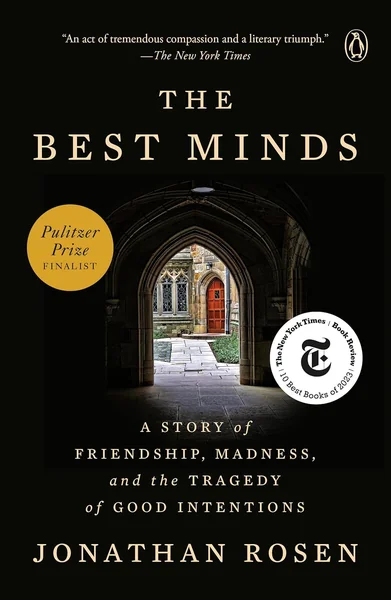
A Friendship Forged in Youth
Rosen's narrative begins with the formation of an unlikely but intense friendship during his school years. The author presents his friend as intellectually gifted, charismatic, and destined for greatness - a young man whose brilliant mind seemed to promise extraordinary achievements. The early sections capture the intoxicating nature of adolescent friendship, where shared interests and intellectual competition create bonds that feel unbreakable.
The memoir's strength lies in Rosen's ability to convey both the genuine affection he felt for his friend and the growing awareness that something was fundamentally wrong. Rather than romanticizing their relationship, he presents it with clear-eyed honesty, acknowledging both the joy and the mounting anxiety that characterized their connection.
When Brilliance Becomes Burden
As the narrative progresses, Rosen documents his friend's gradual descent into mental illness with unflinching detail. The author avoids clinical terminology, instead focusing on the human experience of watching someone you care about slip away. His prose captures the confusion and helplessness that family and friends experience when confronted with severe mental illness.
The tragedy of good intentions referenced in the subtitle becomes increasingly apparent as Rosen describes various attempts to help his friend. Well-meaning interventions, family efforts, and professional treatments all fail to halt the decline. The author's examination of these failures raises uncomfortable questions about the limitations of love, friendship, and even medical intervention in the face of severe psychiatric illness.
Rosen's Reflective Prose
Rosen writes with the measured tone of someone who has spent years processing difficult experiences. His style combines memoir with social commentary, moving seamlessly between personal anecdote and broader observations about mental health treatment in America. The prose never feels clinical or detached, despite tackling heavy subject matter.
The author's background as a writer serves him well in crafting scenes that feel immediate and authentic. He avoids both sentimentality and exploitation, presenting his friend's story with dignity while acknowledging his own role in the unfolding tragedy. The writing demonstrates remarkable restraint, particularly when describing the most painful episodes.
The Weight of Witnessing
One of the memoir's most powerful themes involves the psychological toll on those who love someone with severe mental illness. Rosen explores the guilt, frustration, and eventual acceptance that characterizes this experience. He examines how friendships change when one person requires constant care and support, and how good intentions can sometimes cause harm.
The book also addresses broader societal issues, including the inadequacy of mental health resources and the tendency to blame families for treatment failures. Rosen's perspective as an educated, well-connected friend provides insight into how even those with advantages struggle to navigate the mental health system effectively.
Where the Narrative Stumbles
Despite its emotional power, the memoir occasionally feels uneven in its pacing. Some sections devoted to broader social commentary interrupt the more compelling personal narrative. Rosen sometimes struggles to balance his roles as friend, observer, and social critic, leading to passages that feel more like journalism than memoir.
The book's structure also presents challenges. The non-linear approach to storytelling, while emotionally authentic, can make it difficult to follow the chronological progression of his friend's illness. Readers seeking a more traditional narrative arc may find themselves frustrated by the memoir's impressionistic approach.
Additionally, Rosen's tendency toward self-reflection, while generally a strength, occasionally verges on self-absorption. Some readers may wish for more focus on his friend's perspective and less on the author's own psychological journey.
A Necessary but Difficult Read
The Best Minds succeeds as both personal memoir and social commentary, offering valuable insights into the experience of loving someone with severe mental illness. Rosen's willingness to examine his own failures and limitations adds depth to what could have been a simple tragedy narrative.
The book proves most valuable for readers who have experienced similar situations - either as friends, family members, or caregivers of those with mental illness. Mental health professionals may also find it useful for understanding the perspective of those in supporting roles.
However, this is not a light read. The subject matter requires emotional resilience, and some readers may find the lack of resolution frustrating. Unlike recovery memoirs or clinical case studies, this book offers no clear answers or hopeful endings.
The bottom line: The Best Minds provides an honest, thoughtful examination of friendship tested by mental illness. While not always easy to read, it offers important insights into the limits of love and the tragedy of watching brilliant minds succumb to illness. Recommended for readers seeking authentic perspectives on mental health, friendship, and the complex dynamics of trying to help those who may be beyond help.