
Strategic Leadership Through History: 6 Essential Reads
Curated recommendations for Business leaders and executives seeking strategic thinking frameworks from historical perspectives
6 books
Perfect for: Business leaders and executives seeking strategic thinking frameworks from historical perspectives
Great leaders throughout history have faced impossible odds, navigated complex crises, and transformed entire societies through strategic vision and decisive action. For today's business executives, these historical giants offer invaluable lessons in leadership, resilience, and strategic thinking that transcend time and industry. This curated collection examines transformational leaders who redefined their fields—from Einstein's revolutionary scientific breakthroughs to Mandela's masterful approach to reconciliation, from Churchill's wartime leadership to Franklin's diplomatic genius. Each biography reveals the strategic frameworks, decision-making processes, and leadership principles that enabled these figures to achieve lasting impact. By studying their methods, modern executives can develop the strategic acumen needed to navigate uncertainty, inspire teams, and drive organizational transformation in an increasingly complex business landscape.
#1
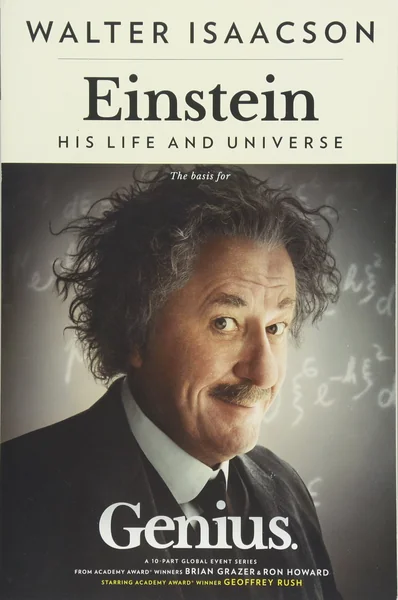
Einstein: His Life and Universe by Walter Isaacson
4.2
For executives navigating complex strategic decisions, Einstein's journey offers invaluable lessons in revolutionary thinking and managing contradictions. Isaacson masterfully presents Einstein as both visionary and pragmatist—a leader who championed peace while understanding his theories' potential for destruction. Business leaders will recognize familiar tensions: the innovator who craved solitude yet required collaboration, the strategic thinker whose breakthrough ideas emerged from questioning fundamental assumptions. Isaacson's accessible prose transforms complex scientific concepts into comprehensible strategic frameworks, demonstrating how Einstein's approach to problem-solving—challenging conventional wisdom, embracing intellectual debate, and maintaining long-term vision amid short-term pressures—directly applies to modern leadership challenges. The biography's exploration of moral leadership under pressure provides essential insights for executives facing ethical dilemmas while driving organizational transformation.
"Rather than drowning readers in equations, he weaves Einstein's personal struggles with his scientific evolution, creating a portrait that's both intellectually rigorous and emotionally compelling."
#2
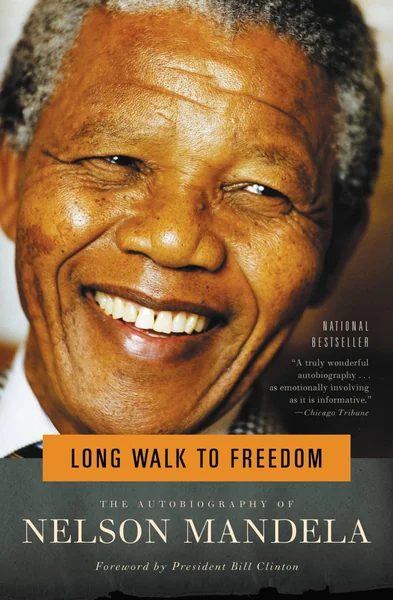
Long Walk to Freedom: The Autobiography of Nelson Mandela by Nelson Mandela
4.5
Mandela's autobiography delivers a masterclass in transformational leadership, strategic patience, and moral courage under extreme pressure. For business executives, his 27-year imprisonment becomes a profound case study in maintaining vision and values while adapting tactics to changing circumstances. The book reveals how Mandela transformed from reactive revolutionary to strategic statesman, offering invaluable lessons in stakeholder management, coalition-building, and navigating organizational change. His journey from "village boy to global leader" demonstrates the power of principled leadership in overcoming seemingly insurmountable obstacles. Executives will find particular value in Mandela's approach to negotiation, his ability to maintain credibility with diverse constituencies, and his strategic thinking about long-term organizational transformation. The autobiography's unflinching honesty about personal sacrifice and moral complexity provides essential insights for leaders facing difficult strategic decisions.
"This sweeping memoir chronicles Mandela's journey through 27 years of imprisonment and his eventual rise to become South Africa's first Black president."
#3
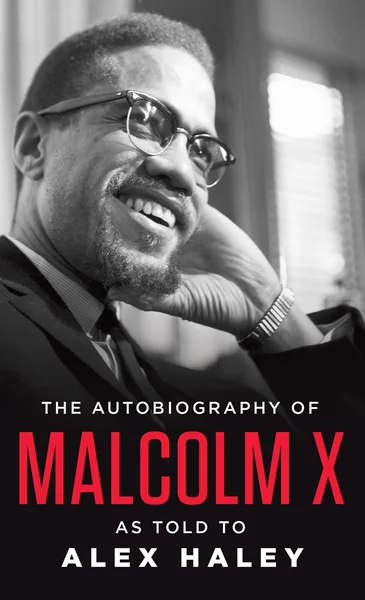
The Autobiography of Malcolm X by Malcolm X and Alex Haley
4.5
Malcolm X's radical personal transformation offers business leaders a compelling framework for organizational reinvention and strategic pivoting. His evolution from "Malcolm Little to Detroit Red to Malcolm X to El-Hajj Malik El-Shabazz" demonstrates the power of continuous learning, intellectual courage, and willingness to challenge established thinking—even one's own. For executives, his journey illustrates how effective leaders must sometimes completely restructure their strategic approach based on new information and changing circumstances. The collaboration with Alex Haley showcases the importance of clear communication and narrative coherence in leadership messaging. Malcolm X's "unflinching portrayal of transformation" and intellectual rigor in questioning fundamental assumptions provide valuable lessons for leaders navigating organizational change, crisis management, and stakeholder communication. His story proves that authentic leadership sometimes requires abandoning comfortable positions to pursue uncomfortable truths.
"The book captures not just a personal transformation but a pivotal moment in American civil rights history, told with brutal honesty and intellectual rigor."
#4

Churchill: A Life by Martin Gilbert
4.0
For executives seeking to understand leadership under extreme pressure, Gilbert's definitive Churchill biography offers unparalleled access to decision-making processes during history's most consequential moments. Unlike mythologized portraits, Gilbert presents Churchill through documentary evidence—his own words, private correspondence, and strategic deliberations. Business leaders will find invaluable lessons in Churchill's evolution from political outsider to wartime strategist, particularly his ability to navigate complex coalitions and maintain resolve during organizational crises. While Gilbert's academic approach demands commitment, the payoff is witnessing authentic leadership in action rather than sanitized heroics. The comprehensive treatment allows readers to study Churchill's strategic thinking patterns, risk assessment methods, and communication strategies across decades of political transformation. This is essential reading for leaders who understand that真正 strategic insight comes from studying primary sources rather than popular retellings.
"Gilbert presents Churchill not as the mythic wartime leader of popular imagination, but as a complex political figure whose career spanned dramatic transformations."
#5
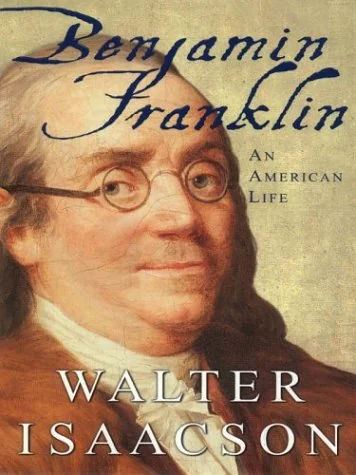
Benjamin Franklin: An American Life by Walter Isaacson
4.2
Isaacson's Franklin biography serves as a masterclass in pragmatic leadership and strategic relationship-building. For modern executives, Franklin's approach to diplomacy—turning Revolutionary War negotiations into "political thrillers"—demonstrates how to navigate complex stakeholder environments under extreme pressure. Isaacson's nuanced treatment of Franklin's contradictions offers crucial insights for leaders grappling with ethical complexity in competitive markets. The biography's strength lies in showing how Franklin balanced competing interests while building coalitions across ideological divides. His relationships with figures like John Adams reveal sophisticated approaches to managing "competitive friendships" within leadership teams. Isaacson's journalist's eye makes 18th-century political machinations feel immediately relevant to contemporary strategic challenges. Business leaders will particularly value Franklin's integration of scientific thinking, diplomatic strategy, and entrepreneurial vision—a model for modern polymathic leadership that transcends traditional functional silos.
"Complex diplomatic negotiations during the Revolutionary War read with the tension of contemporary political thrillers rather than dry historical recounting."
#6
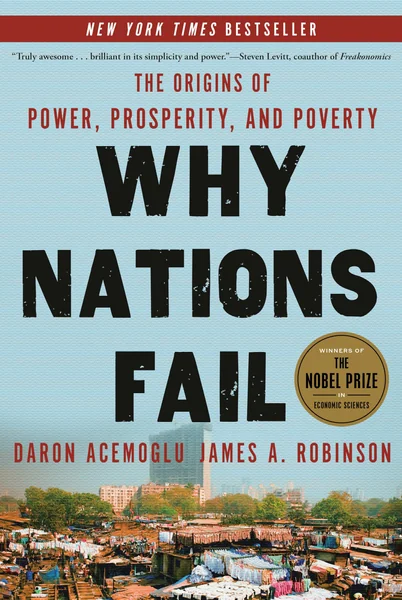
Why Nations Fail: The Origins of Power, Prosperity, and Poverty by Daron Acemoglu and James A. Robinson
4.2
This rigorous academic work provides executives with a powerful framework for understanding why organizations and nations succeed or fail. Acemoglu and Robinson's distinction between "extractive" versus "inclusive" institutions offers direct applications for corporate strategy and organizational design. Their analysis of historical case studies—from Roman decline to the contrasting development of North and South Korea—demonstrates how institutional choices create lasting competitive advantages or disadvantages. For business leaders expanding globally or restructuring organizations, the book's examination of how "secure property rights encourage investment" and "competitive markets reward innovation" provides evidence-based guidance for creating sustainable growth systems. The authors' vast historical sweep, covering everything from Maya civilization collapse to colonial strategies, equips executives with pattern recognition skills for anticipating institutional risks and opportunities. While dense, this framework is essential for leaders making decisions that will shape organizational futures.
"Inclusive institutions provide broad-based property rights, equal access to education and economic opportunities, and constraints on executive power, creating positive feedback loops."
Final Thoughts
These six books offer more than biographical entertainment—they provide a masterclass in strategic leadership from history's most transformational figures. Each leader faced seemingly insurmountable challenges yet found ways to turn obstacles into opportunities through strategic thinking, principled decision-making, and unwavering vision. Whether you're leading through crisis, driving innovation, or building lasting institutions, the frameworks and insights from these historical giants remain remarkably relevant. Invest time in studying these strategic minds, and you'll develop the long-term perspective and principled approach that distinguishes truly great leaders from mere managers.
Frequently Asked Questions
Why focus on historical leaders rather than contemporary business leaders?
Historical leaders like Churchill, Mandela, and Franklin faced existential challenges that tested their strategic thinking under extreme pressure. Their proven frameworks have stood the test of time and offer perspectives unclouded by current business trends.
How do these biographies apply to modern business challenges?
Leaders like Einstein demonstrate innovative thinking, Mandela shows conflict resolution and stakeholder management, while Churchill exemplifies crisis leadership. These universal principles translate directly to corporate strategy and team management.
Which book should executives read first?
Start with "Benjamin Franklin: An American Life" for foundational principles of strategic networking and pragmatic leadership, then move to "Churchill: A Life" for crisis management insights.
Are these books accessible for busy executives?
While comprehensive, Isaacson's biographies (Einstein and Franklin) are particularly engaging and well-paced. Consider audiobook versions during commutes to maximize learning efficiency.
How does "Why Nations Fail" fit with the biographical works?
Acemoglu and Robinson provide the institutional framework that explains why some of these leaders succeeded while others in similar circumstances failed—essential context for understanding sustainable organizational change.
What strategic frameworks will executives learn from these books?
Key frameworks include Churchill's decision-making under uncertainty, Mandela's stakeholder reconciliation strategies, Einstein's innovative problem-solving approach, and Franklin's diplomatic consensus-building methods.
Reader Comments
ExecutiveInsights
3 weeks agoBrilliant selection. I've read the Churchill and Franklin biographies - both completely changed how I approach strategic planning. Churchill's wartime cabinet management is basically a masterclass in crisis leadership. The way he balanced competing priorities while maintaining team cohesion is exactly what we need in today's volatile business environment.
StrategyBookworm
2 weeks agosurprised the Alexander Hamilton bio isn't on here given his financial innovation, but solid list overall
CorporateReader42
2 weeks agoJust finished the Mandela autobiography after seeing it on another list. The strategic patience he demonstrated is incredible - 27 years in prison and still emerged with a clear vision for reconciliation. Every executive dealing with organizational conflict should study his approach.
LuvemBooks
Great point about Hamilton! We actually considered "Alexander Hamilton" by Chernow, but wanted to focus on leaders who faced broader transformational challenges beyond specific sectors. Hamilton's financial genius is definitely worth studying though.
HistoryNerd_CEO
10 days agoThe Einstein biography was a game-changer for me. His approach to questioning fundamental assumptions and thinking in thought experiments has revolutionized how I approach innovation strategy. Isaacson really captures how Einstein's mind worked differently from his peers.
LeadershipStudent
1 week agoCan anyone comment on the Malcolm X book? I understand the transformation angle, but how does it apply to business leadership specifically?
PageTurnerExec
1 week ago@LeadershipStudent - Malcolm X shows incredible intellectual honesty and willingness to evolve his thinking based on new evidence. His transformation from street activist to global diplomat demonstrates strategic pivoting and stakeholder relationship management. Essential reading for any leader.
LuvemBooks
Exactly right! Malcolm X's journey demonstrates the courage required for strategic transformation - admitting when previous approaches aren't working and completely reimagining your strategy. That intellectual flexibility is crucial for modern executives.
BookishCEO
5 days agolove this focus on strategic thinking vs just business tactics. these leaders dealt with life-and-death decisions that make quarterly earnings seem manageable lol
SkepticalMBA
4 days agoWhy Nations Fail feels out of place with all the biographies. Different genre entirely and pretty academic. Would rather see another biography of a strategic leader.
InstitutionalThinking
3 days ago@SkepticalMBA I actually think Why Nations Fail is brilliant inclusion. Understanding why institutions succeed or fail gives context for all the individual leadership stories. These leaders succeeded partly because they understood institutional dynamics.
ExecutiveBookClub
2 days agoOur leadership team is doing the Churchill biography as our next quarterly read. Gilbert's approach is comprehensive but the strategic decision-making sections are pure gold. Highly recommend for senior management teams.
NightOwlStrategist
1 day agoBeen working through the Franklin biography during my commute - fascinating how he built coalitions and managed competing interests. His diplomatic strategies at the Constitutional Convention are basically stakeholder management 101.
LuvemBooks
That's a great observation about Franklin's coalition-building! His ability to find common ground among vastly different perspectives is exactly what modern leaders need in our polarized business environment.
TransformationCoach
6 hours agoThis list perfectly captures the difference between management and leadership. These figures all transformed their contexts rather than just operating within existing frameworks. Bookmarking this for my executive coaching clients.