
In This Article
- The Budmouth Academy Removal
- Who Is Involved and What They Are Saying
- Context: A Transatlantic Pattern
- What to Watch
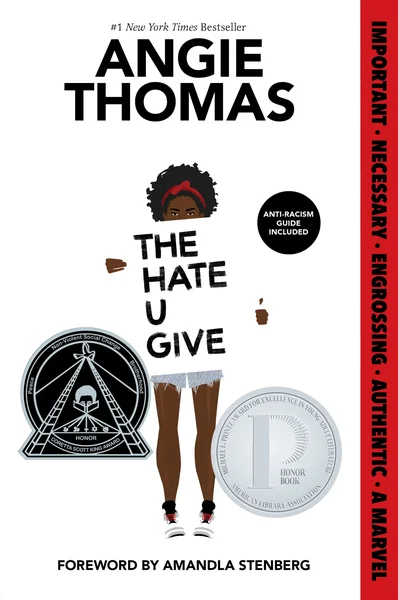
Book removal controversies that educators once associated almost exclusively with the United States have taken firm root in British schools in recent months. A March 2026 report by Index on Censorship documented that a Greater Manchester secondary school had censored scores of books from its library, with the school's librarian threatened with disciplinary action. The Manchester Mill subsequently identified the school at the centre of the scandal, reporting that a list of over 130 titles had allegedly been targeted for removal. That incident is now part of a broader pattern that includes Angie Thomas's debut novel The Hate U Give being pulled from a year 10 reading list at a Dorset secondary.
The Budmouth Academy Removal
In September 2025, Budmouth Academy in Weymouth removed The Hate U Give from its year 10 reading list following a complaint from a single parent, according to The Guardian. James Farquharson, a parent of two girls at the school and a former Conservative councillor, objected to the novel's explicit language and sexual references, and also argued in a letter posted publicly on Facebook that the book taught his daughters "that their inherited skin colour makes them baddies." A spokesperson for Budmouth Academy told The Guardian that, after careful consideration, the school had decided "there are alternative texts that raise similar themes which are better suited to our students in year 10," while confirming the book remained accessible to older pupils. A second title at the school, Pigeon English by Stephen Kelman, was also placed under review following a separate complaint from Farquharson, though it was expected to remain on the curriculum as a prescribed GCSE text.
The Guardian reported that hundreds of parents and former students signed a call for the book's reinstatement, with one ex-pupil saying she and others felt "let down" by the decision. The book's UK publisher also responded publicly: Walker Books issued an open letter firmly opposing the removal, calling The Hate U Give a groundbreaking novel that should remain in school reading lists.
The Hate U Give, published in 2017 by HarperCollins/Balzer + Bray, follows 16-year-old Starr Carter, who witnesses the fatal police shooting of an unarmed Black friend and must decide whether to speak out. For LuvemBooks' full assessment of the novel, see our review.
Who Is Involved and What They Are Saying
The National Education Union (NEU) has emerged as a principal institutional voice against the trend. At its annual conference in Brighton, NEU members voted to oppose any censorship as part of a "fight against the far right," according to the BBC. The NEU's general secretary, Daniel Kebede, said "any move to censor books in school libraries, based on misinformation and fearmongering, should ring alarm bells," and stated that children's access to a wide range of literature was "a fundamental good that the NEU is proud to defend."
The BBC also reported that the NEU's discussion was directly linked to events at the Lowry Academy in Salford — subsequently named as the Greater Manchester school in the Index on Censorship report — where books including Nineteen Eighty-Four by George Orwell and Twilight by Stephenie Meyer were removed. The Lowry Academy told the BBC it had not "banned" any books but had conducted an "audit" after concerns that some library titles were "neither age nor content appropriate," adding that books had been "placed into age-appropriate categories." The school's librarian nonetheless resigned following what Index on Censorship described as a threat of disciplinary action.
Separately, a librarian speaking at the NEU conference told delegates she had heard multiple accounts from colleagues being asked to remove art books containing reproductions of historic nudes. "Literature is an art form, and we need to be making sure that we're not eroding it and we're not censoring it," she said, as reported by the BBC.
Context: A Transatlantic Pattern
Kebede drew an explicit comparison to developments abroad, telling the NEU conference that countries including the US and Hungary had banned school books and had "primarily targeted books by women, black people and LGBT authors," according to the BBC. "The NEU is clear this is not a path we are prepared to follow in the UK," he said.
The Budmouth Academy row has been noted by education commentators as emblematic of a widening front. Writing in late 2025, media educator David Buckingham observed that the attempt to remove The Hate U Give in Dorset was part of a pattern consistent with book-ban movements seen in the US, and warned that such pressures were "on their way to Britain."
What to Watch
The NEU has said it will work with partner organisations to develop a practical toolkit for school librarians facing censorship pressure. Whether that resource materialises — and whether further schools in England face comparable complaints — will determine how far the institutional response can keep pace with individual removal requests. The Budmouth Academy case also remains unresolved for the families and former pupils who have called for The Hate U Give to be restored to the year 10 reading list, a demand the school has so far not acted upon publicly.
Frequently Asked Questions
Is The Hate U Give worth reading despite the controversy?
Absolutely. The book tackles crucial social issues with sophistication and authenticity that many adult novels lack. At 4.0/5 stars, we found it both compelling fiction and important social commentary, though parents should consider their teen's maturity level due to its unflinching examination of violence and injustice.
What is the main message of The Hate U Give?
The novel explores themes of police brutality, systemic racism, and finding one's voice in the face of injustice. Through Starr Carter's journey after witnessing her friend's shooting by police, Thomas examines code-switching, community loyalty, and the courage required to speak truth to power.
Who should read The Hate U Give?
The book is ideal for mature teens and adults who want to engage with contemporary social issues through compelling fiction. It's particularly valuable for readers interested in diverse perspectives and authentic portrayals of the Black American experience, though younger middle school readers may find the content challenging.
Why is The Hate U Give being banned in schools?
Some schools have challenged the book due to its frank discussion of police brutality, use of strong language, and unflinching examination of racism. Critics argue the content is inappropriate for young readers, while supporters contend it provides crucial conversations about social justice and systemic inequality.
Reader Discussion
No comments yet
Be the first to share your thoughts!