
In This Article
- What the Rental Data Shows
- Who Is Involved and What They're Saying
- Why the Argument Matters Now
- What to Watch
Personal finance author Ramit Sethi has stepped into the debate over shifting U.S. rental markets, as new data shows rent prices falling sharply across major metropolitan areas. According to TheStreet, Sethi argues that landlords do not control the cost of rent — the market does — a position that has taken on fresh relevance as rents retreat across the country.
What the Rental Data Shows
A February analysis by Realtor.com, cited by Benzinga, found that median asking rents across the 50 largest U.S. metro areas had fallen for 30 consecutive months, with the national median sitting at $1,667. Austin, Texas has recorded one of the steepest drops, with rental prices down 22.2%, according to TheStreet. Other large metros are experiencing similar downward pressure, representing a broad structural shift rather than isolated local conditions.
Benzinga also notes that Sethi has publicly challenged what he calls America's "number one religion" — the default assumption that homeownership is always the superior financial choice — and has described renters as being unfairly stigmatised, saying society has taught people that "renters are poor."
Who Is Involved and What They're Saying
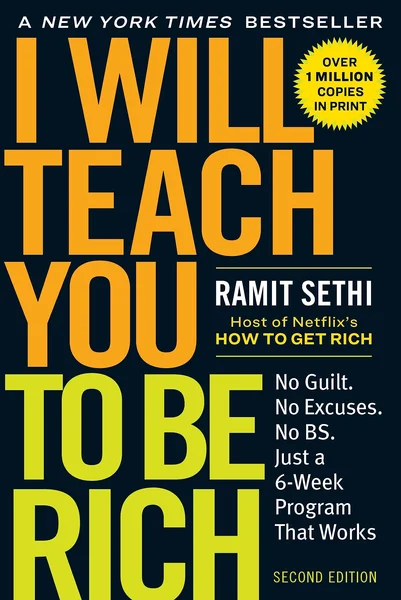
Sethi, 43, is the author of I Will Teach You to Be Rich, a personal finance book that has sold more than one million copies, according to The New York Times. The book, first published in 2009, centres on a six-week programme built around automated investing and what Sethi calls conscious spending — readers can find LuvemBooks' full assessment in our book review.
On the landlord side of the debate, AOL Finance reports that property owners have pushed back on Sethi's claim that landlords cannot automatically pass their own rising ownership costs on to tenants. Sethi's position, as characterised by AOL, is that rental pricing is determined by market conditions rather than individual landlord expenses — a view that the current sustained decline in asking rents appears to support empirically.
Why the Argument Matters Now
The broader significance of Sethi's commentary lies in what he says renters typically get wrong. As Yahoo Finance reports, Sethi argues that renting only beats buying financially if the renter actually invests the money saved by not carrying a mortgage — without that discipline, the theoretical advantage of renting evaporates.
To illustrate the rent-versus-buy calculation in concrete terms, Moneywise notes that Sethi has used a specific property — a two-bedroom, two-bathroom condo at 776 Bryan Street in Palo Alto, California — to demonstrate that homeownership is not automatically the better financial outcome. His argument is not that renting is always superior, but that the decision depends on local market conditions and individual financial behaviour.
With 30 consecutive months of falling rents now on record, the practical stakes of that calculation have shifted meaningfully for households evaluating their housing options.
What to Watch
The rental market data that has informed Sethi's recent commentary continues to develop. The Realtor.com figures cited by Benzinga represent a snapshot through February 2026; whether the 30-month declining trend continues or stabilises will determine whether the window Sethi describes — in which renting and investing the difference outperforms buying — remains open for prospective renters in high-cost metros. Sethi's own platform continues to frame housing as one variable in a broader automated financial system, as outlined on his website, where he encourages readers to make deliberate choices rather than defaulting to spreadsheet-driven assumptions.
Frequently Asked Questions
Is I Will Teach You to Be Rich worth buying for housing decisions?
Yes, if you're new to personal finance. Sethi's systematic approach to evaluating housing costs versus other financial goals is valuable, though the book assumes stable income and doesn't address today's volatile rental markets in detail.
What is the main message of I Will Teach You to Be Rich?
The book teaches that wealth building should be automated and guilt-free through a six-week system covering banking, saving, budgeting, and investing. Sethi emphasizes conscious spending on what you love while cutting costs ruthlessly on what you don't.
Who should read I Will Teach You to Be Rich in 2026?
Best for financial beginners in their 20s and 30s with steady income who want practical, actionable advice. Advanced investors or those with irregular income may find it too basic or unrealistic for their situations.
Should I follow Ramit Sethi's housing advice during falling rent prices?
Sethi's core principle of calculating total costs and opportunity costs remains sound regardless of market conditions. His emphasis on automation and emergency funds is particularly relevant during volatile rental markets like we're seeing in 2026.


Reader Discussion
No comments yet
Be the first to share your thoughts!