
Updated July 16, 2026
Ries Promotes 'Incorruptible' at San Diego Angel Conference and in New Interviews
See the full update ↓
In This Article
- The Book and Its Central Argument
- Who Is Involved and What Ries Has Been Building
- Context: A Departure from Lean Startup's Methodology
- What to Watch
Eric Ries, the entrepreneur and author best known for The Lean Startup, announced his new book Incorruptible: Why Good Companies Go Bad and How Great Companies Stay Great during a virtual appearance at the University of Colorado Boulder's Leeds School of Business on April 2, 2026. The reveal came as part of CU Boulder's "Startups & Sandwiches" speaker series, marking a notable shift in Ries's public focus — from the startup methodology that made his name to the longer-arc question of why established organizations lose their way. According to incorruptible.co, the book is scheduled for release on May 26, 2026.
The Book and Its Central Argument
Incorruptible centres on what Ries calls "financial gravity" — the structural forces that pull companies away from their founding missions over time. Writing in a Hacker News AMA, Ries described the phenomenon directly: "I kept watching good companies drift away from the missions they were founded on. Not because anyone woke up one day and decided to be evil, but because the structure they were built on slowly pulled them there." The book examines how a select group of companies — including Costco, Patagonia, and Novo Nordisk — have built organisational structures that resist that pull and sustain their founding values over decades, or longer. According to markgraban.com, the full subtitle frames both sides of that question: why good companies go bad, and how great companies stay great. The book is available through Simon & Schuster, whose author page for Ries lists it under ISBN 9798893311860.
Who Is Involved and What Ries Has Been Building
The announcement positions Incorruptible as the product of a decade and a half of work across multiple ventures beyond publishing. In his Hacker News AMA, Ries stated that in the years since The Lean Startup he founded the Long-Term Stock Exchange (LTSE), co-founded an AI research and development lab called Answer.AI alongside Jeremy Howard, and advised a number of companies on governance — naming Anthropic among them. Simon & Schuster's author biography also lists legal services startup Virgil and IMVU among his ventures. That breadth of institutional experience across startups, public markets, and AI appears to inform the book's scope; Ries's AMA noted he has worked across "big companies and tiny startups, NGOs and governments, in almost every industry."
Context: A Departure from Lean Startup's Methodology
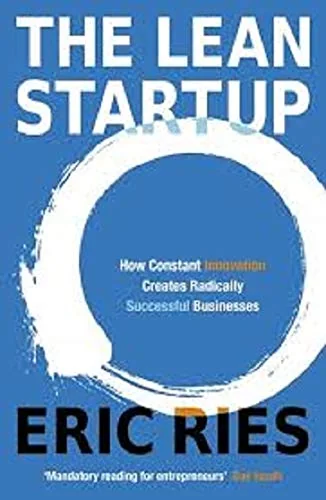
Incorruptible represents a thematic departure from the work that established Ries's reputation. According to Wikipedia, The Lean Startup — published in 2011 — outlined a framework built around rapid prototyping, validated learning, and iterative product development, drawing on ideas from lean manufacturing and agile development. The publisher reported sales exceeding one million copies, and the book debuted at number two on The New York Times Best Sellers list in the Hardcover Advice & Misc. category. A 2019 article cited by Wikipedia described it as having quickly become a foundational work in entrepreneurship education. Where The Lean Startup addressed how to build and test a new venture, Incorruptible turns to what happens after a company succeeds — and the institutional pressures that can erode its original purpose. The reader reception community site howisincorruptiblegoing.com has already begun applying the book's "financial gravity" framework in practice; contributor Brendan Marsh, a former Spotify product and organisation adviser, used it to compare Spotify's pre-IPO mission statement with its current one, identifying specific language that was quietly removed over time.
What to Watch
Incorruptible is set for publication on May 26, 2026, per incorruptible.co. Fortune has also covered Ries's arguments around the book's themes. For readers interested in LuvemBooks' assessment of Ries's earlier landmark work, our full review of The Lean Startup is available separately.
Story updates
We track this developing story and add verified developments as they happen. Originally published April 7, 2026.
Ries Promotes 'Incorruptible' at San Diego Angel Conference and in New Interviews
Following the book's May 26, 2026 release, Eric Ries appeared live at the San Diego Angel Conference (SDAC) finale at SDSU to discuss Incorruptible, with a recorded session published by Rising Tide Partners. Additional post-publication coverage includes a review at Worth.com and an interview on the Braden Kelley blog (dated June 2026) in which Ries elaborates on "financial gravity," corporate governance fixes, and protecting company mission.
Frequently Asked Questions
Is The Lean Startup: How Today's Entrepreneurs Use Continuous Innovation To Create Radically Successful Businesses worth buying in 2026?
Yes, for tech entrepreneurs and digital product developers. The book's core frameworks remain valuable for early-stage startups, though readers should understand its limitations beyond software businesses and the potential for misapplying concepts like MVP.
What is the main message of The Lean Startup?
Replace traditional business planning with rapid experimentation using the Build-Measure-Learn feedback loop. Test business hypotheses quickly and cheaply through minimum viable products, then pivot or persevere based on validated learning rather than assumptions.
Who should read The Lean Startup?
Early-stage tech entrepreneurs, product managers, and innovation leaders in digital businesses will find the most value. However, founders in manufacturing, retail, or service industries should approach the methodology with caution as many principles don't translate directly.
What is Eric Ries's new book Incorruptible about?
According to his recent announcement at CU Boulder, 'Incorruptible: Why Good Companies Go Bad' explores corporate ethics and organizational decline, marking a shift from his previous focus on startup methodology to examining how successful companies maintain ethical standards as they grow.


Reader Discussion
No comments yet
Be the first to share your thoughts!