
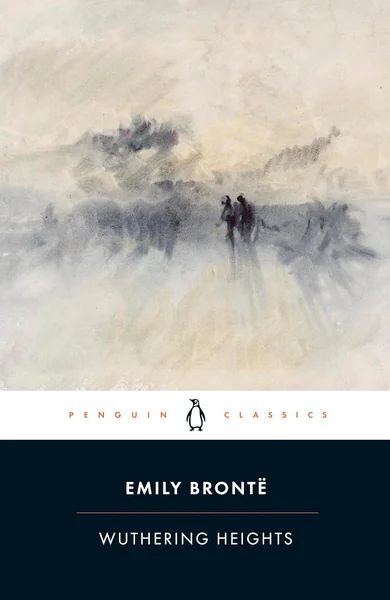
Emerald Fennell's film adaptation of Wuthering Heights arrived on Canal+ on September 22, 2026, reigniting debate around one of English literature's most enduring and ferocious novels. As covered by Numéro ahead of the Canal+ premiere, Margot Robbie was in Paris promoting the film — a Warner Bros. production that has drawn as much controversy as commercial attention since its theatrical release earlier in the year.
The film, which Wikipedia confirms) premiered at Grauman's Chinese Theatre in Los Angeles on January 28, 2026, and opened in the UK and US on February 13, grossed $242 million worldwide against an $80 million production budget — a clear commercial success despite the mixed critical reception. Robbie plays Catherine Earnshaw and Jacob Elordi plays Heathcliff, with a supporting cast that includes Hong Chau, Shazad Latif, Alison Oliver, Martin Clunes, and Ewan Mitchell.
What Fennell Changed in Wuthering Heights — and Why It Sparked Debate
Fennell has been unusually candid about her intentions. As the Los Angeles Times reported, she set out to "recreate the feeling of a teenage girl reading this book for the first time" — a subjective, emotionally driven ambition that explains both the film's appeal and its divisiveness. Where Emily Brontë's novel contains what the LA Times describes as "mere glimmers of physical intimacy," Fennell's adaptation is explicitly erotic, with steamy scenes drawn not from the source text but from what Fennell calls "the book of my head" — her own imaginative response to reading it as a young woman.
That creative licence has proven contentious on multiple fronts. Critics and devoted readers of Brontë's novel took issue before the film even released: Heathcliff is repeatedly described in the novel as non-white, yet Fennell cast Elordi — her collaborator from Saltburn — in the role. Others have argued that reducing Brontë's dense social critique to a romantic drama strips the work of the very qualities that made it revolutionary. Brontë's novel, first published in 1847, is a transgressive text — violent, psychologically complex, and deeply uncomfortable. Staging it primarily as a sweeping love story is itself an interpretive choice with real consequences for how the source material is understood.
Fennell has defended her decisions throughout the promotional cycle. On the explicit scenes, she has been direct: they are, in her framing, a faithful rendering of what the novel implies rather than what it states. "They're part of the book of all of our heads," she told The Times, as quoted by the LA Times. Some readers, however, reject the conflation of personal fantasy with authorial intent — particularly when the resulting film carries Brontë's name as its title.
Emily Brontë's Novel and the Long History of Adaptation Tension
The Penguin Classics edition of Wuthering Heights — featuring an introduction by Brontë scholar Pauline Nestor and a new preface by Lucasta Miller — is the text against which adaptations are most commonly measured. As the LA Times noted, Nestor's introduction observes that many literary critics read the novel's second half as signifying something quite specific about order, inheritance, and social restoration — dimensions that erotic, aestheticised adaptations tend to sideline. Nestor's scholarly framing is a useful corrective: the novel is not simply a love story with Gothic atmosphere. It is Emily Brontë's only novel, and it has always resisted comfortable categorisation.
Fennell is not the first director to wrestle with this resistance. The history of Wuthering Heights on screen is a history of filmmakers choosing which version of the novel to tell — and those choices always reveal as much about the adapter's moment as about Brontë's text. What distinguishes Fennell's approach is the degree to which she has foregrounded her own subjectivity as the interpretive lens, making the film as much a document of how a contemporary filmmaker experienced the novel as it is a retelling of it. Whether that constitutes creative boldness or critical evasion is a question the film's mixed reviews have not resolved.
Emily Brontë's Wuthering Heights remains one of the most celebrated and argued-over works in English literature — a story of obsession, revenge, and doomed passion on the Yorkshire moors that continues to attract bold reimaginings precisely because its depths are so difficult to exhaust. Want the full verdict? Read our review of Wuthering Heights for a closer look at the Penguin Classics edition and what makes this novel worth returning to.
Power & politics
Family
Dark
Melancholy
Slow-burn
Love & romance
Frequently Asked Questions
Is Wuthering Heights by Emily Brontë worth reading before watching the 2026 film?
Absolutely. Emerald Fennell's film is a loose, subjective interpretation that adds explicit content and anachronistic elements not found in the source novel. Reading Emily Brontë's original text — particularly the Penguin Classics edition with Pauline Nestor's introduction — gives you the social and psychological complexity the film is often criticised for underplaying. The two works reward comparison, but the novel stands entirely on its own terms.
What is controversial about the 2026 Wuthering Heights film adaptation?
Several elements have drawn criticism: director Emerald Fennell cast Jacob Elordi as Heathcliff, a character described as non-white throughout Brontë's novel. The film also includes explicit sexual scenes absent from the source text, which Fennell has defended as her personal imaginative response to reading the book. Some critics and book fans argue the adaptation reduces Brontë's layered social critique to a romantic drama.
Should I read Wuthering Heights by Emily Brontë or watch the Margot Robbie film?
Both, ideally, but for different reasons. Fennell's film is a filmmaker's personal vision of what the novel feels like rather than a faithful rendering. Emily Brontë's original — a ferocious, psychologically violent Gothic novel — offers a far richer and more complex experience. Scholar Pauline Nestor's introduction in the Penguin Classics edition is especially valuable for understanding what critics have long found so radical about the text.
Who is Pauline Nestor and what is her role in the Wuthering Heights Penguin Classics edition?
Pauline Nestor is a Brontë scholar who wrote the introduction to the Penguin Classics edition of Wuthering Heights, the definitive scholarly text of Emily Brontë's novel. The edition also features a new preface by Lucasta Miller. Nestor's critical framing — including her reading of the novel's second half as concerned with social restoration — has been cited in coverage of the 2026 film adaptation as context for what popular screen versions tend to omit.
How did the 2026 Wuthering Heights film perform at the box office?
According to Wikipedia, the film grossed $242 million worldwide against a production budget of $80 million, making it a commercial success despite receiving mixed reviews from critics. It was released in the UK and US by Warner Bros. Pictures on February 13, 2026, before its Canal+ premiere on September 22, 2026.
Is the Penguin Classics edition of Wuthering Heights worth buying in 2026?
The Penguin Classics edition, edited with an introduction by Pauline Nestor and a preface by Lucasta Miller, is widely considered the definitive scholarly version of Emily Brontë's only novel. With the 2026 film adaptation renewing broader interest in the source text, this edition offers the best combination of Brontë's original work and critical context. For LuvemBooks' full assessment, see our review of Wuthering Heights.
Reader Discussion
No comments yet
Be the first to share your thoughts!