
8 min read
4.6
· 5,052 Amazon ratingsShare This Review
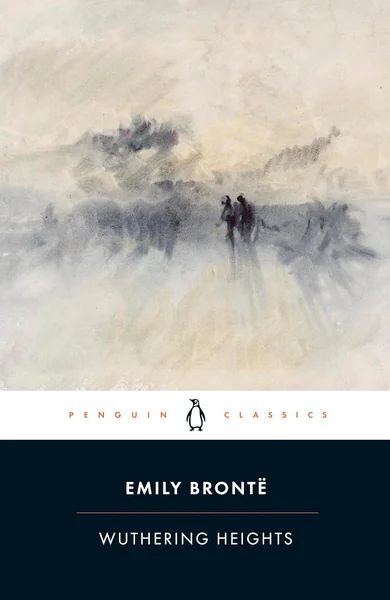
Wuthering Heights by Emily Brontë Review: A Gothic Masterpiece of Obsession and Revenge
Emily Brontë's only novel, first published in 1847 under the pen name Ellis Bell, endures as one of the most celebrated works in English literature — a ferocious story of obsession, revenge, and doomed passion set against the bleak Yorkshire moors, now available in a Penguin Classics revised edition featuring an introduction and notes by Pauline Nestor and a new preface by Lucasta Miller.
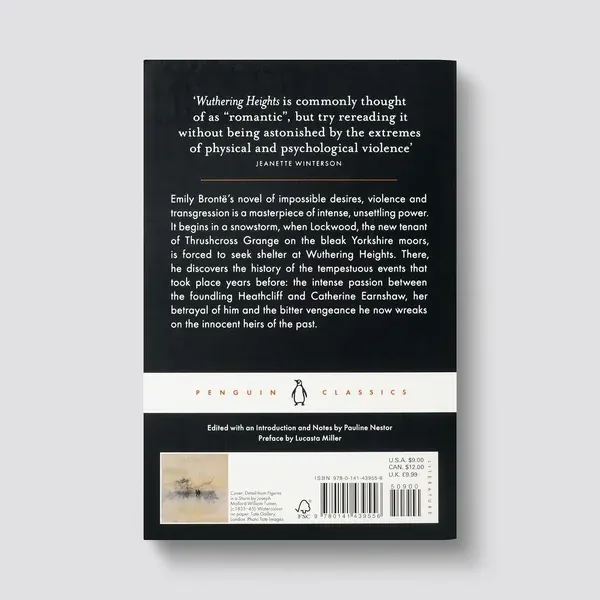 Tap to enlarge
LuvemBooks Verdict
Best for
Students, serious general readers, and anyone returning to Wuthering Heights who wants scholarly grounding — Pauline Nestor's introduction and Lucasta Miller's preface make this edition especially well-suited to academic and classroom contexts.
Worth it if
You want more than a bare text: the combination of Nestor's critical introduction, her throughout annotations, and Miller's preface on the novel's long interpretive afterlife transforms this into a genuinely illuminating resource for anyone ready to engage with why Wuthering Heights remains so unsettling and influential.
Skip if
Readers who simply want an unencumbered text to read for pleasure may find the volume's scholarly apparatus more than they need, and those new to nineteenth-century fiction should be prepared for the novel's deliberately fractured, non-linear structure and the genuine comprehension challenge of Joseph's Yorkshire dialect.
What readers & critics say
Wikipedia records that contemporary reviews on the novel's 1847 publication were polarised — readers disturbed by its depictions of cruelty — but that Wuthering Heights has since come to be regarded as one of the greatest novels in English, with critical opinion shifting decisively in the late nineteenth century and accelerating among Modernist writers. The New Yorker notes that the novel's cultural momentum shows no signs of abating, reporting that a hundred thousand copies sold in just the first two months of 2025 alone, driven by book clubs and influencers, compared with a hundred and eighty thousand total the previous year.
“A hundred thousand copies sold in the first two months of 2025, compared with a hundred and eighty thousand total last year.”
— newyorker.comAge & Reading Level
Recommended age
Ages 16+
Reading level
Adult
3 content notes · who it suits
Content to know about
Best for: Mature 16+ — demanding narrative structure, unflinching depictions of domestic cruelty, obsession, and revenge, and morally unresolved characterisation suit experienced readers
Skip if you're looking for a hopeful or conventionally redemptive love story
Wuthering Heights by Emily Brontë, Pauline Nestor is Trending
Emerald Fennell's 'Wuthering Heights' Film Hits Screens in 2026
A new film adaptation of Wuthering Heights, written and directed by Emerald Fennell, is out now — and it's sending readers straight back to Emily Brontë's original novel. If you've been curious about the source material, this is the perfect moment to pick it up.
Emerald Fennell — the writer-director behind Promising Young Woman and Saltburn — has brought her own spin on Wuthering Heights to the big screen in 2026. She's described the film as an attempt to "recreate the feeling of a teenage girl reading this" for the first time, which tells you this isn't going to be a stiff period-piece retelling. Fennell has a reputation for dark, emotionally intense storytelling, so pairing her with Brontë's already ferocious tale of obsession and revenge on the Yorkshire moors is a combination that's got a lot of people talking.
Whenever a filmmaker with a distinctive voice takes on a classic, it tends to make audiences want to go back to the source. Brontë's novel is only about 300 pages, but it packs in more raw emotion and moral complexity than books three times its length — and reading it before or after seeing Fennell's interpretation gives you a whole different lens for both. This Penguin Classics edition, with notes and introduction by Pauline Nestor, is a solid choice if you want some helpful context alongside the story.
Whether you're a longtime fan revisiting it or coming to Heathcliff and Catherine for the first time, right now is a great time to read Wuthering Heights. The film is already streaming, so you can do a read-then-watch (or watch-then-read) without waiting.
In This Review
- What Works & What Doesn't
- What the Novel Is and What It Contains
- Significance and Place in English Literature
- Strengths of This Penguin Classics Edition
- Genuine Limitations and Who May Be Frustrated
- Who This Edition Is For
What Works & What Doesn't
What Works
- Pauline Nestor's introduction situates the novel within its historical, critical, and biographical context, providing essential grounding for new and returning readers alike
- Lucasta Miller's new preface, drawing on her expertise as author of The Brontë Myth, traces the novel's complex interpretive history from Charlotte Brontë's posthumous editing onward
- Widely regarded as one of the greatest novels in English, the text itself offers a ferociously original exploration of obsession, revenge, class, and transgression across two generations
- The edition's scholarly notes accompany the text throughout, making it a strong choice for academic and classroom use
What Doesn't
- The novel's layered, non-linear narrative structure — a frame story nested within Nelly Dean's extended retrospective — can be challenging for readers accustomed to straightforward chronological storytelling
- The Yorkshire dialect in the speech of the servant Joseph, noted for its historical accuracy, presents a real comprehension hurdle for readers unfamiliar with regional nineteenth-century English
What the Novel Is and What It Contains
Significance and Place in English Literature
Strengths of This Penguin Classics Edition
Genuine Limitations and Who May Be Frustrated
Who This Edition Is For
Frequently Asked Questions
Sources & Further Reading
The key facts and claims in this review are grounded in the retrieved, verified sources listed below.
- Cited in this review
- 1
en.wikipedia.org
- 2
penguinrandomhousehighereducation.com
- 3
- Further reading
- 4
weneedtotalkaboutbooks.com
- 5
bookbrowse.com
- 6
- 7
- 8
penguinrandomhouse.com
- 9
Related Reviews
Reviews of books we picked for readers who enjoyed Wuthering Heights.
Reader Comments
No comments yet
Be the first to share your thoughts!