
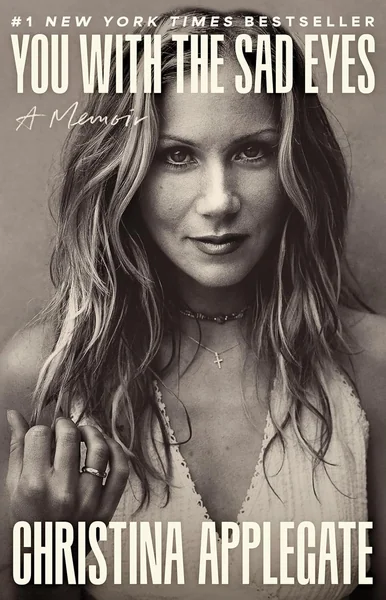
Christina Applegate made her return to social media this week, debuting a fresh blond hair transformation on Instagram following a months-long hospital stay — and the moment has drawn renewed public attention to her #1 New York Times bestselling memoir. As reported by the Los Angeles Times on September 22, 2026, the actress and author resurfaced online to show off her new look, marking her first substantive social media presence since her hospitalization. According to The Independent, Applegate shared her first new video since spending nearly four months in hospital — a significant milestone for a public figure who has been unusually candid about the physical toll of living with multiple sclerosis.
You with the Sad Eyes: The Memoir Behind the Moment
Published in March 2026 by Little, Brown and Company, You with the Sad Eyes is Christina Applegate's debut memoir — and it is, by all critical accounts, anything but a conventional celebrity tell-all. The Associated Press described it as "raw and angry, lyrical and funny, and more than a bit dangerous," while the New York Times called it "funny, furious" — a work more likely to unsettle than to comfort. Taking its title from a Cyndi Lauper song, the book covers childhood trauma, decades of private diary-keeping, and Applegate's 2021 MS diagnosis with a directness that has set it apart in the crowded memoir landscape. That combination of unflinching personal honesty and sharp literary craft earned the book its bestseller designation and widespread critical notice in the months following its release.
What makes Applegate's return to public life this week more than a routine celebrity update is the degree to which her ongoing health story is inseparable from the book itself. You with the Sad Eyes does not treat MS as a tidy narrative of survival and recovery — it documents the unresolved, ongoing nature of serious illness in a way that few mainstream memoirs attempt. Her hospitalization and reappearance, then, arrive not as counterpoint to the memoir's themes but as a continuation of them. Applegate has never presented her story as concluded, and the public response to her Instagram return reflects an audience that understands the stakes in ways they might not have before reading the book.
Why Applegate's Story Matters in the Memoir Genre Right Now
Illness memoirs occupy a peculiar position in publishing: the form has produced some of the most essential nonfiction of recent decades, yet it is also a genre frequently reduced to inspirational packaging for commercial purposes. Applegate's book has largely resisted that flattening. Critics noted that the memoir's voice — built, per Applegate's own words quoted by the AP, from a lifetime of diary-writing — carries an authenticity that distinguishes it from the ghostwritten or heavily processed celebrity memoir. The timing of her return to public view, following a hospitalization that unfolded largely away from media scrutiny, reinforces that authenticity: this is not a managed comeback narrative but a real person navigating real circumstances, which happens also to be the central argument of the book.
Applegate's visibility as both a working actress and a person publicly managing a progressive neurological condition has given You with the Sad Eyes an ongoing cultural relevance that extends well beyond its publication window. Each public update — whether difficult news or, as this week, something as quietly human as a new haircut — sends readers back to a book that was already earning serious attention. For anyone coming to Applegate's story fresh, this is as good a moment as any to start at the source. Want the full verdict? Read our review of You with the Sad Eyes for an in-depth assessment of what the memoir achieves and who it is best suited for.
Frequently Asked Questions
Is You with the Sad Eyes by Christina Applegate worth buying in 2026?
You with the Sad Eyes reached #1 on the New York Times bestseller list and received strong critical praise from outlets including the Associated Press and the New York Times, which called it 'funny, furious.' It is widely regarded as a serious literary memoir rather than a typical celebrity book, making it a strong purchase for readers interested in candid illness narratives and personal essay. Our full review breaks down who will connect with it most.
What is You with the Sad Eyes about?
You with the Sad Eyes is Christina Applegate's debut memoir, published in March 2026. It covers childhood trauma, decades of private diary-keeping, and her 2021 multiple sclerosis diagnosis. Critics have described it as raw, funny, and emotionally unsparing — closer to literary memoir than celebrity autobiography.
Who should read You with the Sad Eyes by Christina Applegate?
Readers drawn to candid illness memoirs, darkly funny personal essays, and accounts of long-term chronic disease will find the most to connect with here. The book has also been praised by readers who appreciate Applegate's public honesty about MS, making it particularly resonant for anyone navigating similar experiences or supporting someone who is.
Why was Christina Applegate in the hospital in 2026?
According to The Independent and the Los Angeles Times, Applegate spent nearly four months in hospital before returning to social media in September 2026. Applegate has publicly discussed living with multiple sclerosis since her 2021 diagnosis, and her memoir You with the Sad Eyes addresses her experience with the condition in depth. Specific details of the 2026 hospitalization were not disclosed by Applegate publicly.
Is You with the Sad Eyes a New York Times bestseller?
Yes. You with the Sad Eyes by Christina Applegate reached #1 on the New York Times bestseller list following its publication in March 2026 by Little, Brown and Company. It received significant critical coverage across major outlets at launch.
What does the title You with the Sad Eyes refer to?
The title You with the Sad Eyes is drawn from a Cyndi Lauper song, as noted by the New York Times in its coverage of the memoir. The choice signals the book's emotional register — introspective and bittersweet rather than triumphalist — and reflects the personal and musical touchstones Applegate weaves through the narrative.
Reader Discussion
No comments yet
Be the first to share your thoughts!