
In This Article
- What the Book Covers
- Who Is Involved
- Context and Significance
- What to Watch
Psychologists Robert Brooks and Sam Goldstein have announced a new book aimed specifically at autistic adults, according to a listing on Brooks' official website. The Power of Resilience for Autistic Adults: Thriving in a Neurotypical World is set to be published by Springer in 2026, marking a significant expansion of the authors' strength-based approach to resilience beyond childhood.
What the Book Covers
According to the drrobertbrooks.com announcement, the new title is a comprehensive guide designed to empower autistic adults by fostering resilience in their daily lives. Bookseller Shakespeare and Company notes that the book details autistic adults' encounters with unique social, emotional, and professional challenges and outlines strategies to address them. Retailer Browns Books similarly describes it as a guide focused on empowering autistic adults through resilience-building in everyday contexts.
Who Is Involved
Robert Brooks and Sam Goldstein are the psychology pairing behind several collaborative works on resilience. Their earlier titles include Raising Resilient Children with Autism Spectrum Disorders, in which, as Barnes & Noble describes, the authors teach strategies and the mindset necessary to help children on the spectrum develop strength, hope, and optimism. The new 2026 title is explicitly framed on Brooks' site as a follow-up to that earlier autism-focused work, this time directed at adults rather than the parents and caregivers who were the primary audience before. Springer, a major international academic and professional publisher, is the imprint bringing the book to market.
Context and Significance
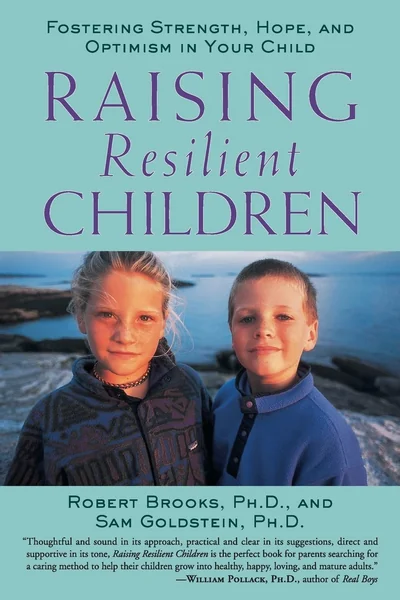
The new book represents a shift in scope within Brooks and Goldstein's body of work. Where their earlier autism-related collaboration addressed the experiences of children through the lens of parents and caregivers, the 2026 title turns to autistic adults as the primary readership — a population whose social, emotional, and professional challenges are described by Shakespeare and Company as a central focus of the book. The authors' longstanding emphasis on strength-based psychology, established through works including Raising Resilient Children, underpins their approach here. For a full assessment of that foundational work, see our review.
What to Watch
The book is scheduled for 2026 publication through Springer, though a specific release date has not appeared in available sources. The ISBN listed by Browns Books is 9783032099594. Readers and professionals in psychology, disability services, and related fields can monitor Brooks' official site for updates on availability and pre-order details as the publication date approaches.
Frequently Asked Questions
Is Raising Resilient Children: Fostering Strength, Hope, and Optimism in Your Child worth buying in 2026?
Yes, especially for parents seeking evidence-based strategies for building genuine resilience in children. At 4.1/5 stars, it offers practical tools and avoids abstract theories, though families facing complex systemic challenges may need additional resources.
What is the main message of Raising Resilient Children?
The book emphasizes building children's internal strength and coping skills rather than simply protecting them from challenges. Brooks and Goldstein focus on fostering growth mindsets, problem-solving abilities, and emotional regulation through practical, individualized approaches.
Who should read Raising Resilient Children by Brooks and Goldstein?
Parents, educators, and child development professionals will find the most value. The book is particularly useful for those working with children who face ongoing challenges or those seeking to move beyond traditional protective parenting approaches.
Should I read Raising Resilient Children before the new autism book comes out?
Reading the original book could provide valuable context for understanding Brooks and Goldstein's resilience-based methodology. However, their upcoming autism-specific book will likely be tailored for adult experiences and may not require familiarity with their parenting work.
Reader Discussion
No comments yet
Be the first to share your thoughts!