
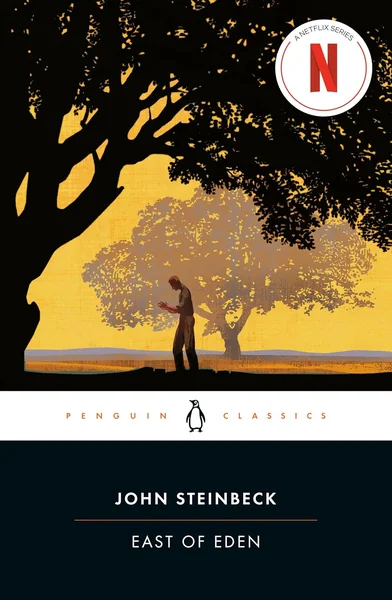
Netflix's major limited series adaptation of East of Eden debuted on October 1, 2026, and the commercial impact on John Steinbeck's source novel was almost immediate — as Variety reported, the 1952 novel climbed to the number one spot on Amazon's Best Sellers List in the days following the series' release.
The sales surge extended beyond Amazon. East of Eden appeared at number two on the LA Times bestselling books list for the week of October 11, 2026, confirming that reader interest in the novel was broad-based rather than confined to a single retail platform.
East of Eden Returns: Steinbeck's Magnum Opus Gets Its Most Complete Screen Treatment
The Netflix series was created and written by Zoe Kazan — a detail that carries significant biographical weight — as she is the granddaughter of Elia Kazan, who directed the celebrated 1955 film adaptation starring James Dean, according to The Hollywood Reporter.
The 1955 film, as NPR's review of the new adaptation notes, covered only a fraction of Steinbeck's novel — director Elia Kazan opened the story mid-book with Cal Trask hunting down his mother, omitting the first three-quarters of the text entirely.
The Netflix series takes a fundamentally different approach: Fiction Horizon reports that the adaptation is built directly from Steinbeck's novel rather than derived from the earlier film, giving the series scope to engage with the book's full multi-generational sweep.
The cast assembled for the project is led by Florence Pugh as Cathy, alongside Christopher Abbott, Mike Faist, Hoon Lee, Ciarán Hinds, and Martha Plimpton, per Fiction Horizon. The Guardian's series review opens with Abbott and Faist as brothers Adam and Charles Trask, tracing their bleak upbringing before Pugh's Cathy arrives to upend their lives.
Why the Adaptation Effect Hits Especially Hard for a Novel This Size
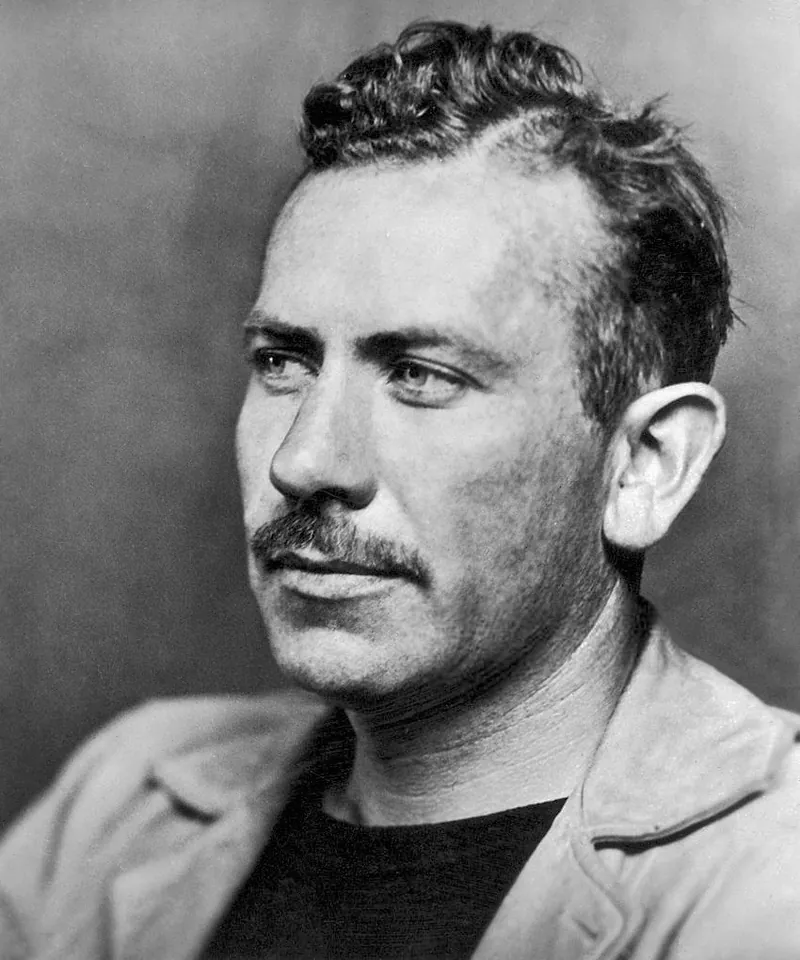
Steinbeck considered East of Eden his magnum opus — a sprawling family saga following the Trasks and Hamiltons across generations in California's Salinas Valley, structured around questions of fate, free will, and the nature of evil.
The novel's scale is precisely why previous adaptations left so much on the table, and why a long-form television format is better equipped to honor it. NPR notes that even the 1981 ABC miniseries — which ran six hours — still had to make difficult choices about what to include.
For a book of this complexity, the adaptation-to-sales pipeline matters in a specific way: readers who watch the series and want the full story — the parts no screen version has ever fully captured — have a clear incentive to go back to Steinbeck's text. That dynamic appears to be playing out directly in the current chart performance.
The series also topped Netflix's own weekly ratings charts in its opening window, according to Deadline, with 6.5 million views earned in its first four days of streaming — a figure that further contextualizes the scale of new audience exposure the novel is receiving.
The sales data, confirmed across Yahoo Entertainment, Tribune.com.pk, and Economic Times, suggest this is one of the more substantial adaptation-driven sales events in recent memory for a classic literary novel — a meaningful moment for Steinbeck's legacy and for literary fiction's ongoing relationship with prestige television.
Readers returning to — or discovering — East of Eden for the first time will find one of American literature's most ambitious novels. Want the full verdict?
Read our review of East of Eden for a complete assessment of what makes the novel work and who should read it.
Dark
Melancholy
Slow-burn
Identity
Family
Faith & meaning
Frequently Asked Questions
Is East of Eden by John Steinbeck worth buying in 2026?
East of Eden reached the number one spot on Amazon's Best Sellers List following the Netflix adaptation's October 2026 release, suggesting enormous reader interest — and the novel's reputation as Steinbeck's own self-described magnum opus makes it a strong case for any serious reader's shelf.
Should I read East of Eden or just watch the Netflix series?
Every previous screen adaptation of East of Eden has covered only a portion of Steinbeck's novel — the Netflix series draws more fully from the source material, but the book remains the only way to experience the complete story Steinbeck wrote.
Who stars in the Netflix adaptation of East of Eden?
The Netflix limited series stars Florence Pugh as Cathy, alongside Christopher Abbott, Mike Faist, Hoon Lee, Ciarán Hinds, and Martha Plimpton, with the series written and executive produced by Zoe Kazan.
How does the Netflix East of Eden differ from the 1955 film?
The 1955 Elia Kazan film starring James Dean adapted only the final portion of Steinbeck's novel; the 2026 Netflix series is built directly from the full book, giving it scope to tell a much more complete version of the story.
What is East of Eden by John Steinbeck about?
East of Eden is a sweeping multi-generational family saga set in California's Salinas Valley, following two families — the Trasks and the Hamiltons — and exploring questions of fate, free will, good, and evil through a structure that echoes the biblical story of Cain and Abel.
How did the Netflix adaptation affect East of Eden book sales?
Following the series debut on October 1, 2026, East of Eden reached number one on Amazon's Best Sellers List and number two on the LA Times bestselling books list for the week of October 11, 2026.

No Discussion Yet
Be the first to share your thoughts on this news article.