
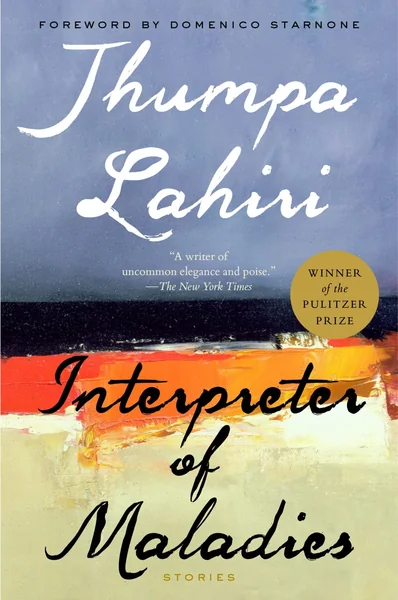
Netflix has confirmed a December 17, 2026 premiere date for Unaccustomed Earth, a new drama series adapted from Jhumpa Lahiri's celebrated short story collection of the same name. As Harper's Bazaar reported on September 17, 2026, the streamer released first-look images alongside the premiere announcement, drawing renewed attention to one of contemporary literature's most significant voices — and to the Pulitzer Prize-winning debut collection, Interpreter of Maladies, that first established her reputation.
What the Interpreter of Maladies Author Brings to Streaming
Lahiri's Interpreter of Maladies, published in 1999, won the Pulitzer Prize for Fiction and the Hemingway Foundation/PEN Award, and has sold over 15 million copies worldwide. The nine-story collection renders the interior lives of Indians and Indian Americans navigating the tensions between heritage and a new country — work that critics and readers have long considered a landmark of immigrant fiction.
The upcoming Netflix series draws not from that debut but from Lahiri's later story collection, Unaccustomed Earth, yet the adaptation's announcement has understandably renewed attention across her entire body of work.
The series stars Freida Pinto and is led by showrunner Madhuri Shekar, who has woven together the collection's disparate short stories into a single sweeping drama narrative. According to Harper's Bazaar, the production arrives roughly two decades after filmmaker Mira Nair brought Lahiri's debut novel, The Namesake, to the big screen — placing Unaccustomed Earth within a notable lineage of Lahiri adaptations that have consistently attracted serious filmmaking talent.
The cast also includes Siddarth, Indraneil Sengupta, Parveen Kaur, and Sarayu Blue, signalling the kind of ensemble production that Lahiri's emotionally intricate, multi-generational stories demand.
Why This Adaptation Moment Matters for Literary Fiction on Screen
Lahiri occupies a particular position in American letters: a writer whose work is taught in universities, shelved in serious literary collections, and simultaneously capable of generating broad popular appeal. That combination — critical prestige and genuine readership — is precisely what streaming platforms seek when adapting literary fiction, and the Unaccustomed Earth announcement reflects a broader industry confidence in character-driven, diaspora narratives as viable prestige television.
The challenge Shekar faces is a structural one familiar to any adapter of short fiction: Lahiri's stories operate through compression and implication, qualities that translate uneasily to serialised drama. Weaving discrete stories into a continuous narrative arc is an act of significant creative interpretation, not mere transcription.
For readers coming to Lahiri's work for the first time via the Netflix series, Interpreter of Maladies remains the natural entry point — a collection whose nine precisely observed stories about lives caught between roots and a new world established the thematic and emotional terrain Lahiri has navigated ever since. The stories probe grief, estrangement, longing, and the quiet failures of communication with a restraint that has rarely been matched in the genre.
For LuvemBooks' full assessment of that debut, read our review of Interpreter of Maladies.
With a confirmed premiere date and first-look materials already circulating, the Unaccustomed Earth series is now one of the more closely watched literary adaptations on the streaming calendar. Whether or not the show reaches the standard of its source material, its arrival this December will almost certainly introduce Lahiri's fiction to an audience that has not yet encountered her on the page — which, for a writer of her calibre, is no small thing.
Want the full verdict on the book that started it all? Our review of Interpreter of Maladies covers what makes the collection so enduring.
Discussion