
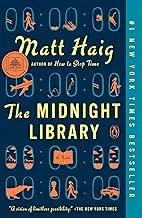
Oscar nominee Florence Pugh is attached to star in and produce a film adaptation of Matt Haig's bestselling novel The Midnight Library, with Garth Davis — the director behind Lion — set to helm the project. As reported by Deadline and confirmed by Variety, the film will be co-produced by Studiocanal and Blueprint Pictures, with the project having launched at Cannes. People has also confirmed Pugh's dual role as both lead and producer.
What The Midnight Library Brings to the Screen
Matt Haig's speculative novel follows Nora Seed, a woman who finds herself in a liminal space between life and death — a vast, mystical library where every unchosen path in her life becomes an accessible door. It is a high-concept premise with genuine emotional stakes, which helps explain why studios have pursued an adaptation for years. As The Hollywood Reporter documented, Blueprint Pictures and Studiocanal first optioned the film rights some time ago, with the production pairing giving the project serious pedigree: Blueprint previously co-produced Three Billboards Outside Ebbing, Missouri. According to Wikipedia's entry on the adaptation, the screenplay will be adapted by Laura Wade and Nick Payne, and Paramount Pictures has announced the project is in development, with Studiocanal co-producing. For LuvemBooks' full assessment of the source novel, read our review.
Why This Casting and Creative Team Signals Serious Ambition
The pairing of Pugh and Davis is not an obvious commercial calculation — it is a creatively ambitious combination. Davis's Lion demonstrated a rare ability to handle profound grief and fractured identity with restraint and visual intelligence, qualities that map directly onto Haig's material. Pugh, meanwhile, has built a reputation for bringing psychological interiority to roles that could easily tip into sentiment — a quality that Nora Seed, as a character navigating regret and the question of what makes a life worth living, will demand.
The screenplay in the hands of Laura Wade and Nick Payne is also worth noting. Payne, in particular, is known for stage work that interrogates parallel lives and the weight of small decisions — Constellations being the most prominent example — which makes him a considered choice for material built around exactly those preoccupations. The adaptation, then, appears to have been assembled with a writer-director-star alignment that prioritises craft over franchise potential.
It is also worth situating this development within Haig's broader momentum. As noted in a recent feature on book-to-film adaptations by Deadline, Haig's continued relevance in the adaptation pipeline is substantial. Readers who want to explore more of Haig's work before the film arrives may also find his earlier novel How to Stop Time a worthwhile companion, representing a similarly imaginative engagement with time, regret, and the possibilities of other lives.
Adaptations of introspective, philosophically driven novels carry inherent risk — the inner life that makes a book resonate on the page is precisely what cinema struggles to externalise without flattening it. The Midnight Library's structure, in which its protagonist samples parallel versions of her own existence, does offer a natural cinematic architecture, but the film's success will depend on whether Davis and Pugh can preserve the specificity of Nora's interiority rather than reducing it to a sequence of visually distinct alternate worlds. The creative signals so far suggest both the ambition and the care to attempt it seriously. Want the full verdict on the source novel? Read our review of The Midnight Library for an in-depth assessment.
Identity
Redemption
Hopeful
Melancholy
Propulsive
Grief & loss
Frequently Asked Questions
Who is playing the lead in The Midnight Library film?
Florence Pugh is set to star in and produce The Midnight Library film adaptation. She will play Nora Seed, the novel's protagonist, with Garth Davis directing. The casting was confirmed by multiple outlets including Deadline and Variety.
Is The Midnight Library by Matt Haig worth reading before the film?
Matt Haig's novel has earned strong sales and generally positive critical reception for its imaginative, emotionally resonant premise. Reading it before the film arrives gives you the full depth of Nora Seed's inner journey that any adaptation will need to compress. You can find an in-depth assessment in our review of The Midnight Library.
Who is directing The Midnight Library movie?
Garth Davis, the Australian filmmaker known for directing Lion, is attached to direct The Midnight Library. The screenplay is being adapted by Laura Wade and Nick Payne.
Which studios are producing The Midnight Library film?
The Midnight Library is being co-produced by Studiocanal and Blueprint Pictures, with Paramount Pictures also announced as involved in development. Blueprint Pictures previously co-produced Three Billboards Outside Ebbing, Missouri.
What is The Midnight Library by Matt Haig about?
The Midnight Library is a speculative novel following Nora Seed, a woman who finds herself in a liminal space between life and death — a mystical library where every unchosen path in her life becomes accessible. It explores regret, identity, and the question of what makes life worth living.
Should I read The Midnight Library or wait for the Florence Pugh film?
The novel and the film will likely offer quite different experiences — the book's power lies substantially in Nora's internal life, which cinema translates differently. Many readers find that engaging with the source material first enriches their experience of any adaptation. Our full review of The Midnight Library can help you decide if the novel is right for you.
Reader Discussion
No comments yet
Be the first to share your thoughts!