
9 min read
Share This Review
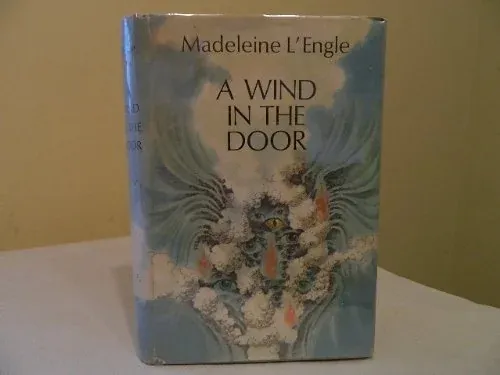
Our review
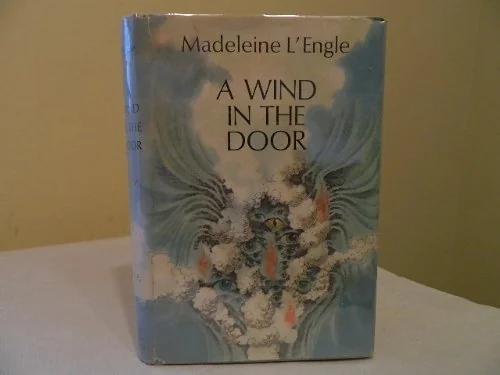
A Wind in the Door by Madeleine L'Engle Review: Bold, Ambitious Science Fantasy Sequel
A Wind in the Door is a young adult science fantasy novel by Madeleine L'Engle, the second entry in the Time Quintet, in which fourteen-year-old Meg Murry races to save her gravely ill brother Charles Wallace by journeying inside his very cells. Its audacious blend of cosmic mythology, cellular biology, and moral urgency makes it one of the most inventive entries in the genre.
LuvemBooks Verdict
Best for
Readers aged 9 and up — and curious adults — who are drawn to ideas as much as adventure and want a young adult fantasy that treats cellular biology, classical theology, and cosmic ethics as equally serious narrative languages.
Worth it if
Worth reading if you relish ambitious science fantasy that scales from a child's mitochondria to the fate of the universe, and you're willing to meet a genuinely alien cherubim, a villain that is literally a void, and a moral test rooted in learning to love someone you actively dislike.
Skip if
Skip it if you need your allegory tightly integrated and your protagonist's emotional transformation to feel earned rather than arrived at — Kirkus Reviews' original 1973 notice found that Meg learns to love the universe and her antagonist with unconvincing ease, and that the novel strains to connect contemporary American social ills to the metaphysics of farandolae.
What readers & critics say
Kirkus Reviews, in its original 1973 notice, acknowledged the audacity of L'Engle's mytho-scientific imagination and her storytelling abilities as the engine driving the quest, while also noting that Meg's transformation arrives with unconvincing ease and that the novel strains unusually hard to connect what's wrong with America to the double-talk of mitochondria and farandolae. Wikipedia's reception entry records that Michele Murray wrote in critical coverage that L'Engle "mixes classical theology, contemporary family life, and futuristic science fiction to make a completely convincing tale," and that a 2012 Tor.com essay by Mari Ness called it "L'Engle at the height of her poetic powers."
“The audacity of L'Engle's mytho-scientific imagination and her undoubted storytelling abilities keep readers engaged in Meg's quest.”
— Kirkus ReviewsAge & Reading Level
Recommended age
Ages 12–18
Reading level
Young adult
3 content notes · who it suits
Content to know about
Best for: Ages 12+ — abstract theological and scientific concepts (cellular biology as cosmic metaphor, the ethics of loving an enemy) suit confident YA readers rather than younger children
Skip if you want tightly integrated allegory where every symbolic thread resolves cleanly
In This Review
- What Works & What Doesn't
- What the Story Actually Is
- The Scope of L'Engle's Mytho-Scientific Imagination
- Emotional and Moral Stakes
- Where Critics Found Friction
- Its Place in the Canon and Who It Rewards
What Works & What Doesn't
What Works
- L'Engle's mytho-scientific imagination — linking cellular biology to cosmic evil — is genuinely audacious and unlike anything else in young adult fantasy
- The emotional core, Meg's forced reckoning with her dislike of Mr. Jenkins, grounds the cosmic stakes in a believable moral struggle
- Proginoskes is a richly original creation, recasting the cherubim as a many-eyed extraterrestrial being with real narrative weight
- Critics including Michele Murray in critics praised it as a completely convincing blend of theology, family life, and science fiction
- Mari Ness at Tor.com called it 'L'Engle at the height of her poetic powers,' pointing to its underappreciated ambition
What Doesn't
- Kirkus Reviews found that Meg's transformation — learning to love the universe and her antagonist — arrives with unconvincing ease, undercutting the novel's emotional arc
- The attempt to connect America's social ills to the metaphysics of mitochondria and farandolae can feel strained, as Kirkus noted in its original 1973 review
What the Story Actually Is
The Scope of L'Engle's Mytho-Scientific Imagination
Emotional and Moral Stakes
Where Critics Found Friction
Its Place in the Canon and Who It Rewards
Frequently Asked Questions
Sources & Further Reading
The key facts and claims in this review are grounded in the retrieved, verified sources listed below.
- 1
en.wikipedia.org
- 2
kirkusreviews.com
- 3
- 4
- 5
semicolonblog.com
- 6
commonsensemedia.org
- 7
books.google.com
Reader Comments
No comments yet
Be the first to share your thoughts!